Books

World Malaria Day 2026 on 25 April focuses on ending malaria with new vaccines, prevention tools, and global action. Despite progress, challenges remain. India and global programs continue working towards malaria elimination by 2030.
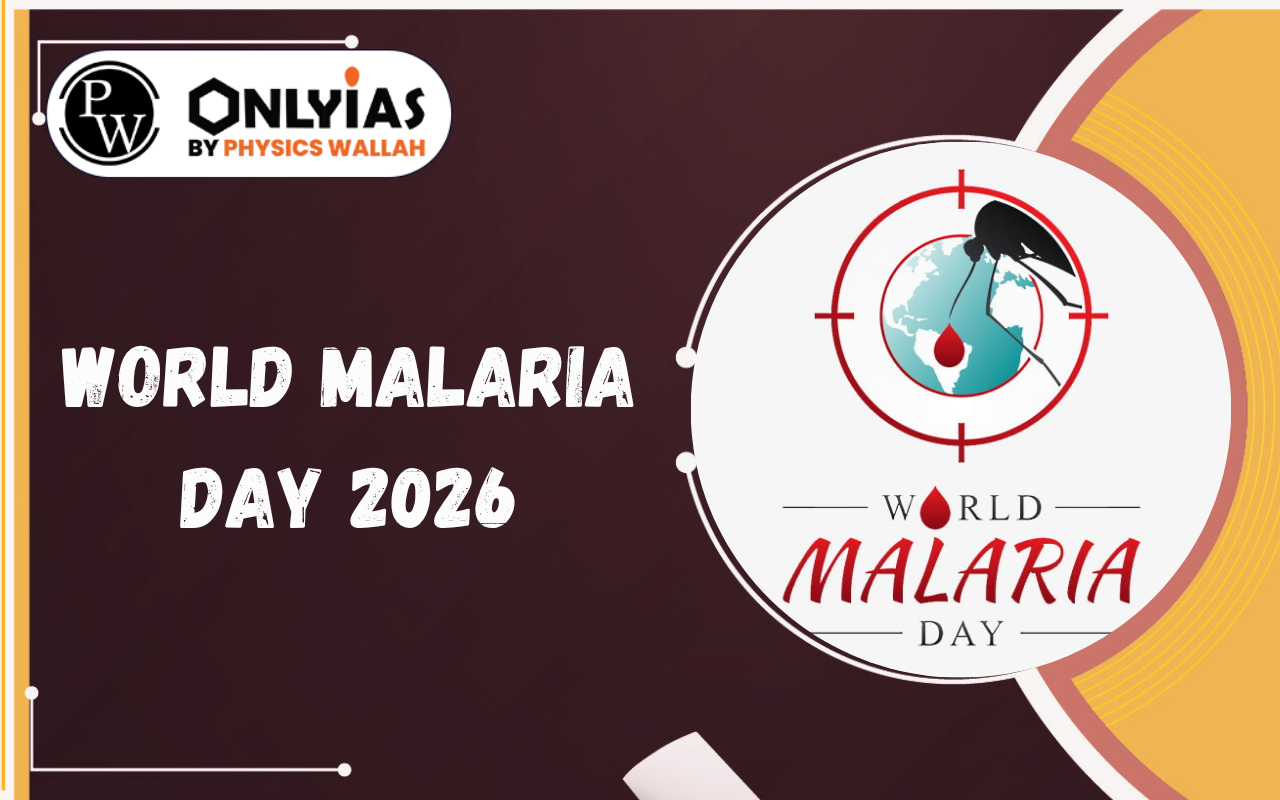
World Malaria Day 2026 will be observed on 25 April, bringing global attention to one of the most persistent public health challenges. This day is marked every year to spread awareness about malaria, its prevention, and the efforts being made worldwide to reduce its impact.
The observance of World Malaria Day is supported by the World Health Organization and its partners. It serves as a reminder that malaria continues to affect millions of people, especially in developing regions.
The World Malaria Day date remains fixed each year, making 25 April World Malaria Day a key moment for governments, organizations, and communities to come together and take action.
The World Malaria Day theme 2026 is:
“Driven to End Malaria: Now We Can. Now We Must.”
This theme reflects urgency and hope. It highlights that progress has been made, but stronger action is still needed. The message focuses on using available tools and innovations to reduce malaria cases and move closer to elimination.
Malaria is a life-threatening disease that spreads through mosquito bites. Many people still ask basic questions like, ” Malaria is caused by what”?
Malaria is caused by parasites known as Plasmodium. These parasites enter the human body through the bite of an infected female mosquito. When discussing which mosquito causes malaria, the answer is the female Anopheles mosquito.
Once inside the body, the parasite multiplies in the liver and then infects red blood cells. This leads to symptoms such as fever, chills, headache, and fatigue. Without proper treatment, malaria can become severe and life-threatening.
The global fight against malaria has shown both progress and challenges. Over the past decades, efforts supported by the global malaria program have helped reduce the burden of the disease.
Many countries have reported fewer cases, and several have achieved malaria-free status. At the same time, recent data shows that the total number of cases and deaths has not declined as expected.
Challenges such as drug resistance, insecticide resistance, and climate-related changes continue to affect progress. These issues highlight the need for stronger strategies and sustained efforts.
Despite challenges, significant progress has been made. Scientific advancements are changing the way malaria is prevented and treated.
New vaccines are being introduced in several countries to protect children. Long-lasting mosquito nets are being distributed widely. These nets are designed to improve protection against mosquitoes.
Innovative approaches, such as genetic modification of mosquitoes and long-acting treatments, are also under development. These advancements give hope for better control and possible elimination of malaria in the future.
The WHO Malaria Day campaign focuses on raising awareness and encouraging action at all levels. The World Health Organization works with governments and partners to promote prevention, treatment, and research.
The campaign encourages countries to strengthen their health systems. It also promotes community involvement, which plays an important role in controlling the spread of malaria.
Through awareness programs and partnerships, WHO continues to support global efforts to reduce malaria cases and deaths.
A strong malaria prevention campaign is essential to control the disease. Prevention strategies focus on reducing mosquito bites and controlling mosquito populations.
Some common methods include:
Community awareness is also important. People need to understand how malaria spreads and how they can protect themselves and their families.
The Malaria status in India has improved over the years due to consistent efforts by health authorities. Many regions have reported a decline in cases, but malaria still remains a concern in some areas.
Factors such as climate, population density, and access to healthcare influence the spread of malaria in India. Rural and forest regions are more vulnerable due to favorable conditions for mosquito breeding.
The government continues to focus on strengthening healthcare services and improving access to treatment.
India has implemented several Malaria control programmes in India to reduce the disease burden. These programmes focus on prevention, diagnosis, and treatment.
A key organization leading these efforts is the National Center for Vector-Borne Disease Control (NCVBDC). It works under the Ministry of Health and Family Welfare and plays an important role in planning and executing malaria control strategies.
These programmes include the distribution of mosquito nets, awareness campaigns, and regular monitoring of malaria cases. Efforts are also made to improve healthcare infrastructure in affected regions.
The goal of Eliminating Malaria by 2030: South-East Asia Region has gained strong support from countries in the region. Health ministers and officials have reaffirmed their commitment to achieving this target.
Regional collaboration plays a key role in this effort. Countries are working together to share knowledge, resources, and strategies. Cross-border coordination is important to prevent the spread of malaria.
Community participation is also essential. Local involvement helps in early detection, prevention, and treatment.
Check Out UPSC CSE Books
Visit PW Store
Even with progress, several challenges remain. Drug resistance is making some treatments less effective. Insecticide resistance is reducing the impact of mosquito control methods.
Environmental factors such as climate change are also influencing the spread of malaria. Changes in temperature and rainfall can increase mosquito breeding.
Funding gaps and disruptions in healthcare systems can slow down progress. Continuous investment and strong policies are required to overcome these challenges.
World Malaria Day 2026 highlights both progress and responsibility. It reminds us that while many achievements have been made, the fight is not over.
The theme encourages immediate action. It calls on everyone to contribute towards a malaria-free future. By focusing on prevention, treatment, and innovation, the global community can continue to make progress.
On this 25 April World Malaria Day, the goal is not only to raise awareness but also to strengthen efforts that protect lives and create a healthier future for all.
UPSC Offline Centres List
City
UPSC Offline Centres
Pantna
UPSC Coaching in Patna
Delhi
UPSC Coaching in Delhi
Lucknow
UPSC Coaching in Lucknow
Indore
UPSC Coaching in Indore
Jaipur
UPSC Coaching in Jaipur
Chandigarh
UPSC Coaching in Chandigarh
Bengaluru
UPSC Coaching in Bengaluru
Muzaffarpur
UPSC Coaching in Muzaffarpur
Prayagraj
UPSC Coaching in Prayagraj
Explore UPSC Test Series

It is a global awareness day observed on 25 April to highlight malaria prevention and control efforts.
The theme is “Driven to End Malaria: Now We Can. Now We Must.”
Malaria spreads through the bite of an infected female Anopheles mosquito.
Fever, chills, headache, and fatigue are the most common symptoms.
The World Health Organization leads global malaria awareness and control initiatives.



Explore SRIJAN Prelims Crash Course


Connect with our experts to get free counselling & start preparing
Books
Udaan (Prelims Wallah)
Prahaar (Mains Wallah)
Q&A Bank (Prelims & Mains)
Budget & Economic Survey
NCERT Wallah
Marks Booster
हिंदी माध्यम विशेष शृंखला
 Current Affairs
Monthly Current Wallah
Subject Wise Current Affairs
Editorial Analysis
Editorial PDFs
News of The Day
Download Our App



Download Our App
<div class="new-fform">
</div>

 GS Foundation
 Optional Course
 Combo Courses
 Degree Program