Books

Yamuna river tributaries are vital lifelines for Northern India, supporting both the ecology and economy of the region. Originating from the Yamunotri Glacier, the Yamuna is the largest tributary of the Ganga. This overview explores the river's origin, course, and its major branches including the Chambal, Tons, Betwa, Ken, Hindon, Giri, and Sindh rivers and how these Yamuna basin rivers shape the geography and water resources of the North Indian plains.
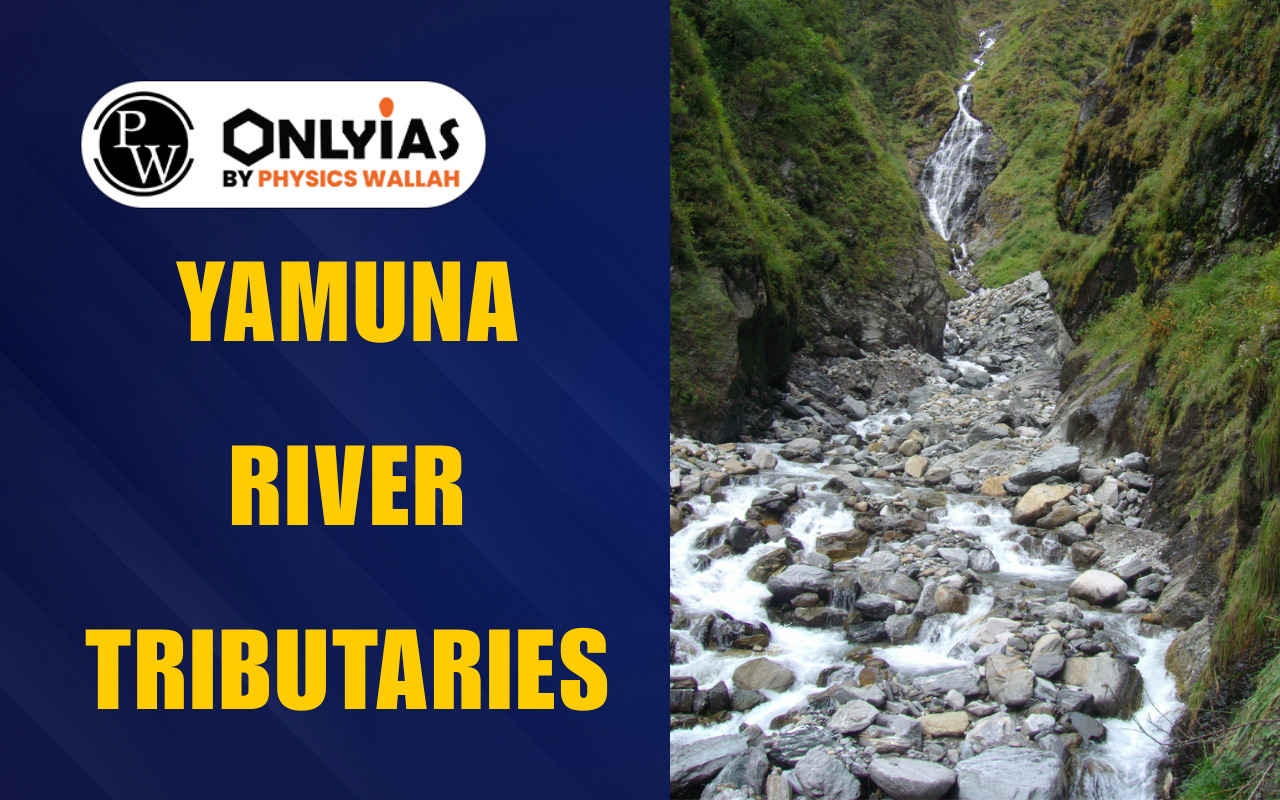
Yamuna river tributaries form one of the most extensive and economically significant river networks in Northern India, serving as the backbone of the vast Indo-Gangetic Plain. As the primary western affluent of the Ganga, the Yamuna River travels approximately 1,376 kilometers, collecting waters from a diverse array of Himalayan and Peninsular rivers. From the snow-fed surges of the Tons River in the north to the rain-fed currents of the Chambal and Betwa in the south, these tributaries of the Yamuna River are essential for sustaining agriculture, industry, and urban centers across five Indian states. Understanding the Yamuna river system and its complex basin is vital for grasping the geographical and hydrological intricacies of India’s drainage systems.
The Yamuna River is a main tributary of the Ganga River, essential to North Indian geography. Its many Yamuna river tributaries form a vital river network. Understanding these tributaries of Yamuna river is important for studying India’s river systems. This knowledge highlights their impact on local agriculture and urban water supply.
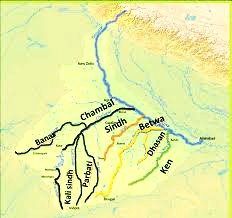
The Yamuna River System forms a crucial part of the Ganga Drainage System. It supports millions of people and diverse ecosystems.
Origin: The Yamuna River begins at the Yamunotri Glacier. This is near Bandarpoonch Peak in the Lower Himalayas. Its altitude is about 6,387 meters in Uttarkashi district, Uttarakhand.
Course: The river flows through Uttarakhand, Himachal Pradesh, and Haryana. It enters Delhi and merges with the Ganga River. This confluence happens near Triveni Sangam in Prayagraj (Allahabad). The Yamuna is the Ganga’s largest tributary in the northern plains.
Main Affluent: In its upper reaches, the Tons River is its main affluent. The Tons also rises from the Bandarpoonch glacier.
Explore UPSC Foundation Courses

Explore UPSC Foundation Courses
The Yamuna River receives water from many smaller rivers. These are its yamuna river tributaries. They are classified as left-bank or right-bank tributaries based on their joining direction. Here is the Yamuna river tributaries list:
The left bank tributaries play a vital role in augmenting the water volume of the Yamuna, especially as it descends from the Himalayan heights into the plains. These rivers primarily originate from the Shivalik and Garhwal ranges, contributing significantly to the ecological and agricultural health of Uttarakhand, Himachal Pradesh, and Uttar Pradesh.
Tons river tributary of Yamuna: This is the longest and largest tributary of the Yamuna River. It flows through Garhwal, western Uttarakhand. The river starts at 3,900 meters and joins the Yamuna below Kalsi near Dehradun. It is a major perennial river in the Indian Himalayas.
Giri river tributary of Yamuna: This is a key tributary of Yamuna river and a primary water source for southeastern Himachal Pradesh. It originates from Kupar Peak in the Jubbal and Rohru hills.
Hindon river tributary of Yamuna: This important Yamuna river tributary starts in the Upper Shivalik (Lower Himalayas). It flows between the Ganga on the left and the Yamuna on the right.
Explore UPSC Prarambh Course

Explore UPSC Prarambh Course
The right bank tributaries of the Yamuna originate primarily from the Peninsular plateau and the Vindhya and Aravalli ranges. These rivers contribute a significant volume of water to the Yamuna in its middle and lower courses, carving through the rugged landscapes of Central India and Rajasthan.
Chambal river tributary of Yamuna: Also known as Charmanwati. It starts from the Janapao Hills on the southern slopes of the Vindhya Range in Madhya Pradesh. Poor rainfall causes severe erosion, creating deep ravines. This leads to badland topography.
Four important dams exist on the Chambal River, a significant Chambal river tributary of Yamuna. They are arranged from South to North:
Water from power generation at the first three dams is rerouted by Kota Barrage. This water is used for irrigation in Rajasthan and Madhya Pradesh through a canal system. Keoladeo National Park also receives water from the Chambal River Irrigation Project.
Banas river tributary of Yamuna: This river is known as ‘Van Ki Asha’ (Hope of Forest). It originates in the Aravalli Range in Rajasthan’s Rajsamand District.
Kali Sindh river tributary of Yamuna: It flows in the Malwa region of Madhya Pradesh. It joins the Chambal River near Sawai Madhopur in Rajasthan.
Sindh river tributary of Yamuna: This river originates on the Malwa Plateau in Vidisha district. It flows north-northeast through several Madhya Pradesh districts. It joins the Yamuna River in Etawah District, Uttar Pradesh.
Betwa river tributary of Yamuna: Also known as Vetravati. It rises in the Vindhya Range north of Hoshangabad in Madhya Pradesh. The Betwa and Yamuna Rivers meet in Hamirpur, Uttar Pradesh.
Ken river tributary of Yamuna: It starts from the slopes of the Kaimur Range in Jabalpur district, Madhya Pradesh. It merges with the Yamuna near Fatehpur in Uttar Pradesh. The Ken Valley separates the Rewa Plateau from the Satna Plateau and goes through Panna National Park.
The Yamuna River flows through several states and passes many important cities.
|
States and Cities along Yamuna |
|
|---|---|
| States | Uttarakhand, Himachal Pradesh, Uttar Pradesh, Haryana, Delhi |
| Cities | Noida, Mathura, Agra, Firozabad, Etawah, Kalpi, Hamirpur, Prayagraj (Allahabad) |
Check Out UPSC CSE Books
Visit PW Store
The Yamuna river system faces major environmental problems.
Pollution: High levels of industrial waste, sewage, and solid waste pollute its waters. This makes the water unsafe for use.
Declining Groundwater: Too much groundwater extraction for farming and industry lowers groundwater levels. This worsens water scarcity.
Encroachment: Fast urban and industrial growth along its banks leads to encroachment. This damages wetlands and floodplains.
Climate Change: Erratic rainfall and glacial retreat impact the river. Extreme weather events also worsen water challenges.
Programs like the Yamuna Action Plan help improve sewage treatment and control pollution.

Taj Mahal is an ivory-white marble mausoleum on the south bank of the Yamuna river in the Indian city of Agra. It was commissioned in 1632 by the Mughal emperor, Shah Jahan (reigned from 1628 to 1658), to house the tomb of his favourite wife, Mumtaz Mahal. The tomb is the centrepiece of a 17-hectare (42-acre)complex, which includes a mosque and a guest house, and is set in formal gardens bounded on three sides by a crenellated wall.
Ready to boost your UPSC preparation? Join PW’s UPSC online courses today!
Explore UPSC Test Series

The Yamuna River System is a major river network in northern India. It is a critical part of the Ganga Drainage System. It includes the Yamuna River and its many yamuna river tributaries.
The Yamuna River flows through Uttarakhand, Himachal Pradesh, Haryana, Delhi, and Uttar Pradesh. It begins in Uttarakhand and joins the Ganga in Uttar Pradesh.
Key major tributaries of Yamuna include the Tons, Hindon, Giri, Chambal, Banas, Kali Sindh, Sindh, Betwa, and Ken rivers.
The Yamuna Action Plan (YAP) is a big project by the Indian government. Its goal is to reduce pollution and repair environmental damage to the Yamuna River.




Explore SRIJAN Prelims Crash Course


Connect with our experts to get free counselling & start preparing
Books
Udaan (Prelims Wallah)
Prahaar (Mains Wallah)
Q&A Bank (Prelims & Mains)
Budget & Economic Survey
NCERT Wallah
Marks Booster
हिंदी माध्यम विशेष शृंखला
 Current Affairs
Monthly Current Wallah
Subject Wise Current Affairs
Editorial Analysis
Editorial PDFs
News of The Day
Download Our App



Download Our App
<div class="new-fform">
</div>

 GS Foundation
 Optional Course
 Combo Courses
 Degree Program