Books

In 1526, Babur Mughal Emperor, established the Mughal Empire in India. This forefather of Timur and Genghis Khan adopted very modern ways to win battles at places like Panipat and Khanwa. In the book 'Baburnama,' he describes his life. Then, in 1530, he took his last breath, and in Kabul lies his tomb as a souvenir for eternity.

Babur Mughal Emperor, was the founder of the Mughal Empire in India. He became famous after winning major battles like the First Battle of Panipat in 1526. Coming from a royal family of great rulers, Babur used new war strategies and gunpowder weapons to defeat much larger armies. His victories helped him take control of Delhi, Agra, and Lahore, beginning a new era in Indian history.
In his early years, Babur fought many wars to regain his kingdom in Central Asia, but after losing several times, he turned his focus to India. He was not only a brave warrior but also a talented writer who described his life and experiences in the Baburnama. Babur died in 1530, and his tomb, known as Babur Makbara, is in Kabul, Afghanistan, honoring him as a wise and courageous emperor.
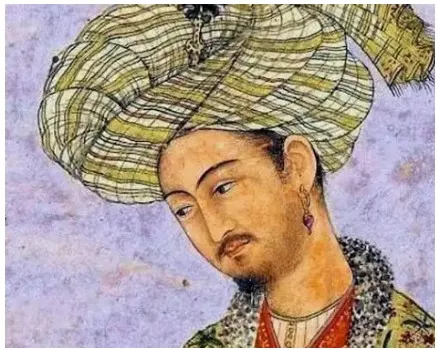
Mughal Emperor Babur was the founder of the Mughal Empire in India. He was a strong leader and soldier born into a family that was steeped in the tradition of rulers. Babur’s full name was Zahir ud-Din Muhammad Babur.
In the Persian language, Babur means “tiger”, and that itself shows that he was brave and strong. He was also a writer who kept a diary called Baburnama, telling about his life and adventures. He began his rule in India in 1526, starting a new history for the country.
Babur belonged to a family that came from two great leaders: Timur on his father’s side and Genghis Khan on his mother’s side. He became a king when he was only 12 years old, but faced many battles during his early years.
Babur was born on February 14, 1483, in a place called Andijan in the Fergana Valley, which is in present-day Uzbekistan. He was the son of Umar Shaikh Mirza II, the ruler of Farghana.
Babur had an early interest in history and poetry. Immediately after his ascension as a ruler at 12, Babur faced an immense number of challenges. He tried to regain lands like Samarkand, but his enemies-mainly the Uzbeks-stopped him.
After losing his home, Babur captured Kabul and planned to expand his power in India.
Babur descended from a family of two great warriors. His father was a direct descendant of Timur, more generally known as Tamerlane, the great Central Asian conqueror, and his mother belonged to the family of Genghis Khan, the most famous Mongol leader.
Below is a detail of Babur’s close family members:
| Babur Family Tree | |
| Family Member | Relation to Babur |
| Umar Shaikh Mirza II | Father |
| Timur | Ancestor (Paternal side) |
| Genghis Khan | Ancestor (Maternal side) |
| Humayun | Son |
Babur came to India because he wanted to build a bigger kingdom. His first goal was to recover lands in Central Asia, but after many defeats, he looked towards India. The political system in India was weak, making it easier.
He fought many battles and won key cities. He was invited by local leaders who were unhappy with the rulers in Delhi. Babur crossed mountains and rivers and finally defeated Ibrahim Lodi in 1526 to become the emperor.
Babur fought many battles to create and protect his empire in India. A list of his important battles in order is as follows:
| Battles Fought By Babur | |||
| Year | Battle Name | Opponents | Result |
| 1526 | First Battle of Panipat | Ibrahim Lodi (Delhi Sultanate) | Babur won and entered India |
| 1527 | Battle of Khanwa | Rana Sanga (Rajput Confederacy) | Babur defeated the Rajputs |
| 1528 | Battle of Chanderi | Medini Rai (Malwa ruler) | Babur took control of Malwa |
| 1529 | Battle of Ghagra | Afghan forces | Babur secured Northern India |
Babur’s history is a saga of bravery and change. He was the first ruler who initiate the Mughal Empire in India. Babur conquered many cities, of which Lahore, Delhi, and Agra are a few.
His major victory was the Battle of Panipat in 1526, in which he defeated Ibrahim Lodi, one of the most powerful rulers of that time. Babur also won other important battles, such as Khanwa and Chanderi, thereby establishing his rule in India. These victories gave birth to a new era in Indian history.
Check Out UPSC CSE Books
Visit PW Store
Babur died on December 26, 1530, in Agra, India. Firstly, he was buried in Agra, but later his body was shifted to Kabul, Afghanistan. His tomb is known as Babur Makbara, or Babur’s tomb. It is situated in a garden called Bagh-e Babur. The tomb is a quiet place, respectful to the great emperor who initiated the Mughal Empire.
Babur himself wrote his biography. The title of his biography is “Baburnama,” which means “Book of Babur.” It was a diary where Babur narrated about his life, the battles he fought, and the places he had visited. In this book, we learn about Babur directly from himself.
Ready to boost your UPSC 2026 preparation? Join PW’s UPSC online courses today!
Explore UPSC Test Series

He was the founder of the Mughal Empire in India and was a fearless warrior and leader.
His full name was Zahir ud-Din Muhammad Babur.
Babur was born in Andijan, Fergana Valley, now in Uzbekistan.
He fought the First Battle of Panipat, the Battle of Khanwa, Chanderi, and Ghagra.
Babur's grave is in Kabul, Afghanistan, within the famous garden called Bagh-e Babur.
It was Babur who wrote his own biography, Baburnama. As an author, he shared his thoughts, feelings, and stories of his journey from Central Asia to India.



Explore SRIJAN Prelims Crash Course


Connect with our experts to get free counselling & start preparing
Books
Udaan (Prelims Wallah)
Prahaar (Mains Wallah)
Q&A Bank (Prelims & Mains)
Budget & Economic Survey
NCERT Wallah
Marks Booster
हिंदी माध्यम विशेष शृंखला
 Current Affairs
Monthly Current Wallah
Subject Wise Current Affairs
Editorial Analysis
Editorial PDFs
News of The Day
Download Our App



Download Our App
<div class="new-fform">
</div>

 GS Foundation
 Optional Course
 Combo Courses
 Degree Program