Books

Bipin Chandra Pal was a prominent figure in India's freedom struggle. He was a nationalist leader, orator, and journalist. Pal played a crucial role in the Swadeshi Movement. He advocated for complete self-governance. His ideas influenced many during the early 20th century. Pal is remembered as part of the 'Lal-Bal-Pal' trio.
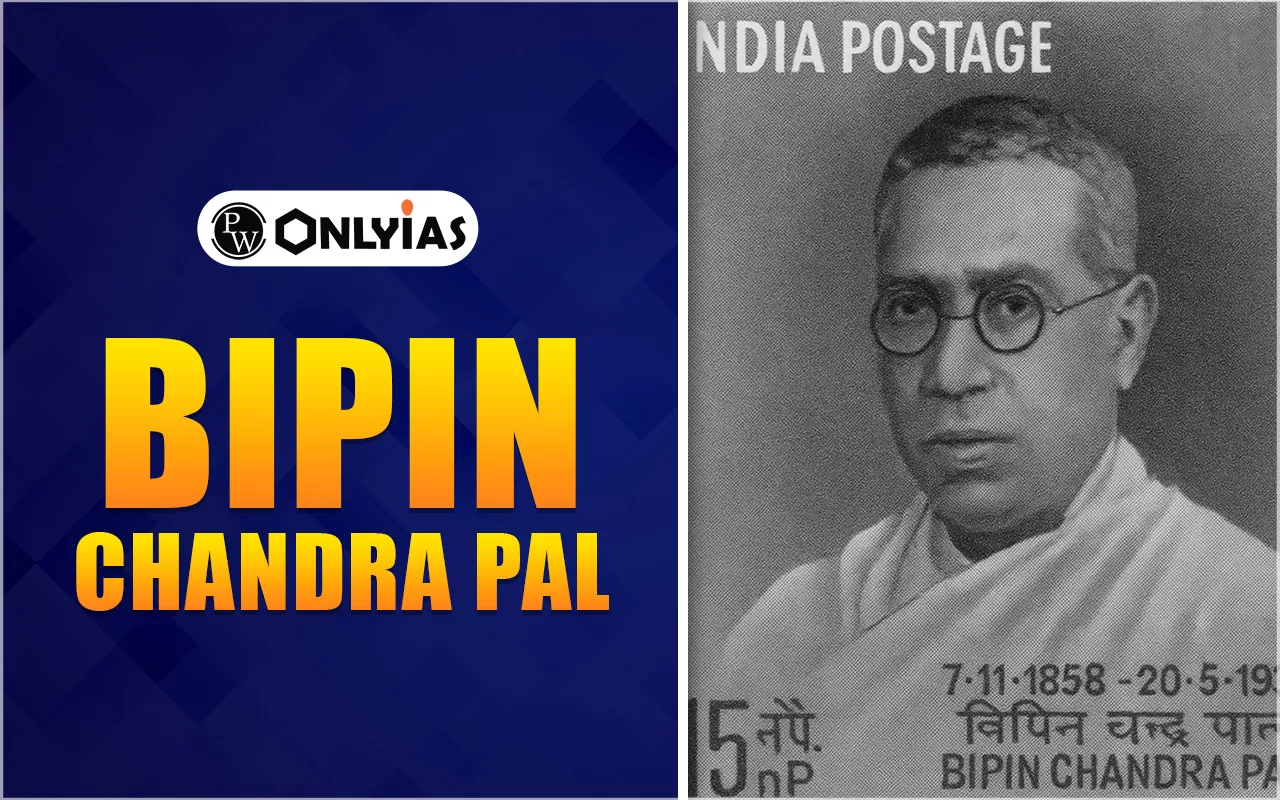
Bipin Chandra Pal was born on November 7, 1858, in Sylhet, Bengal Presidency (now Bangladesh). He was a leading Indian nationalist, freedom fighter, and social reformer, and was a key member of the Lal-Bal-Pal trio that strengthened the Swadeshi and boycott movements. Known for his powerful speeches and bold ideas, he inspired a new wave of revolutionary nationalism.
Pal strongly advocated self-reliance, national education, and revival of Indian industries. An influential journalist, he contributed to papers such as Bande Mataram and New India. His ideas played a big role in shaping early Indian political thought.
Bipin Chandra Pal was an influential nationalist and social reformer. Bipin Chandra Pal was one of the significant figures in India’s Independence Movement. The following are some of the key aspects of Bipin Chandra Pal’s biography:
| Bipin Chandra Pal Biography | |
| Particulars | Details |
| Full Name | Bipin Chandra Pal |
| Date of Birth | 7 November 1858 |
| Place of Birth | Sylhet (now in Bangladesh) |
| Role in Freedom Movement | Leader of the Lal-Bal-Pal trio. Significant figure in the Swadeshi and boycott movements |
| Bipin Chandra Pal Contributions | Powerful orator, social reformer, nationalist leader |
| Social Reforms | Supported women’s rights, widow remarriage, and social equality |
| Date of Death | 20 May 1932 |
Bipin Chandra Pal played an important role in shaping early Indian nationalism through his fervent support of Swaraj, or complete self-rule. He used his powerful oratory and journalism to spread nationalist ideas and influence young people to think on revolutionary lines.
The following is his notable role in the Indian National Movement:
Bipin Chandra Pal was an important influence in giving shape to the extremist section of the Indian National Congress. Along with Bal Gangadhar Tilak and Lala Lajpat Rai, he forced the Congress away from the moderate means of petitions to assertive nationalism, which laid claims to Swaraj as a national aim.
Supportive of boycott, Swadeshi, and mass mobilisation as political tools within the Congress, Pal laboured to influence party policies in the early years of the 1900s, especially during the Swadeshi Movement following the Partition of Bengal. He would later withdraw from active politics, but his ideological push helped in transforming the INC into a more assertive and mass-based movement.
Bipin Chandra Pal played a key role in the Swadeshi Movement. This movement was started after the 1905 Bengal Partition. He advocated for indigenous goods and institutions, appealing to Indians to boycott British goods.
Following are some of the key aspects in which he contributed to the Swadeshi Movement, Bengal Partition:
Check Out UPSC CSE Books
Visit PW Store
Bipin Chandra Pal was a prolific writer and journalist. He started many newspapers and journals. These included Paridarshak, New India, and Bande Mataram. His literature propagated nationalist ideas. In his autobiography, Memories of My Life and Times (1932), he chronicled his personal and political evolution.
His major political works, such as Indian Nationalism, Swaraj and the Present Situation, Nationality and Empire, and The Soul of India, analyse the impact of imperialism, plead for self-rule, and discuss the essence of nationalism.
Bipin Chandra Pal played an important role in India’s freedom struggle as a main leader of the Lal-Bal-Pal trio and a strong advocate of assertive nationalism.
Ready to boost your UPSC 2026 preparation? Join PW’s UPSC online courses today!
Bipin Chandra Pal was an Indian nationalist, orator, and journalist. He was one of the key leaders of the Indian independence movement.
He was one of the leading personalities of the Swadeshi Movement, advocating boycotts of British goods and encouraging indigenous industries and education.
He belonged to the 'Lal-Bal-Pal' trio, which included Lala Lajpat Rai and Bal Gangadhar Tilak.
His published works mainly include The Soul of India, Indian Nationalism, and journals such as New India and Bande Mataram.
He had formerly been a member of Congress but held more radical ideas concerning total independence, thus often opposing the moderate faction.


Connect with our experts to get free counselling & start preparing
Books
Udaan (Prelims Wallah)
Prahaar (Mains Wallah)
Q&A Bank (Prelims & Mains)
Budget & Economic Survey
NCERT Wallah
Marks Booster
हिंदी माध्यम विशेष शृंखला
 Current Affairs
Monthly Current Wallah
Subject Wise Current Affairs
Editorial Analysis
Editorial PDFs
News of The Day
Download Our App



Download Our App
<div class="new-fform">
</div>

 GS Foundation
 Optional Course
 Combo Courses
 Degree Program