Udaan, Prahaar, Q&A Bank etc.
CA Magazines & Editorials
Article 352 allows the President to declare a National Emergency during war, external aggression, or armed rebellion on Cabinet advice. It requires parliamentary approval, lasts 6 months (extendable), and strengthens the Centre while safeguarding key rights after the 44th Amendment.
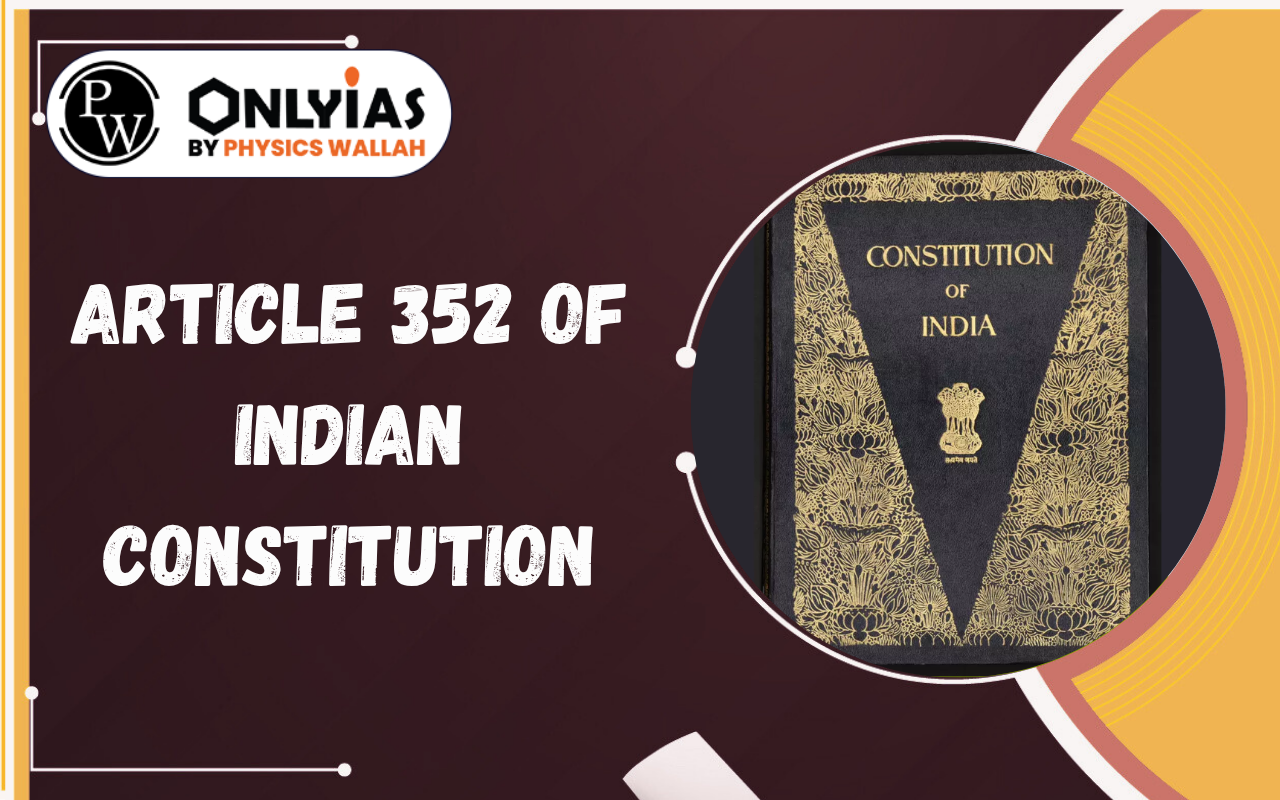
Article 352 of the Indian Constitution empowers the Union Government to declare a National Emergency during serious threats like war, external aggression, or armed rebellion. It ensures strong central control in times of constitutional crisis while operating under strict safeguards introduced by the 44th Amendment, including Cabinet advice and parliamentary approval.
The emergency is initially valid for six months and can be extended with Parliament’s approval, while also allowing revocation by the President or Lok Sabha. It significantly shifts power towards the Centre, may affect Centre–State relations, and can suspend certain Fundamental Rights, making it one of the most important yet debated provisions in Indian constitutional law.
Article 352 of the Indian Constitution is one of the most powerful emergency provisions that allows the Union Government to declare a National Emergency in case of a serious threat to the security of India. This includes situations like war, external aggression, or armed rebellion.
It is part of the emergency provisions of India that ensure the government can act decisively during a constitutional crisis India may face.
A National Emergency can be declared only on specific grounds:
The change from “internal disturbance” to “armed rebellion” was made to prevent misuse of emergency powers.
These conditions ensure that the security of India threat is real and serious before invoking emergency powers.
Under Article 352, the President of India declares the emergency, but only on the:
This ensures that the decision is not taken individually but has collective executive responsibility.
To prevent unilateral decisions, the Constitution outlines a rigorous process for declaring an emergency:
The duration of a National Emergency under Article 352 is initially six months, extendable indefinitely with parliamentary approval, and can also be revoked through Presidential proclamation or Lok Sabha resolution.
A National Emergency can be revoked in two ways:
By the President:
By Lok Sabha:
This provision was strengthened after the 44th Constitutional Amendment to prevent misuse of power.
The National Emergency under Article 352 significantly strengthens the Centre over States and may suspend certain Fundamental Rights, though protections under Articles 20 and 21 remain intact after the 44th Amendment.
During an emergency:
Under Articles 358 and 359:
However, rights under Article 20 and 21 cannot be suspended (post-44th Amendment protection).
This is the most important reform:
Article 352 is vital for safeguarding national security during crises by empowering the Centre, providing a legal emergency framework, and balancing federalism with national interest, though it remains highly debated for its impact on democracy and fundamental rights. Article 352 is crucial because it:
However, it is also one of the most critically debated provisions due to its impact on democracy and rights.
Article 352 of the Indian Constitution provides the framework for declaring a National Emergency when India faces severe threats like war, external aggression, or armed rebellion. While it strengthens the Centre’s ability to protect national security, it also comes with strict parliamentary controls after the 44th Amendment to prevent misuse. Understanding this provision is essential for exams like UPSC, SSC, and other government exams.
Check Out UPSC CSE Books
Visit PW Store
Explore SRIJAN Courses

Article 352 allows the President to declare a National Emergency in case of war, external aggression, or armed rebellion.
The President declares it on the written advice of the Union Cabinet.
It initially lasts six months and can be extended indefinitely with parliamentary approval every six months.






Connect with our experts to get free counselling & start preparing
Join India’s trusted platform for expert guidance, quality content, proven success.
Learn anytime, anywhere.



India's leading UPSC coaching platform helping aspirants prepare for IAS, IPS, IFS and other Civil Services examinations with the best faculty and proven strategies.
<div class="new-fform">
</div>