Udaan, Prahaar, Q&A Bank etc.
CA Magazines & Editorials
Delimitation Bill 2026 proposes redrawing constituencies, increasing Lok Sabha seats, using updated census data, and enabling women’s reservation. It aims to improve fair representation, adjust SC/ST reserved seats, and reshape the future electoral structure of India.
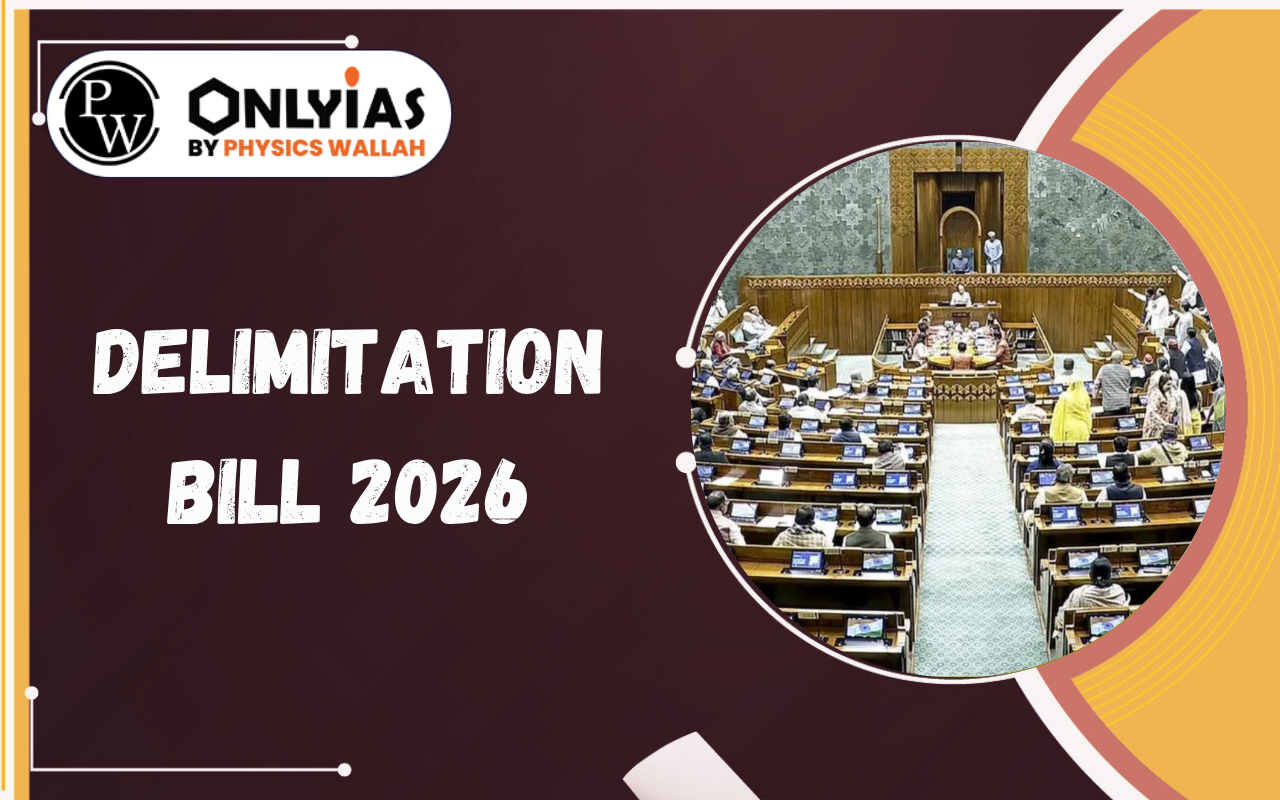
The Delimitation Bill 2026 has become one of the most discussed topics in Indian politics. It is directly linked to how people are represented in Parliament. It also connects with seat distribution, women’s reservation, and future elections.
The government has introduced the Delimitation Bill 2026 along with other related proposals to update the structure of representation in India. These changes aim to reflect population growth and improve fairness in elections.
The Delimitation Bill focuses on redrawing constituencies and increasing the number of seats so that representation becomes more balanced.
The Delimitation Bill 2026 is a proposal that allows the government to redraw Lok Sabha constituencies and increase the number of seats. It is connected with the Constitution 131st Amendment Bill 2026 and the Union Territories Laws Amendment Bill 2026, which together bring structural changes.
Delimitation means adjusting boundaries of constituencies based on population. This ensures that every vote carries similar value.
The idea is based on the principle of one person one vote one value, which is considered the foundation of democracy in India.
India’s population has grown a lot over the years. But the number of seats in the Lok Sabha has remained almost unchanged for decades.
This has created a situation where some constituencies have a very large number of voters, while others have fewer. This imbalance affects fair representation.
The delimitation process India aims to fix this issue. It ensures that constituencies are adjusted according to population so that representation becomes more equal.
The Constitution already provides rules for delimitation. These are mentioned in Articles 81 82 170 Constitution.
According to these provisions:
However, this process was paused for many years. The freeze started in the 1970s and continued through later amendments.
The Delimitation Bill now tries to restart this process and update representation based on current realities.
The Delimitation Bill includes several important changes that will impact elections and governance.
One major change is the Lok Sabha seat increase.
The bill allows Parliament to decide which census will be used.
A delimitation commission India will be formed to carry out the process.
The Delimitation Bill will directly affect representation in Lok Sabha. States with higher populations may get more seats. States with slower population growth may see smaller changes. This could shift the balance of power between different regions.
At the same time, the government has said that steps will be taken to maintain fairness and balance.
The Delimitation Bill is closely connected with women’s reservation.
The Women Reservation Bill India, also known as the Nari Shakti Vandan Act, provides reservation for women in Parliament and State Assemblies.
However, this reservation will only be implemented after delimitation.
This means:
This step is expected to improve women political representation India and increase participation of women in law-making.
Delimitation also plays an important role in SC ST seat reservation.
When constituencies are redrawn:
This ensures that reserved categories continue to get fair representation.
The upcoming census will be important for delimitation.
The government has also announced that the caste census India will be included in the process.
This will help:
The Delimitation Bill 2026 makes it possible to use updated data for future elections.
While the Delimitation Bill 2026 aims to improve representation, it also raises some concerns.
Some states may gain more seats while others may lose relative share.
This could create political debates.
Increasing Lok Sabha seats may change its balance with Rajya Sabha.
This can affect decision-making in Parliament.
More MPs may lead to:
The process takes time.
It may not be completed before the next general elections.
Understanding the timeline helps to see why the Delimitation Bill 2026 is important today.
This long gap has created the need for fresh exercise.
After the Delimitation Bill 2026 is passed:
This process takes time and involves many steps.
The Delimitation Bill 2026 is not just a technical change. It is a major step that will shape the future of elections in India.
It aims to correct imbalances in representation. It also prepares the system for population changes. At the same time, it connects with important reforms like women’s reservation and updated census data.
The success of the Delimitation Bill 2026 will depend on how smoothly it is implemented and how well it balances the interests of different regions and groups. In the coming years, this reform will play a key role in defining how democracy works at the ground level in India.
Check Out UPSC CSE Books
Visit PW Store
Delimitation Bill 2026 is a proposal to redraw constituencies and increase Lok Sabha seats based on population changes.
It is important because it aims to improve equal representation in Parliament and connect women’s reservation with updated seat allocation.
Women’s reservation under the Nari Shakti Vandan Act will be applied only after the delimitation exercise is completed.
Yes, all states may be affected, but the change in seat numbers and share will vary based on population data.
A Delimitation Commission will be formed to use census data, hold hearings, and redraw constituency boundaries


Connect with our experts to get free counselling & start preparing
Join India’s trusted platform for expert guidance, quality content, proven success.
Learn anytime, anywhere.



India's leading UPSC coaching platform helping aspirants prepare for IAS, IPS, IFS and other Civil Services examinations with the best faculty and proven strategies.
<div class="new-fform">
</div>