Books

Beas is a Himalayan river originating from Beas Kund in the Pir Panjal range. It flows primarily through Himachal Pradesh and then enters Punjab. Known for its rich history and ecological significance, the Beas River is crucial for irrigation and hydroelectric power. It eventually joins the Sutlej River, supporting diverse ecosystems and human settlements.

The Beas River is one of the most important rivers of North India. It plays a major role in the geography, history, culture, and economy of Himachal Pradesh and Punjab. Flowing through fertile valleys and plains, the Beas River supports irrigation, hydropower, and human settlements.
From ancient Vedic references to modern dams and projects, the river continues to shape life in its basin. Read on to learn about the Beas River origin, course, tributaries, dams, basin, and its journey from the Himalayas to the Sutlej River.
Explore UPSC Foundation Courses

Explore UPSC Foundation Courses
Beas is one of the five major rivers in Punjab, with its source in the high mountains of Himachal Pradesh. Historically, the Beas River marked the eastern limit of Alexander the Great’s conquests in India (326 BCE). Its Sanskrit name, Vipasha, links to Sage Vyasa.
Mythology also surrounds its largest tributary, the Parbati River, particularly the legend of Manikaran involving Lord Shiva, Goddess Parbati, and Guru Nanak, highlighting the area’s spiritual significance.
This river holds historical and geographical importance, being a key source of water in the region. Here are key facts about this river:
| Features of Beas River | Information |
|---|---|
| Beas River Vedic Name | Arjikiya |
| Beas River Sanskrit Name | Vipasha |
| Greek Name | Hyphasis |
| Length | 470 km (286 km in HP) |
| Source | Beas Kund (Rohtang Pass) |
| Districts | Kullu, Mandi, Kangra |
| Catchment Area | 13,663 sq. km. (24.5% of HP’s area) |
| Hydro Electric Projects | 359 projects (Total) |
The Beas River origin is Beas Kund, near Rohtang Pass in the Pir Panjal range. The origin point is located at an altitude of about 4,365 meters above sea level. It flows through the Kullu Valley, then turns west past Mandi into the Kangra Valley. After exiting Himachal Pradesh, the Beas River in Punjab flows south-southwest.
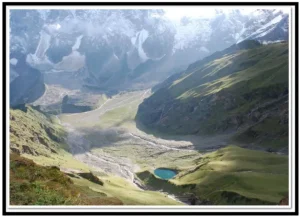
The Beas River joins Sutlej at Harike. The Beas River basin has the second-largest catchment area in Himachal Pradesh. The Beas river course spans approximately 470 km in total.
For students preparing for competitive exams, studying the Beas River map is very important.
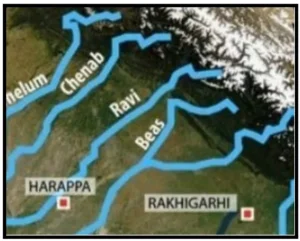
The Beas River course begins in the high Himalayas of Himachal Pradesh. After originating at Beas Kund, the river flows through the Kullu Valley. This region is famous for scenic beauty and tourism. The river then passes through Mandi district. Here, major hydropower projects are located.
After leaving the mountains, the Beas River enters the plains of Punjab. In Punjab, the river flows through districts like Hoshiarpur, Kapurthala, and Amritsar. The river finally meets the Sutlej River near Harike in Punjab. Thus, the Beas river course shows a transition from glaciers to hills and then to fertile plains.
Explore UPSC Prarambh Course

Explore UPSC Prarambh Course
The Beas River tributaries include many streams. Northern and eastern tributaries are typically snow-fed and perennial. Southern ones are seasonal.
The Parbati River is the largest tributary. Many of these join the Beas River in Himachal Pradesh.
Check Out UPSC CSE Books
Visit PW Store
Several important dams are built on the Beas River to harness its hydroelectric potential and manage water resources. These include projects for power generation and irrigation.
Ready to boost your UPSC preparation? Join PW’s UPSC online courses today!
Explore UPSC Test Series

The Vedic name for the Beas River is Arjikiya.
The Beas River origin is Beas Kund, located near Rohtang Pass in the Pir Panjal mountain range.
The Beas River joins the Sutlej River at Harike, in Punjab.
Two important dams are the Pandoh Dam and the Pong Dam (also known as the Beas Dam).
The Sanskrit name for the Beas River is Vipasha.




Explore SRIJAN Prelims Crash Course


Connect with our experts to get free counselling & start preparing
Books
Udaan (Prelims Wallah)
Prahaar (Mains Wallah)
Q&A Bank (Prelims & Mains)
Budget & Economic Survey
NCERT Wallah
Marks Booster
हिंदी माध्यम विशेष शृंखला
 Current Affairs
Monthly Current Wallah
Subject Wise Current Affairs
Editorial Analysis
Editorial PDFs
News of The Day
Download Our App



Download Our App
<div class="new-fform">
</div>

 GS Foundation
 Optional Course
 Combo Courses
 Degree Program