Positive Indigenisation List (PIL)
Context: The Department of Defence Production (DDP) notified the 6th Positive Indigenisation List (PIL) comprising 405 strategically important defence items worth ₹3,070 crore in estimated business potential.
UPSC Online Courses
About Positive Indigenisation List
- Introduction: The PIL is a list of defence items that the Indian Armed Forces are required to procure from domestic manufacturers after their specified indigenisation deadlines.
- It is an official negative import list/procurement embargo list notified by the Ministry of Defence.
- Origin: The first Positive Indigenisation List was introduced on August 21, 2020
- Domestic Procurement: The listed items can be manufactured by Indian private-sector companies as well as Defence Public Sector Undertakings (DPSUs), thereby reducing dependence on imported defence equipment.
- Policy Framework: It forms part of the Government’s Aatmanirbhar Bharat initiative and is implemented through the Defence Acquisition Procedure (DAP).
- Key Objectives
- Reducing Import Dependence: The PIL seeks to progressively eliminate import dependence in defence procurement by encouraging domestic design, development and production.
- Strengthening Industry: It promotes participation of MSMEs, startups and private companies, while encouraging investment, innovation and development of indigenous defence technologies.
- Building Defence Ecosystem: It aims to strengthen India’s domestic defence manufacturing ecosystem and contribute towards making India a global defence manufacturing hub.
- Role of SRIJAN Defence Portal
- Digital Platform: The SRIJAN Defence Portal, launched by DDP in August 2020, provides a dedicated platform where Defence Public Sector Undertakings (DPSUs) and Service Headquarters (SHQs) offer imported defence items to Indian industry for indigenous development and production.
- Overall Performance: Over 15,700 defence items have been successfully indigenised in the last five years, resulting in estimated import substitution of about ₹9,000 crore.
Incentive Scheme for Promotion of Domestic PNG Connections
Context: The Government has approved an incentive scheme to accelerate domestic PNG connections, with implementation scheduled from the 1st of the following month.
About the Incentive Scheme for Promotion of Domestic PNG Connections
- The scheme aims to expand active domestic Piped Natural Gas (PNG) connections by incentivising City Gas Distribution (CGD) entities to convert unbilled connections into active gas connections and extend networks to new areas.
- Nodal Ministry: Ministry of Petroleum and Natural Gas (MoPNG)
- Objective: To make PNG cleaner, safer and more affordable for households while accelerating the expansion of India’s city gas distribution network.
- Implementation:
- CGD Network: The scheme specifically targets the conversion of unbilled connections into active billed connections and expansion of PNG networks into new geographical areas.
- Eligible CGD entities will receive 200 Standard Cubic Metres (SCM) of domestically produced, lower-priced gas for every incremental billed domestic PNG connection achieved during the performance period.
- Phases: The scheme will be implemented in two tranches over six months, with the additional domestic gas allocation helping reduce the sourcing cost of CGD entities.
About Piped Natural Gas (PNG)
- PNG is natural gas supplied to households through pipelines, primarily for cooking and other domestic applications, eliminating the need for LPG cylinders.
- Natural gas is a naturally occurring fossil fuel formed deep beneath the earth’s surface from the decayed remains of ancient plants and animals
- It is a colorless, highly flammable gaseous mixture composed primarily of methane, alongside smaller amounts of heavier hydrocarbons and trace impurities
- Current Domestic Connections: India currently has around 1.74 crore domestic PNG connections, indicating significant expansion of piped gas access across urban and semi-urban areas.
- Benefits of PNG
- Cleaner Cooking Fuel: PNG produces lower particulate and pollutant emissions compared with several conventional cooking fuels, contributing to cleaner household air.
- Safety and Convenience: PNG provides a continuous pipeline supply, eliminating the need for cylinder storage, transportation and frequent replacement.
- Energy Transition: Expanding PNG access can support India’s transition towards cleaner gaseous fuels while strengthening the country’s city gas distribution infrastructure.
Tamirabharani (Porunai) River
Context: The Madras High Court recognised the Tamirabharani River as a deity and legal person to strengthen its protection against pollution.
About Tamirabharani River
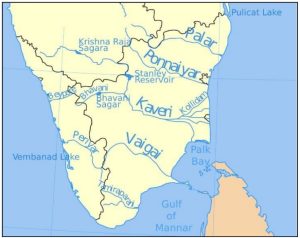
- The Tamirabharani, also known as Porunai or Tamraparni, is a perennial river of southern Tamil Nadu and has considerable ecological, economic and cultural significance.
- Origin: The river originates at Agastyarkoodam Peak in the Pothigai Hills of the Western Ghats, at an elevation of about 1,725 metres.
- Course: It flows for approximately 128 km, initially towards the north and subsequently eastwards through Tirunelveli and Thoothukudi districts.
- Tributaries: Major tributaries include Servalar, Manimuthar, Gadananathi, Pachaiyar, Chittar, Ramanathi and Koraiyar.
- Mouth: The river ultimately drains into the Gulf of Mannar on the southeastern coast of India.
- Ecological Significance: The perennial river supports agriculture, irrigation, biodiversity and human settlements, with its catchment largely located in the Western Ghats.
- Cultural Significance: Historically known as Tamira Porunai, the river finds references in Sangam literature and ancient religious texts and has long been associated with the cultural heritage of southern Tamil Nadu.
- Impact of Legal-Person Status
-
- Legal Recognition: Recognition as a legal person gives the river a distinct legal identity, enabling its interests to be represented and protected through legal mechanisms.
- Pollution Control: The decision seeks to strengthen protection against waste dumping and pollution, including waste generated during funeral and ritual practices along the riverbanks.
- Environmental Jurisprudence: The ruling reinforces an eco-centric approach, under which nature is considered to possess interests deserving protection rather than being viewed solely as a resource for human use.
Other Natural Resources Given Legal-Person Status in India
- Ganga and Yamuna: The Uttarakhand High Court (2017) recognised the Ganga and Yamuna rivers as legal persons, although the Supreme Court subsequently stayed the order.
- Glaciers: The Uttarakhand High Court also extended legal-person status to the Gangotri and Yamunotri glaciers in 2017.
- Sukhna Lake: The Punjab and Haryana High Court (2020) recognised Sukhna Lake as a legal entity/person for its preservation and conservation.
- Animal Kingdom: The Punjab and Haryana High Court (2019) declared the entire animal kingdom in Haryana a legal entity to promote animal welfare and protection.
UPSC Online Classes
India- Armenia
Context: India and Armenia have strengthened defence cooperation through institutionalised military talks and an MoU on joint collaboration, innovation and defence research.
India–Armenia Defence Cooperation
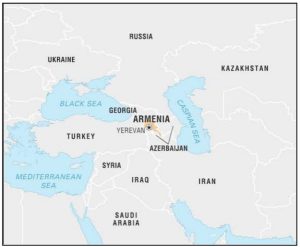
- Growing Partnership: Armenia is seeking to diversify its defence procurement, with India emerging as an important partner in military-technical cooperation.
- Institutional Cooperation: India and Armenia exchanged Terms of Reference for Joint Services Staff Talks and signed an MoU covering joint collaboration, innovation and defence R&D.
About Armenia
- Armenia is a landlocked, mountainous country in the South Caucasus with a rich cultural heritage.
- Its capital and largest city is Yerevan, which serves as the country’s administrative, economic and cultural centre.
- Location: Armenia lies in the South Caucasus region of Eurasia, at the geographical crossroads of Western Asia and Eastern Europe.
- Borders: Georgia (north), Azerbaijan (East) , Iran (south) and Turkey (west).
- Key Geographical Features
- Mountainous Terrain: Armenia is characterised by the Armenian Highlands, with extensive mountainous terrain and high-altitude landscapes.
- Mount Aragats is the highest peak within Armenia, while the historic Mount Ararat lies across the border in Turkey.
- Lake Sevan: Lake Sevan is a major high-altitude freshwater lake and an important geographical and economic feature of Armenia.
- Rivers: Armenia has several fast-flowing mountain rivers, which are important for irrigation, hydropower and freshwater resources.
- Climate: Armenia predominantly experiences a continental climate, with hot summers and cold winters.
- Vegetation: The natural vegetation includes steppes, grasslands and semi-desert landscapes.
- Forests of oak, beech and hornbeam occur mainly in suitable mountainous regions.
Click to Know UPSC Coaching Centres in India
Indian Army Chief Conferred Honorary General Rank in Nepali Army
Context: Indian Army Chief General Dhiraj Seth was conferred the rank of Honorary General of the Nepalese Army by Nepalese President Ram Chandra Paudel during his official visit to Nepal.

About the Honorary General of the Nepalese Army
- The Honorary General is a ceremonial military rank conferred by one country’s army on the Chief of the Army of the other country as a symbol of mutual respect, trust and longstanding military ties.
- Unique tradition: Since 1950, India and Nepal have reciprocally conferred the honorary rank of General on each other’s Army Chiefs.
- Nature: It is primarily an honorary and symbolic distinction, representing military camaraderie rather than operational command.
 20 Aug 2026