International Women’s Day (IWD) is celebrated globally on 8 March each year to recognise women’s achievements and contributions across social, economic, cultural, and political spheres.
- The day also serves as a platform to highlight gender inequalities, advocate women’s rights, and mobilise global action for gender equality.
- Theme of 2026: “Rights. Justice. Action. For ALL Women and Girls”
About International Women’s Day
- Origin: Emerged from early 20th-century labour movements in North America and Europe, focusing on women’s rights, better working conditions, and political participation.
- Proposal of the Day (1910): The idea of an international observance was proposed by Clara Zetkin at the Second International Conference of Working Women in Copenhagen.
- The proposal received unanimous support from over 100 women representing 17 countries.
- First Celebration (1911): The first International Women’s Day was observed on 19 March 1911, with mass meetings and demonstrations across Europe, including a gathering of about 30,000 women.
- Adoption of 8 March: In 1913, the observance was shifted to 8 March, which has remained the official date of celebration worldwide.
- Significance:
- Honoring the Past: This day is a time to celebrate the bravery and determination of the women who changed history and paved the way for others.
- Looking at Progress: It gives us an opportunity to review how far we have come in the struggle for equality, peace, and development.
- Creating Change: Most importantly, the day is a chance for people to unite and network so they can work together to create meaningful change for the future.
About Women Empowerment
- Women’s empowerment is the process by which women become aware of gender-based unequal power relationships and acquire a greater voice in which to speak out against the inequality found in the home, workplace, and community.
- Key Objectives:
-
- Capacity Building: Enable women to participate equally in societal activities and decision-making at all levels.
- Equal Access to Resources: Promote affirmative action to ensure women have equal access to and control over resources and benefits (productive, reproductive, and community activities).
- Safe & Equal Work Conditions: Achieve equality and ensure safe, respectful working environments for women.
- Strengthening Organizations: Support women’s/development organizations to advocate for empowerment and gender equality.
- Socio-Economic Reforms: Address systemic issues subordinating women (e.g., laws, education, political participation, violence, human rights).
- Men’s Awareness: Educate men on the importance of gender equality for societal progress.
Status of Women in Various Sectors
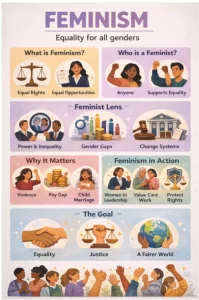
- Economic Participation and Workforce Growth:
- Rising Female Workforce Participation: India has witnessed a significant increase in women’s participation in the labour market.
- According to the National Statistical Office Periodic Labour Force Survey (PLFS), the Women’s Worker Population Ratio (WPR) increased from 22% in 2017–18 to 40.3% in 2023–24, reflecting expanding employment opportunities for women across sectors.
- Declining Female Unemployment: The female unemployment rate declined from 5.6% in 2017–18 to 3.2% in 2023–24, indicating improved labour absorption and growing participation of women in both formal and informal employment.
- Rural–Urban Employment Expansion: Women’s employment growth has been particularly strong in rural areas, where female employment increased by 96%, while urban areas recorded a 43% rise.
- It highlights the expanding economic role of women across diverse regional economies.
- Improving Employability and Skilled Workforce: The employability of female graduates increased from 42% in 2013 to 47.53% in 2024, while the employment rate among women with postgraduate education and above rose from 34.5% in 2017–18 to 40% in 2023–24, reflecting increasing integration of women in skilled and professional sectors.
- Growing Participation in the Formal Sector: Data from the Employees’ Provident Fund Organisation (EPFO) indicates that over 1.56 crore women have joined the formal workforce in the past seven years, while more than 16.69 crore women workers have registered on the e-Shram Portal, enabling access to social security and welfare benefits.
- Entrepreneurship and Women-Led Economic Growth:
- Shift towards Women-Led Development: India is witnessing a paradigm shift from “women’s development” to “women-led development,” with increasing policy focus on empowering women as drivers of economic growth, innovation, and enterprise.
- Expanding Policy Support Ecosystem: Currently, over 70 central schemes across 15 ministries and more than 400 state-level schemes provide financial assistance, training, and market access to support women entrepreneurs and strengthen their participation in economic activities.
- Rise in Female Self-Employment: Female self-employment has increased significantly, rising from 51.9% in 2017–18 to 67.4% in 2023–24, indicating a growing trend of women establishing their own enterprises and livelihood activities.
- Schemes such as Pradhan Mantri Mudra Yojana have played a critical role in supporting women entrepreneurs, with women receiving nearly 68% of total Mudra loans, amounting to over 35.38 crore loans worth ₹14.72 lakh crore.
- Support for Women Street Vendors: Under PM Street Vendor’s AtmaNirbhar Nidhi (PM SVANidhi), nearly 44% of beneficiaries are women, enabling them to rebuild and sustain livelihoods through affordable working capital loans.
- Women-Led MSMEs as Growth Drivers: Women-owned Micro, Small and Medium Enterprises (MSMEs) have emerged as key contributors to job creation and economic expansion.
- The share of women-owned proprietary establishments increased from 17.4% in 2010–11 to 26.2% in 2023–24, while the number of women-led MSMEs nearly doubled from 1 crore to 1.92 crore, generating over 89 lakh additional jobs for women between FY21 and FY23.
- Increasing Female Presence in Startups: Under Startup India, nearly 50% of DPIIT-recognised startups have at least one woman director, demonstrating the growing role of women in innovation-driven sectors.
- Grassroots Economic Empowerment: Programmes such as Deendayal Antyodaya Yojana – National Rural Livelihoods Mission and Namo Drone Didi Scheme are strengthening women’s livelihood opportunities and technological capabilities, while nearly 2 crore women have become “Lakhpati Didis”, achieving annual incomes above ₹1 lakh through self-help group initiatives.
- Health, Nutrition and Human Capital Development:
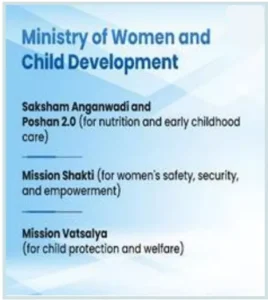 Nutrition and Healthcare as Foundational Pillars: Women’s empowerment is closely linked with improvements in nutrition, maternal health, and access to healthcare services, which contribute to stronger human capital and long-term economic development.
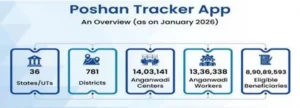
- Integrated Nutrition Programmes: The Saksham Anganwadi and Poshan 2.0 initiative provides integrated services such as supplementary nutrition, early childhood education, and health monitoring for children, adolescent girls, pregnant women, and lactating mothers.
- Combatting Malnutrition: The flagship Poshan Abhiyaan adopts a multi-sectoral and technology-driven approach to reduce malnutrition and improve health outcomes through convergence among various ministries.
- Maternal Health and Welfare Schemes: Programmes such as Pradhan Mantri Matru Vandana Yojana, Janani Suraksha Yojana, and Janani Shishu Suraksha Karyakram promote safe institutional deliveries, maternity benefits, and improved healthcare services for mothers and newborns.
 Improvement in Health Indicators: As a result of sustained interventions, India’s Maternal Mortality Ratio (MMR) declined from 130 per 100,000 live births in 2014–16 to 93 in 2019–21, while the under-five mortality rate reduced from 48 to 28 per 1,000 live births between 2015 and 2023, reflecting improved maternal and child health outcomes.
- Education, Skills and Knowledge Empowerment:
 Education as a Catalyst for Women’s Empowerment: Access to education enhances women’s decision-making capacity, economic independence, and social mobility, enabling them to actively participate in national development.
- Promotion of Girl Child Education: The Beti Bachao Beti Padhao initiative focuses on improving gender equality, promoting education of girls, and addressing the declining child sex ratio.
- As a result, the Sex Ratio at Birth improved from 918 in 2014–15 to 929 in 2024–25.
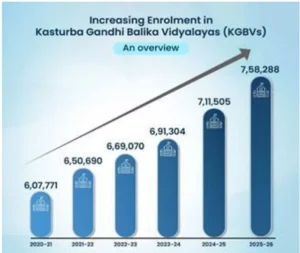
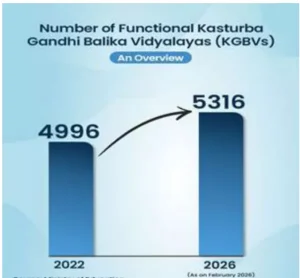 Inclusive Schooling Opportunities: Kasturba Gandhi Balika Vidyalaya provides residential schooling facilities for girls from socio-economically disadvantaged communities, particularly in educationally backward regions.
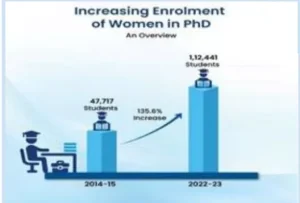
- Growth in Higher Education Participation: Female participation in higher education has expanded significantly, with PhD enrolment among women increasing by 135.6% between 2014–15 and 2022–23, while female postgraduate enrolment rose by 61.3%, reflecting growing academic advancement.
 Encouraging Women in STEM: Initiatives such as the Vigyan Jyoti Scheme encourage girls to pursue careers in Science, Technology, Engineering and Mathematics (STEM), while supernumerary seats in IITs and NITs have increased female participation in engineering from below 10% to over 20%.
- Skill Development for Emerging Sectors: The Nurturing Aspirations through Vocational Training for Young Adolescent Girls (NAVYA) programme equips adolescent girls with vocational training in emerging sectors such as artificial intelligence, cybersecurity, digital marketing, and green jobs, strengthening their employability.
 Safety, Security and Institutional Protection:
- Creating Safe Environments for Women: Women’s empowerment requires safe homes, workplaces, and communities, enabling women to pursue education and employment without fear of violence or discrimination.
- Integrated Framework for Women’s Safety: The Mission Shakti initiative serves as an umbrella programme integrating safety, protection, and empowerment schemes for women and girls.
- Support Services for Survivors of Violence: One Stop Centres (Sakhi Centres) provide medical aid, legal assistance, psychological counselling, and shelter services for women affected by violence.
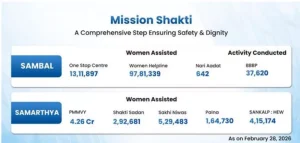 Emergency Helpline and Community Support: The Women Helpline (181) provides 24×7 emergency assistance and counselling, while Nari Adalats facilitate community-based dispute resolution mechanisms.
- Ensuring Safe Workplaces: The SHe-Box Portal enables women to file online complaints of workplace sexual harassment, strengthening the implementation of the Sexual Harassment of Women at Workplace (Prevention, Prohibition and Redressal) Act, 2013.
- Child Protection and Welfare: The Mission Vatsalya focuses on protecting vulnerable children and strengthening child welfare systems, thereby addressing intergenerational vulnerabilities affecting women and girls.
- Contribution to Inclusive National Development:
- Strengthening Gender-Responsive Budgeting: The Gender Budget has increased by 429% over the past decade, rising from ₹0.85 lakh crore in FY 2013–14 to ₹4.49 lakh crore in FY 2025–26, reflecting the government’s growing commitment to women-centric development.
- Life-Cycle Approach to Empowerment: India has adopted a life-cycle approach to women’s empowerment, addressing needs from early childhood nutrition and education to employment, entrepreneurship, and safety in adulthood.
- Women as Drivers of Sustainable Development: Greater participation of women across economic, educational, technological, and social sectors strengthens human capital formation, inclusive growth, and social justice, making women central to India’s long-term development trajectory.
- Achievements in Sports:
- Maiden Cricket World Cup (2025): The Indian Women’s team made history in November 2025 by lifting their first-ever ICC ODI World Cup title, defeating South Africa in the final on home soil to end a 47-year wait.
- Historic Olympic Double: At the Paris 2024 Olympics, Manu Bhaker became the first Indian woman to win an Olympic shooting medal and the first Indian in the post-independence era to win two medals at a single Games.
- Chess World Domination: In July 2025, 19-year-old Divya Deshmukh was crowned the FIDE Women’s World Cup Champion, defeating veteran Koneru Humpy in an all-Indian final to become India’s latest Grandmaster.
- Para-Sports Revolution: Sheetal Devi, the “armless archer,” won the 2025 World Para Archery title and made history as the first para-athlete selected to compete in India’s able-bodied national team for the Asia Cup.
- Boxing Gold Rush: India dominated the 2025 World Boxing Championships in Liverpool, with Jaismine Lamboria (57kg) and Minakshi Hooda (48kg) both being crowned World Champions.
- Hockey Revival: The Indian Women’s hockey team secured Gold at the 2024 Asian Champions Trophy and followed it with a Silver at the 2025 Asia Cup, maintaining their status as a top continental power.
- Professional Growth (WPL): By 2026, the Women’s Premier League (WPL) has evolved into the world’s second-most valuable women’s sports league, providing unprecedented financial independence and professional career paths for Indian athletes.
Why is there a Need for Women Empowerment?
- Eliminating Structural Gender Inequality: Despite constitutional guarantees of equality, women continue to face systemic barriers in education, employment, inheritance, and access to resources.
- Empowerment helps ensure equal rights, opportunities, and participation in public life, strengthening democratic and social justice principles.
- Improving Economic Participation and Growth: Women’s participation in the workforce remains significantly lower than men, limiting the country’s productive potential.
- Promoting women entrepreneurship, skill development, and employment can enhance household income and accelerate economic growth.
- For example, schemes such as Pradhan Mantri Mudra Yojana and Stand-Up India have enabled many women to establish small and medium enterprises.
- Ensuring Financial Independence and Livelihood Security: Economic empowerment allows women to exercise control over income, savings, and assets, reducing vulnerability and dependence.
- Initiatives like the Namo Drone Didi Scheme aim to train women from Self-Help Groups (SHGs) to operate drones for agricultural services, creating new income opportunities in rural areas.
- Strengthening Representation in Governance: Women’s participation in political decision-making improves policy inclusiveness and grassroots governance.
- The passage of the Nari Shakti Vandan Adhiniyam seeks to ensure greater representation of women in the Lok Sabha and State Legislative Assemblies, marking a significant step toward gender-balanced political institutions.
 Harnessing Women’s Potential in Science and Innovation: Women’s empowerment helps utilise the full intellectual and creative potential of society, especially in science, technology, and research sectors.
- Women scientists played important roles in missions of the Indian Space Research Organisation, including Chandrayaan‑3 and Aditya‑L1, reflecting the increasing presence of women in high-technology fields.
- Promoting Social Development and Human Welfare: Empowered women contribute significantly to better health, nutrition, and education outcomes for families and communities.
- Greater autonomy enables women to make informed decisions regarding child health, education, and household welfare, thereby strengthening human development indicators.
- Achieving Global Gender Equality Commitments: Women empowerment is central to achieving Sustainable Development Goal 5, which aims to eliminate discrimination, ensure equal opportunities, and promote leadership roles for women worldwide.
- Advancing gender equality is therefore essential not only for social justice but also for sustainable and inclusive development.
Impunity Against Women and Access to Justice
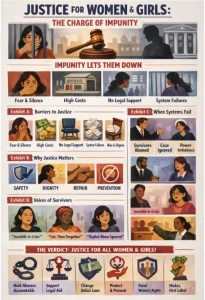
- Meaning of Impunity: Impunity refers to situations where crimes against women occur without accountability or punishment, thereby weakening the rule of law and deterrence mechanisms.
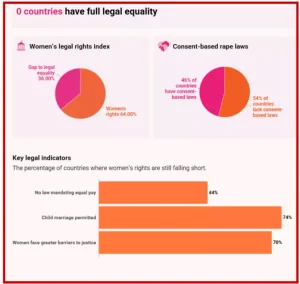
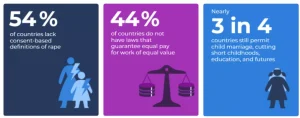
- Persistent Global Legal Inequality: Despite progress, no country has achieved full legal equality for women, and legal gaps in areas such as inheritance, employment, property, and family rights continue to sustain structural discrimination.
- Barriers to Accessing Justice: Women face multiple barriers in seeking justice, including fear of stigma or retaliation, financial costs, lack of legal aid, institutional bias, and complex judicial procedures.
- Justice Beyond Criminal Courts: For many women, injustice occurs largely within civil and administrative systems—such as family law, employment disputes, housing rights, and social welfare access—which determine their economic security and autonomy.
- Gender Bias in Justice Systems: Justice institutions often reflect existing social inequalities, where victim-blaming, scrutiny of survivors’ character, and limited representation of women in decision-making roles hinder fair outcomes.
- Impact of Conflict and Crisis: In conflict or fragile settings, weakened institutions lead to greater vulnerability to sexual and gender-based violence, often with little or no accountability for perpetrators.
- Elements of Gender-Responsive Justice Systems: Effective justice systems require clear protective laws, accessible legal aid, coordination among institutions (police, courts, and support services), gender-disaggregated data, and sustained funding for survivor-centred justice mechanisms.
|
Factors Affecting Women’s Empowerment in India
- Socio-Cultural Norms and Patriarchal Structures: Deep-rooted patriarchal values, gender stereotypes, and son preference restrict women’s mobility, education, and decision-making power.
- Practices such as early marriage, dowry, and gender discrimination continue to limit women’s social and economic independence.
- Educational Barriers: Although female enrolment has improved, dropout rates among girls remain high, particularly in rural and economically weaker regions.
 Poverty, safety concerns, lack of sanitation facilities, and domestic responsibilities hinder girls’ educational attainment, reducing opportunities for long-term empowerment.
- Economic Inequality and Low Labour Force Participation: Women face limited employment opportunities, wage disparities, and a heavy burden of unpaid care work.
- According to the Periodic Labour Force Survey 2022-23, female labour force participation is about 37% compared to over 78% for men.
- Lack of childcare support, safe workplaces, and flexible work arrangements further discourages workforce participation.
- Limited Access to Resources and Financial Assets: Many women lack ownership of land, property, and financial assets, reducing economic independence.
- Restricted access to credit, markets, technology, and entrepreneurial networks limits women’s ability to start and expand businesses.
- Gender-Based Violence and Safety Concerns: Domestic violence, sexual harassment, trafficking, and public safety concerns restrict women’s freedom and participation in public life.
- Laws such as the Protection of Women from Domestic Violence Act, 2005 and the Criminal Law (Amendment) Act, 2013 provide legal safeguards, but effective implementation remains a challenge.
- Hidden Market Discrimination and Economic Burden: Women often face gender-based price discrimination in consumer markets, commonly known as the pink tax.
- Everyday products marketed to women—such as personal care items and clothing—are frequently priced higher than similar products for men, increasing the overall cost of living.
- Behavioural factors like the Anchoring Effect allow such pricing differences to persist as consumers gradually accept them.
- Health, Menstrual Hygiene, and Period Poverty: Limited access to affordable menstrual hygiene products and healthcare services affects women’s health, dignity, and participation in education and work.
- According to the National Family Health Survey (NFHS-5), only around 64% of young women use hygienic menstrual protection methods, indicating persistent barriers.
- Digital Divide, Political Underrepresentation, and Intersectional Inequalities: Women face lower access to digital technology, internet connectivity, and digital literacy, limiting participation in the digital economy and e-governance.
- They remain underrepresented in politics, corporate leadership, and decision-making roles, though reforms like the Nari Shakti Vandan Adhiniyam aim to address this imbalance.
- Women from Scheduled Castes, Scheduled Tribes, minority communities, and poorer households face multiple overlapping disadvantages.
AI Deepfake Abuse and Gender Justice
- Meaning of Deepfake Abuse: Deepfakes are AI-generated or manipulated images, audio, or videos that falsely depict a person doing or saying something they never did, often used to create non-consensual sexual content targeting women.
- Gendered Nature of Deepfake Content: Studies show 98% of deepfake videos online are pornographic and about 99% of those depict women, highlighting the gendered misuse of AI technology.
 Rapid Growth of the Threat: The prevalence of deepfake videos increased by nearly 550% between 2019 and 2023, aided by free and easily accessible AI tools that require minimal technical expertise. Rapid Growth of the Threat: The prevalence of deepfake videos increased by nearly 550% between 2019 and 2023, aided by free and easily accessible AI tools that require minimal technical expertise.- Legal and Regulatory Gaps: Most countries lack specific laws addressing AI-generated intimate imagery, and existing “revenge porn” laws often fail to cover deepfakes, creating legal grey areas for prosecution.
- Enforcement Challenges: Investigating deepfake abuse requires digital forensics, cross-border cooperation, and platform data access, but many justice systems remain under-resourced and technologically unprepared.
- Barriers Faced by Survivors: Victims often avoid reporting due to stigma, victim-blaming, fear of retaliation, and re-traumatization during legal processes, resulting in widespread underreporting and impunity.
- Need for Comprehensive Response: Addressing deepfake abuse requires clear legal frameworks, platform accountability, trained law enforcement, survivor-centred legal aid, and digital literacy programs focused on consent and online safety.
|
| PWOnlyIAS Extra Edge:
Women as Enablers and Facilitators of Holistic Development:
- Economic Growth Drivers: Women-led enterprises generate jobs, diversify economic base, and strengthen micro, small and medium enterprises and start-ups.
- Social Transformation Agents: Women reinvest in families, improving health, education, and nutrition, breaking poverty cycles.
- Inclusive Governance: Women in Panchayati Raj Institutions and local bodies ensure transparency, responsiveness, and last-mile delivery.
- Grassroots Empowerment: Self-Help Groups foster financial inclusion, micro-entrepreneurship, and rural livelihood transformation.
- Equity and Justice: Women leaders promote gender-sensitive policymaking and amplify the voices of marginalised communities.
- Sustainability Anchors: Women lead in climate resilience, sustainable farming, and renewable energy adoption, aligning with Sustainable Development Goals 5 (Gender Equality) and 13 (Climate Action).
- Cultural Transmission: As custodians of traditions and values, women foster cohesion, compassion, and cooperation for balanced growth.
|
India’s Initiatives & Actions for Women Empowerment
- Constitutional and Legal Safeguards: The Constitution of India guarantees equality before law (Article 14), prohibition of discrimination (Article 15), and equality of opportunity (Article 16).
- Directive Principles such as Article 39(a) and 39(d) emphasise equal livelihood opportunities and equal pay for equal work.
- Several legislations strengthen women’s rights and protection, including:
- Protection of Women from Domestic Violence Act, 2005
- Sexual Harassment of Women at Workplace (Prevention, Prohibition and Redressal) Act, 2013
- Pre-Conception and Pre-Natal Diagnostic Techniques (PCPNDT) Act, 1994 to curb sex-selective practices.
- Political Empowerment and Representation: Women’s participation in governance has been strengthened through reservation in local self-government institutions under the 73rd Constitutional Amendment Act, 1992 and the 74th Constitutional Amendment Act, 1992, which reserve at least one-third of seats for women.
- Recently, the Nari Shakti Vandan Adhiniyam aims to provide 33% reservation for women in the Lok Sabha and State Legislative Assemblies.
- Education and Social Development Initiatives: The Beti Bachao Beti Padhao addresses declining child sex ratio and promotes girls’ education and survival.
- The Sukanya Samriddhi Yojana encourages long-term savings for the education and future security of girl children.
 Economic Empowerment and Financial Inclusion: Programmes such as Pradhan Mantri Mudra Yojana and Stand-Up India Scheme provide credit support to women entrepreneurs.
- The Deendayal Antyodaya Yojana – National Rural Livelihoods Mission promotes Self-Help Groups (SHGs), enabling millions of rural women to engage in income-generating activities and collective enterprises.
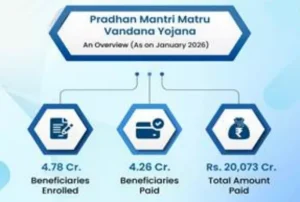
- Health, Nutrition, and Welfare Measures: Schemes such as Pradhan Mantri Matru Vandana Yojana provide financial assistance to pregnant and lactating women for improved maternal health.
- The POSHAN Abhiyaan aims to improve nutrition outcomes among women and children.
 Skill Development and Technological Empowerment: Initiatives such as the Namo Drone Didi Scheme train women from Self-Help Groups to operate agricultural drones, integrating them into modern agricultural services and technology-driven livelihoods.
 Skill training programmes under Skill India Mission also promote women’s participation in diverse sectors.
- Institutional Support and Awareness Mechanisms: Institutions such as the National Commission for Women work to protect women’s rights and address grievances.
- Government campaigns, civil society initiatives, and awareness programmes help promote legal literacy, gender equality, and social empowerment.
Global Initiatives for Women Empowerment
- United Nations Framework on Gender Equality: The United Nations has played a central role in promoting gender equality and women’s empowerment through international conventions, policies, and development programmes.
- It emphasises women’s rights as fundamental human rights and encourages member states to adopt gender-sensitive policies.
- Convention on the Elimination of All Forms of Discrimination Against Women (CEDAW): Adopted in 1979 by the United Nations General Assembly, Convention on the Elimination of All Forms of Discrimination Against Women is often described as the international bill of rights for women.
- It obligates countries to eliminate discrimination against women in political, social, economic, and cultural spheres.
- Beijing Declaration and Platform for Action (1995): Adopted during the Fourth World Conference on Women, the Beijing Declaration and Platform for Action provides a comprehensive roadmap for advancing women’s rights, participation, and empowerment.
- It identifies 12 critical areas of concern, including education, health, violence against women, and economic participation.
- Sustainable Development Goals (SDGs): The United Nations adopted the Sustainable Development Goals in 2015 to guide global development efforts.
- Sustainable Development Goal 5 specifically focuses on achieving gender equality and empowering all women and girls, including eliminating violence, ensuring equal participation in leadership, and improving access to economic resources.
- UN Women and Global Gender Programmes: The UN Women works globally to promote women’s leadership, economic empowerment, and protection from gender-based violence.
- It supports governments in implementing gender-responsive policies and development programmes.
- International Women’s Day as a Global Platform: International Women’s Day is celebrated worldwide to recognise women’s achievements and advocate gender equality.
- It provides a global platform for raising awareness about women’s rights and mobilising international action.
|
Way Forward for Women’s Empowerment in India

- Strengthening Education and Skill Development: Ensure universal access to quality education for girls, particularly in rural and marginalized communities, by addressing dropout rates after secondary schooling.
- Expand STEM participation and digital literacy among women, aligning with initiatives like the Atal Innovation Mission and the Skill India Mission.
- Promote industry-linked skilling programs to improve women’s participation in emerging sectors such as Artificial Intelligence, renewable energy, and digital services
- Enhancing Women’s Economic Participation: Improve female labour force participation through flexible work arrangements, childcare support, and safe workplace environments.
- Strengthen women-led entrepreneurship through credit access, financial literacy, and market linkages, building on schemes such as Stand Up India Scheme and Pradhan Mantri Mudra Yojana.
- Encourage women’s participation in high-growth sectors such as green economy, logistics, and digital platforms.
- Ensuring Political and Leadership Representation: Effective implementation of the Constitution (One Hundred and Sixth Amendment) Act, 2023 to enhance women’s representation in Parliament and State Legislatures.
- Strengthen capacity-building programs for women leaders at the grassroots level, especially within Panchayati Raj Institutions.
- Promote women’s leadership in corporate governance and public administration.
- Strengthening Legal Protection and Safety Mechanisms: Ensure effective enforcement of laws such as the Protection of Women from Domestic Violence Act, 2005 and the Sexual Harassment of Women at Workplace (Prevention, Prohibition and Redressal) Act, 2013.
- Expand fast-track courts, forensic infrastructure, and victim support systems to ensure timely justice.
- Strengthen cyber-safety frameworks to tackle emerging threats such as online harassment and digital exploitation.
- Addressing Social Norms and Gender Stereotypes: Promote gender-sensitive education and media representation to challenge entrenched patriarchal attitudes.
- Expand social campaigns such as Beti Bachao Beti Padhao to address son preference, child marriage, and gender bias.
- Encourage community-based interventions involving civil society and local institutions.
- Improving Health and Nutritional Outcomes: Strengthen maternal health services, reproductive healthcare, and nutrition support under programs like Pradhan Mantri Matru Vandana Yojana and POSHAN Abhiyaan.
- Address issues such as anaemia among women, adolescent health, and menstrual hygiene management.
- Integrate mental health support and gender-responsive healthcare infrastructure.
- Leveraging Technology and Digital Inclusion: Expand digital access for women, particularly in rural areas, through initiatives like the Digital India Programme.
- Promote women’s participation in digital entrepreneurship, e-commerce, and fintech ecosystems.
- Address the gender digital divide, which continues to limit women’s access to information and economic opportunities.
- Strengthening Institutional and Global Commitments: Align national policies with global frameworks such as UN Women initiatives and Convention on the Elimination of All Forms of Discrimination against Women.
- Enhance gender budgeting and data-driven policymaking to monitor progress.
- Promote international cooperation and knowledge sharing to accelerate gender equality.
Conclusion
Women’s empowerment is not merely a social objective but a critical driver of inclusive growth, democratic governance, and sustainable development. Strengthening education, economic participation, legal protection, and digital safety for women will be essential for India to realise its demographic dividend and achieve the vision of women-led development.


 6 Mar 2026








.png)






 Current Affairs




 GS Foundation
 Optional Course
 Combo Courses
 Degree Program