Books

IFOS vs IFS explains the difference between Indian Forest Service and Indian Foreign Service. IFOS focuses on forest management, wildlife protection, and environmental laws within India. IFS focuses on diplomacy, foreign relations, and international postings. Recruitment, training, career paths, postings, and IFOS vs IFS salary structure differ based on roles and service nature.
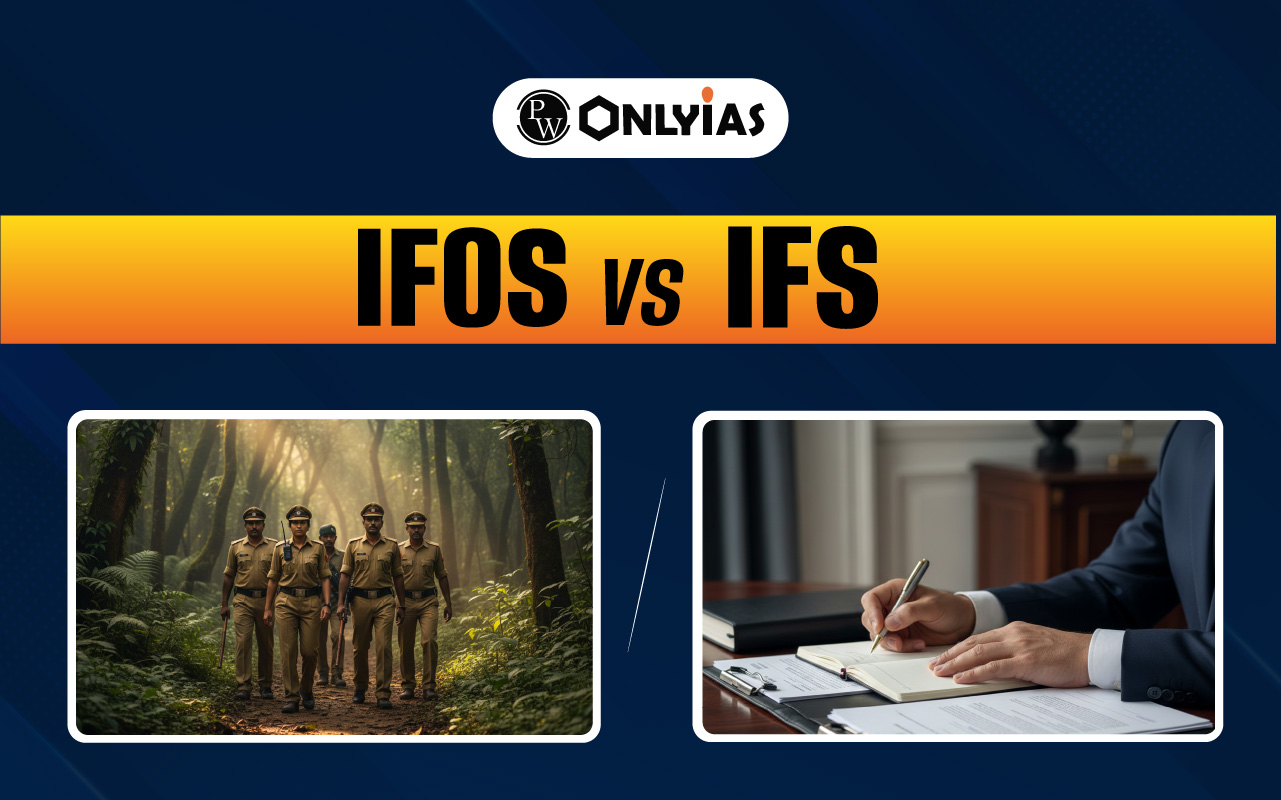
The debate around IFOS vs IFS has remained an important topic within the framework of the Indian civil services. Both services hold the same acronym “IFS” in common usage, which has often led to confusion. Over time, this confusion has raised questions about identity, roles, and historical usage. Understanding IFOS vs IFS clearly helps aspirants and readers differentiate between two services that function in very different domains of governance.
The discussion of IFOS vs IFS is not limited to names alone. It also includes their evolution, responsibilities, training patterns, and service environments. Many students preparing for civil services exams search for clarity on IFOS and IFS to decide their preference order and career path.
The Indian Forest Service, commonly known as IFoS, is one of the three All India Services. In discussions of IFOS and IFS, IFOS represents the service responsible for forest administration and environmental management.
The roots of forest administration in India go back to the nineteenth century. Scientific forest management was introduced to ensure planned use of forest resources. Over time, the service structure evolved to handle conservation, biodiversity protection, and sustainable use of natural resources.
Officers selected for IFOS work at both the state and central levels. Their duties include managing forest land, protecting wildlife, and implementing environmental laws. In the IFOS and IFS comparison, IFOS is closely linked with ecological balance and rural livelihoods.
Training for IFOS officers focuses on forestry, ecology, wildlife management, and related administrative subjects. Officers undergo professional training to understand forest laws, environmental policies, and field-based challenges. This practical exposure forms a core part of the IFOS vs IFS distinction.
In the broader context of governance, IFOS officers contribute to long-term environmental planning. Their role supports sustainable development goals and conservation initiatives. This makes IFOS a service with strong field engagement in the IFOS and IFS discussion.
The Indian Foreign Service is another prestigious civil service and forms a central part of discussions around IFOS and IFS. This service manages India’s external relations and diplomatic engagements.
The Indian Foreign Service handles foreign policy implementation. Officers are posted in Indian missions abroad and in offices within India. Their work includes diplomacy, trade relations, cultural exchanges, and international negotiations. In the India Foreign Service vs Indian Forest Service comparison, IFS operates primarily at the international level.
IFS officers represent India in global forums and maintain bilateral and multilateral relationships. They also assist Indian citizens abroad. This international exposure clearly separates IFS from IFOS in the IFOS vs IFS framework.
Training for IFS officers focuses on international relations, diplomacy, foreign languages, and global political systems. Officers are prepared to work in diverse cultural and political environments. This specialized training further strengthens the distinction between IFOS and IFS.
Within India, IFS officers contribute to policy formulation related to external affairs. Their role supports national interests beyond domestic boundaries. This makes the ifos vs ifs comparison significant for aspirants with different career interests.
Indian Forest Services focus on natural resource management. Their work is largely domestic and field-oriented. Indian Foreign Services focus on diplomacy and foreign relations. Their work extends beyond national borders. This fundamental difference defines India Foreign Service vs Indian Forest Service clearly.
Another key point in What is the difference between Indian forest services and Indian foreign services? relates to training and career environment. IFOS officers spend significant time in forests and rural areas. IFS officers spend much of their career in international postings and central offices.
Check Out UPSC CSE Books
Visit PW Store
The nature of public interaction also differs. IFOS officers interact with local communities and state authorities. IFS officers interact with foreign governments and international organizations. These differences make the IFOS and IFS comparison practical and career-defining.
| IFOS vs IFS | ||
| Basis of Comparison | Indian Forest Service (IFoS) | Indian Foreign Service (IFS) |
| Primary Role | Management of forests, wildlife, and environmental conservation | Handling diplomacy, foreign relations, and international representation |
| Role and Responsibilities | Protecting forests and wildlife, promoting eco-tourism, and preventing illegal activities like poaching and timber smuggling | Working in embassies and consulates, negotiating treaties, promoting trade, and assisting Indian citizens abroad |
| Controlling Ministry | Ministry of Environment, Forest and Climate Change | Ministry of External Affairs |
| Recruitment Process | UPSC CSE Prelims + Separate IFoS Mains + Physical Test + Interview | UPSC CSE Prelims + Mains + Interview |
| Nature of Postings | Mostly domestic and field-based postings | Largely international postings, along with roles in India |
| Career Starting Position | Assistant Conservator of Forests | Third Secretary |
| Career Progression | Deputy Conservator, Conservator, and Principal Chief Conservator of Forests | First Secretary, Counselor, Minister, and Ambassador or High Commissioner |
| Career Focus | Environmental protection, sustainable forest management, and ecological balance | Foreign policy, international relations, and global cooperation |
| ifos vs ifs salary | Competitive and aligned with other Group ‘A’ services, with benefits related to field responsibilities | Competitive structure with additional allowances during overseas postings |
Ready to boost your UPSC 2026 preparation? Join PW’s UPSC online courses today!
Explore UPSC Test Series

No. IFOS and IFS are different services. IFOS deals with forests and the environment. IFS deals with foreign affairs and diplomacy. This difference explains IFOS vs IFS clearly.
Indian Forest Services work inside India. Their focus is forests and wildlife. Indian Foreign Services work at the international level. Their focus is diplomacy and foreign relations. This answers What is the difference between Indian forest services and Indian foreign services?
IFOS has more fieldwork. Officers work in the forest and rural areas. IFS has less fieldwork. Officers work in embassies and offices. This is a key point in India Foreign Service vs Indian Forest Service.
Yes. The process is different. IFOS has a separate main examination. It also includes physical tests. IFS follows the regular UPSC mains and interview. This is important in the ifos vs ifs comparison.
The ifos vs ifs salary follows government pay rules. Both are Group ‘A’ services. Allowances differ due to postings. Field and foreign postings affect benefits.



Explore SRIJAN Prelims Crash Course


Connect with our experts to get free counselling & start preparing
Books
Udaan (Prelims Wallah)
Prahaar (Mains Wallah)
Q&A Bank (Prelims & Mains)
Budget & Economic Survey
NCERT Wallah
Marks Booster
हिंदी माध्यम विशेष शृंखला
 Current Affairs
Monthly Current Wallah
Subject Wise Current Affairs
Editorial Analysis
Editorial PDFs
News of The Day
Download Our App



Download Our App
<div class="new-fform">
</div>

 GS Foundation
 Optional Course
 Combo Courses
 Degree Program