Books

International Universal Health Coverage Day 2025 highlights the global need for affordable healthcare. The theme focuses on unaffordable health costs. Learn what is Universal Health Coverage, progress of Universal Health Coverage in India, and major schemes like PM-JAY, AAMs, ABDM, and NHM that support equitable access.
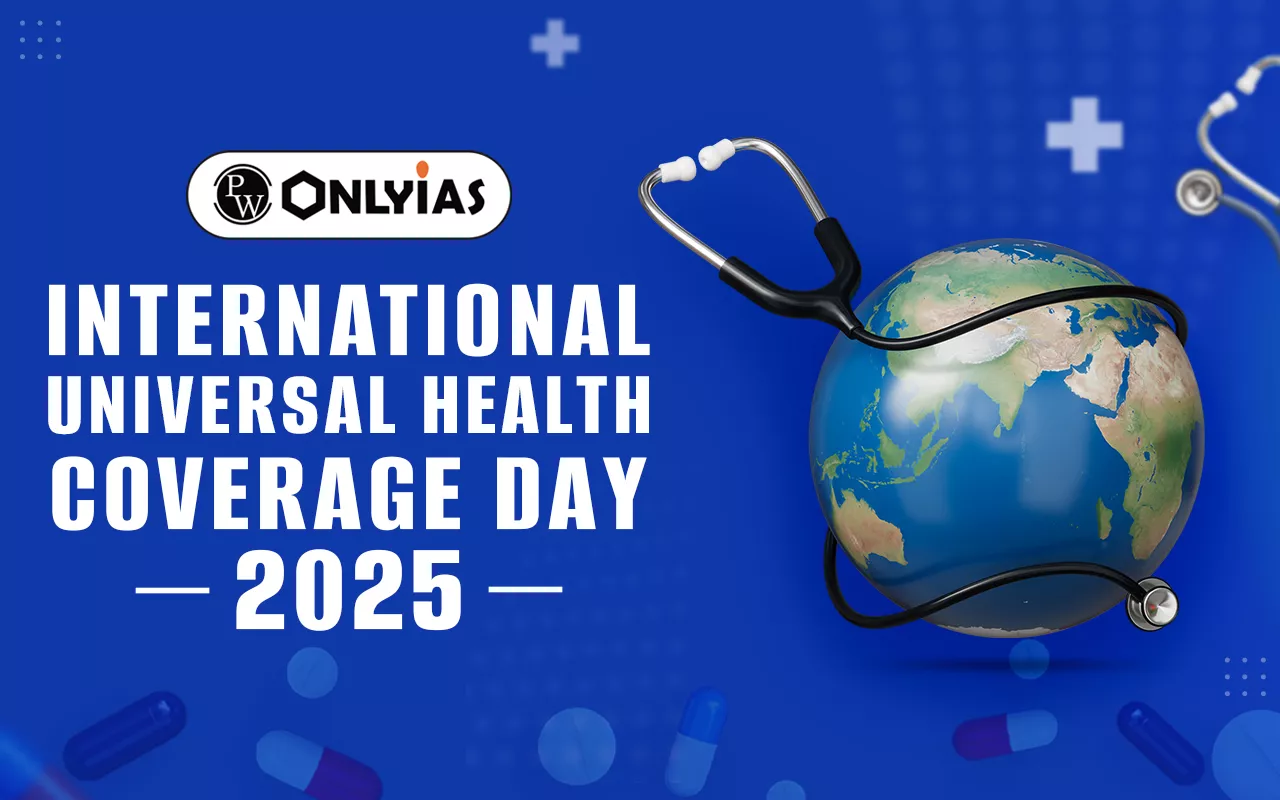
International Universal Health Coverage Day 2025 is observed every year on 12 December to highlight the need for accessible and affordable healthcare for every individual. The day marks the United Nations’ resolution from 2012, which called for global action toward Universal Health Coverage (UHC).
In 2025, the focus is more relevant than ever as millions of people continue to struggle with unaffordable treatments and limited access to essential health services. International Universal Health Coverage Day 2025 reminds governments and stakeholders to invest in strong health systems that protect people from financial hardship.
Universal Health Coverage means everyone should receive quality health services without facing financial risk. It includes preventive care, diagnosis, treatment, rehabilitation, and palliative care. UHC is linked to Sustainable Development Goal 3.8, which ensures that no one is left behind in healthcare access.
The three key dimensions of UHC are:
International Universal Health Coverage Day 2025 uses these principles to increase awareness on equity and affordability in healthcare.
The theme for International Universal Health Coverage Day 2025 is:
This theme highlights the human impact of high medical expenses faced by families worldwide. More than half of the global population lacks basic healthcare, and one in four people suffer financial hardship while seeking treatment. The International Universal Health Coverage Day 2025 theme urges world leaders to strengthen health systems and remove out-of-pocket expenses for vulnerable groups.
International Universal Health Coverage Day 2025 is a reminder that health is a right, not a privilege. It encourages:
The COVID-19 pandemic has shown that UHC is necessary for crisis response and future health security. Countries with stronger UHC systems handled emergencies more effectively, proving the importance of equitable healthcare.
India has made progress in expanding healthcare access, yet challenges remain. Universal Health Coverage in India is shaped by multiple government missions, digital initiatives, and community health efforts.
Key achievements include:
Universal Health Coverage in India continues to grow through focused programs and investments.
Mentioned here are some of the major healthcare initiatives in India, supporting UHC:
This mission was launched to strengthen public health infrastructure. It expands critical care units, district health centers, and labs. It aims to prepare India for future health emergencies and support the Universal Health Coverage programme in India.
AAMs serve as the foundation of primary healthcare. Their rapid expansion from 2018 to 2024 has improved preventive and basic care at the community level. AAMs support digital health, telemedicine, and essential diagnostics.
NHM focuses on rural and urban health, maternal and child care, communicable diseases, and basic services. It empowers states to strengthen primary healthcare delivery.
ABDM modernizes healthcare through:
The Scan & Share system has reduced waiting time and improved patient experience in major hospitals.
PM-JAY is the world’s largest health assurance scheme. It supports around 12 crore families by providing ₹5 lakh annual coverage per family. It covers:
PM-JAY plays a strong role in improving Universal Health Coverage in India by reducing out-of-pocket medical expenses.
ASHAs are community health workers who connect families with essential health services. Their role includes:
The number of ASHAs has steadily increased, strengthening community-level care.
Check Out UPSC CSE Books
Visit PW Store
India faces multiple structural and operational barriers that limit the effectiveness of healthcare delivery. The following table highlights the major challenges affecting Universal Health Coverage.
| Gaps and Barriers in Achieving UHC in India | |
| Challenge | Description |
| Infrastructure Shortages | Rural health centers lack equipment, medical staff, and adequate bed capacity. |
| Low Health Workforce Density | Shortage of doctors, nurses, and specialists, especially in remote areas. |
| High Out-of-Pocket Expenses | Medicines, diagnostics, and OPD care remain costly despite schemes like PM-JAY. |
| Limited Investment | Public health spending is only 2.1% of GDP, below the recommended 2.5%. |
| Growing Non-Communicable Diseases | Rising cases of diabetes, heart disease, and cancer increase healthcare burden. |
| Mental Health Gaps | Lack of mental health professionals and low awareness cause delayed treatment. |
| Data Privacy Concerns | Digital health expansion demands stronger protection of personal health data. |
A stronger and more inclusive healthcare system requires strategic reforms. The following table outlines key steps needed to achieve Universal Health Coverage in India.
| Way Forward for Universal Health Coverage in India | |
| Action Area | Recommended Measures |
| Strengthen Primary Healthcare | Focus on preventive care, screenings, and strong outpatient services. |
| Expand Digital Health Access | Improve rural telemedicine through better connectivity and secure platforms. |
| Increase Government Health Spending | Allocate higher funds to improve essential healthcare services. |
| Support Community Health Workers | Provide training, digital tools, and stable income to ASHA workers. |
| Remove Financial Barriers | Expand insurance to include OPD, diagnostics, and chronic care. |
| Improve Mental Health Services | Expand Tele-MANAS, hire more professionals, and establish district mental health centers. |
| Build Resilient Infrastructure | Upgrade hospitals, ensure power backup, add emergency units, and modernize equipment. |
International Universal Health Coverage Day 2025 is an important reminder that health must be accessible to every person without financial stress. India has made progress through major missions such as PM-JAY, ABDM, NHM, AAMs, and the PM-Ayushman Bharat Health Infrastructure Mission. However, more efforts are needed to close gaps in infrastructure, workforce, affordability, and digital protection.
Ready to boost your UPSC 2026 preparation? Join PW’s UPSC online courses today!
Explore UPSC Test Series

International Universal Health Coverage Day 2025 is observed on 12 December to promote the global goal of ensuring that everyone receives essential health services without financial hardship. It raises awareness about strong, inclusive, and affordable healthcare systems.
The theme for 2025 is “Unaffordable health costs? We’re sick of it!”. It focuses on the rising burden of medical expenses and urges governments to reduce out-of-pocket costs and strengthen health systems for all.
Universal Health Coverage means that all people can access quality healthcare services—prevention, treatment, rehabilitation, and palliative care—without facing financial stress. It is part of SDG 3.8 and ensures equity in healthcare.
India supports UHC through key programs such as Pradhan Mantri Jan Arogya Yojana (PM-JAY), Ayushman Aarogya Mandirs (AAMs), National Health Mission (NHM), Ayushman Bharat Digital Mission (ABDM), and the PM-Ayushman Bharat Health Infrastructure Mission. These initiatives strengthen hospital care, digital health, primary care, and financial protection.
Major challenges include infrastructure shortages, low health workforce density, high out-of-pocket expenses, limited public health investment, rising non-communicable diseases, mental health gaps, and data privacy concerns. Continued investment and reforms are needed to achieve full UHC.



Explore SRIJAN Prelims Crash Course


Connect with our experts to get free counselling & start preparing
Books
Udaan (Prelims Wallah)
Prahaar (Mains Wallah)
Q&A Bank (Prelims & Mains)
Budget & Economic Survey
NCERT Wallah
Marks Booster
हिंदी माध्यम विशेष शृंखला
 Current Affairs
Monthly Current Wallah
Subject Wise Current Affairs
Editorial Analysis
Editorial PDFs
News of The Day
Download Our App



Download Our App
<div class="new-fform">
</div>

 GS Foundation
 Optional Course
 Combo Courses
 Degree Program