Core Demand of the Question
- Digital Barriers and ICT Gaps
- Impact on Socio-Economic Development
- Role of Other Factors
|
Answer
Introduction
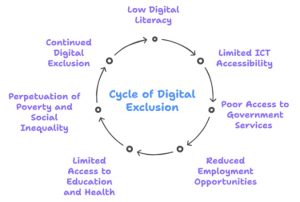
Despite initiatives like Digital India Programme, only about 37% of rural households have internet access (NSSO), reflecting persistent digital illiteracy and ICT gaps that constrain effective service delivery and inclusive socio-economic transformation.
Best Online Coaching for UPSC
Digital Barriers and ICT Gaps
- Low Literacy: Limited digital skills restrict effective use of online platforms and services.
Eg: Under Pradhan Mantri Gramin Digital Saksharta Abhiyan, >6 crore beneficiaries required basic training to access e-services.
- Poor Connectivity: Inadequate internet infrastructure limits digital access in rural areas.
Eg: BharatNet Project still faces delays in last-mile connectivity.
- Device Gap: Lack of affordable smartphones/computers restricts participation.
Eg: NSO (75th Round) shows only ~24% rural households have internet access.
- Gender Divide: Women face higher digital exclusion due to socio-cultural barriers.
Eg: NFHS-5 reports only ~33% rural women use the internet,
- Language Barrier: Limited local-language content reduces usability of digital platforms.
Eg: Government reports highlight the need for vernacular interfaces for e-governance uptake.
Impact on Socio-Economic Development
- Education Loss: Digital gaps hinder access to online learning resources.
Eg: PM eVidya saw uneven access during COVID-19 due to device/internet gaps.
- Health Access: Limits utilisation of telemedicine and digital health services.
Eg: eSanjeevani uptake is lower in digitally excluded regions.
- Financial Exclusion: Digital illiteracy restricts use of online banking and payments.
Eg: Pradhan Mantri Jan Dhan Yojana accounts remain underutilised without digital skills.
- Livelihood Constraints: Reduces access to digital markets and job platforms.
Eg: e-NAM adoption limited among digitally unskilled farmers.
- Service Access: Limits use of e-governance platforms and welfare schemes.
Eg: Common Service Centres bridge gaps but dependence remains due to low literacy.
Role of Other Factors
- Income Levels: Low income limits affordability of devices and internet services.
Eg: NSSO consumption data shows digital access linked with income levels.
- Awareness Gap: Lack of awareness about schemes reduces uptake.
- Governance Issues: Implementation delays affect digital infrastructure rollout.
Eg: BharatNet phase delays reported in CAG findings.
- Social Barriers: Caste, gender, and regional disparities affect access as per the NFHS data.
- Institutional Capacity: Limited local capacity hampers digital service delivery.
Eg: CSC performance varies across states due to administrative capacity differences.
Click to Know UPSC Coaching Centres in India
In an increasingly digital state, exclusion from technology risks becoming exclusion from rights. Bridging digital gaps through last-mile connectivity, digital literacy, and accountable governance is essential to make constitutional guarantees of equality and opportunity truly meaningful.
 July 4, 2026