Udaan, Prahaar, Q&A Bank etc.
CA Magazines & Editorials
Sagarmala Programme is India’s flagship port led development programme launched in 2015 by the Ministry of Ports, Shipping and Waterways. It focuses on port modernization, connectivity, coastal community development, inland waterways, and industrial clusters to reduce logistics costs and boost trade. These sagarmala components aim at sagarmala logistics improvement and long-term sagarmala coastal development.
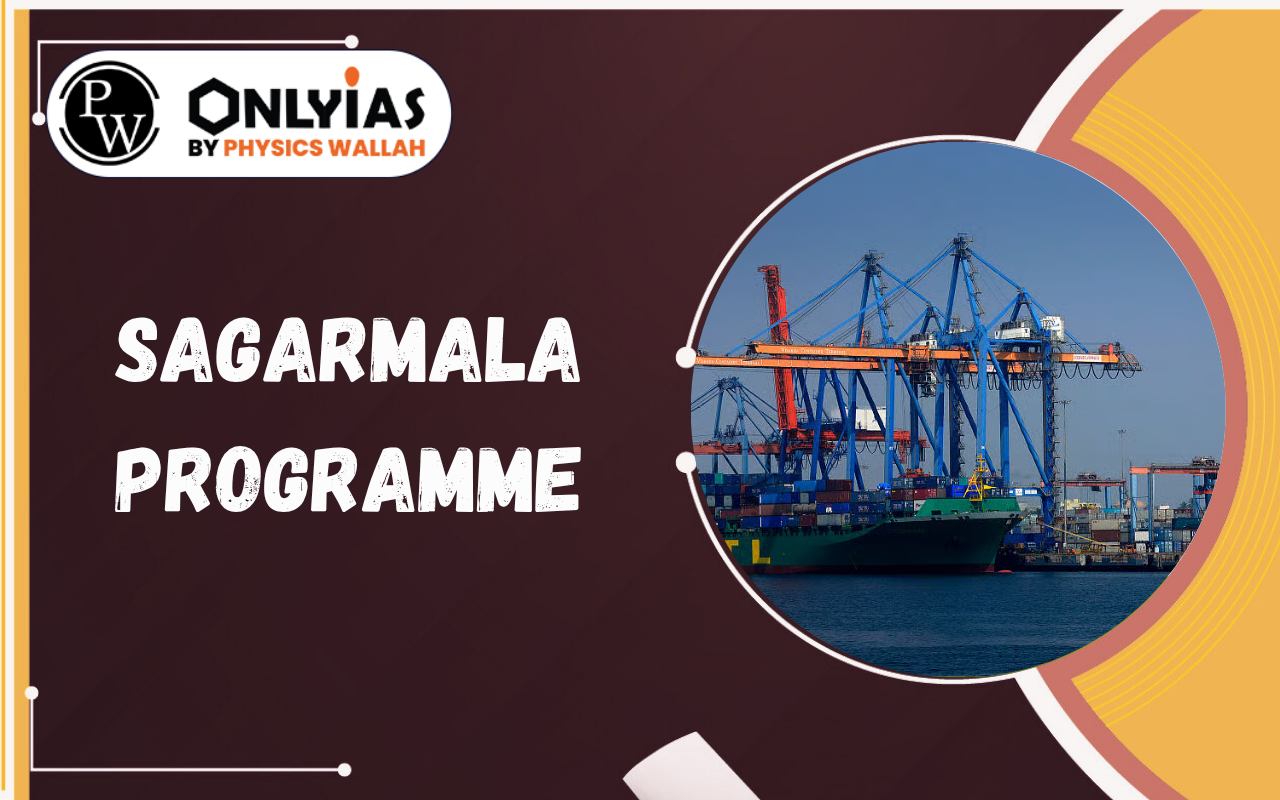
Sagarmala Programme is a major initiative for port led development India. It leverages India’s 11,099 km coastline and extensive waterways to improve trade efficiency and reduce transport costs. These Sagarmala Programme details are highly important for UPSC, State PSC, SSC, Railways, and other competitive exams.
Launched in March 2015, the programme integrates infrastructure, connectivity, industrialization, and community welfare through well-defined sagarmala components India.
Sagarmala Programme is a flagship initiative of the Ministry of Ports, Shipping and Waterways. It promotes port-led development across India. This programme uses the nation’s 11,099 km coastline and vast navigable waterways. It aims to enhance logistics efficiency and reduce transportation costs. This boosts India’s trade and economic growth.
The Sagarmala Programme launched in March 2015. Its vision is to reduce logistics costs for domestic and EXIM cargo. This occurs through optimal and efficient infrastructure development. Such efforts enhance economic efficiency. They also improve the global competitiveness of Indian exports.
The programme has strategic objectives for India’s maritime sector.
The programme focuses on five key areas. These Sagarmala pillars guide all sagarmala components.
An institutional framework ensures coordination. It brings together central and state governments. This fosters “cooperative federalism” to meet programme goals.
| Sagarmala Programme Institutional Framework | |
|---|---|
| Sagarmala Body | Role |
| National Sagarmala Apex Committee | Provides overall policy guidance and high-level coordination. Approves the National Perspective Plan. |
| State Sagarmala Committee | Coordinates and facilitates Sagarmala projects at the state level. Prioritizes actions. |
Sagarmala 2.0 builds upon the original scheme. It supports India’s ambition of becoming a $30 trillion economy by 2047. It advances the Viksit Bharat Mission. It also modernizes the maritime sector and promotes sustainable practices.
As part of the Sagarmala Programme, around 845 projects with an estimated cost of ₹6.06 lakh crore have been identified for implementation. These projects are executed by multiple agencies including the Ministry of Ports, Shipping and Waterways, Inland Waterways Authority of India, Indian Railways, National Highways Authority of India, State Governments, and Major Ports.
Out of these, 315 projects have been completed, accounting for an investment of approximately ₹1.56 lakh crore. These figures reflect the steady progress of the port-led development programme and the ongoing sagarmala logistics improvement across India.
Over the past eleven years, the Sagarmala Programme has significantly advanced port led development India and strengthened coastal connectivity.
Sagarmala has also boosted urban waterway transport:
Notable examples include:
Under convergence with Deen Dayal Upadhyaya Grameen Kaushalya Yojana (DDU-GKY), Sagarmala has strengthened sagarmala coastal development by:
These outcomes clearly highlight the sagarmala project benefits and the real impact of the scheme on logistics, trade, and coastal livelihoods.
Check Out UPSC CSE Books
Visit PW Store
The main aim is to promote port-led development and reduce logistics costs in India.
Sagarmala Programme was launched in March 2015.
The five pillars are Port Modernization, Port Connectivity, Port-led Industrialization, Coastal Community Development, and Coastal Shipping & Inland Waterways Transport.
The Ministry of Ports, Shipping and Waterways is responsible for the Sagarmala Programme.
Sagarmala 2.0 aims to support India's $30 trillion economy goal and modernize the maritime sector.


Connect with our experts to get free counselling & start preparing
Join India’s trusted platform for expert guidance, quality content, proven success.
Learn anytime, anywhere.



India's leading UPSC coaching platform helping aspirants prepare for IAS, IPS, IFS and other Civil Services examinations with the best faculty and proven strategies.
<div class="new-fform">
</div>