Udaan, Prahaar, Q&A Bank etc.
CA Magazines & Editorials
Get the Vice President of India List 2026 along with details of the nation’s second-highest constitutional office, its dual role, first Vice President Sarvepalli Radhakrishnan and current Vice President C. P. Radhakrishnan, with the complete list from 1952 to 2026.

Vice President of India List 2026: The Vice President of India holds a distinct and significant position within the nation’s political structure. This role, while being the second-highest constitutional office, is also unique due to its dual capacity.
The Vice President functions as part of the Executive while also serving as the ex officio Chairman of the Rajya Sabha, placing them within the Parliament. This dual role, a singular feature of the Indian Constitution, gives the office a blend of executive and legislative responsibilities.
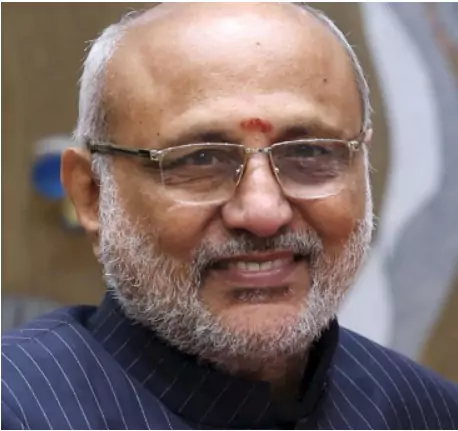
The current Vice President of India is C. P. Radhakrishnan. He assumed office in September 2025, following his election as the 17th Vice President. C. P. Radhakrishnan was the nominee of the National Democratic Alliance (NDA). In the election, he secured 452 votes, defeating the joint Opposition candidate, Justice B. Sudershan Reddy, who received 300 votes. The election was held in New Delhi, and a total of 767 MPs cast their votes. C. P. Radhakrishnan’s appointment came after the resignation of the previous Vice President, Jagdeep Dhankhar.
The vice president of India list from 1952 to 2026 includes fifteen individuals who have served in this constitutional role. The first Vice President was Dr. Sarvepalli Radhakrishnan, who served for two terms. Six of the vice presidents have later been elected to the position of President of India. This historical vice president of India list shows the importance of the office as a path to the nation’s highest post.
| Vice President of India List from 1952 to 2026 | |||
| S. No. | Vice-President | Tenure (From) | Tenure (To) |
| 1 | Dr. Sarvepalli Radhakrishnan | May 13, 1952 | May 12, 1962 |
| 2 | Dr. Zakir Hussain | May 13, 1962 | May 12, 1967 |
| 3 | Varahagiri Venkata Giri | May 13, 1967 | July 20, 1969 |
| 4 | Gopal Swarup Pathak | August 31, 1969 | August 30, 1974 |
| 5 | Basappa Danappa Jatti | August 31, 1974 | August 30, 1979 |
| 6 | Justice Muhammad Hidayatullah | August 31, 1979 | August 30, 1984 |
| 7 | Ramaswamy Venkataraman | August 31, 1984 | July 24, 1987 |
| 8 | Shankar Dayal Sharma | September 7, 1987 | July 24, 1992 |
| 9 | Kocheril Raman Narayanan | August 21, 1992 | July 24, 1997 |
| 10 | Krishan Kant | August 21, 1997 | July 27, 2002 |
| 11 | Bhairon Singh Shekhawat | August 19, 2002 | July 21, 2007 |
| 12 | Mohammad Hamid Ansari | August 11, 2007 | August 10, 2017 |
| 13 | M. Venkaiah Naidu | August 11, 2017 | August 11, 2022 |
| 14 | Jagdeep Dhankhar | August 11, 2022 | July 21, 2025 |
| 15 | C. P. Radhakrishnan | September 9, 2025 | Incumbent |
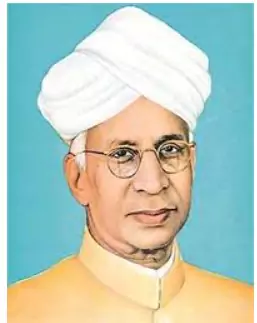
Dr. Sarvepalli Radhakrishnan was the first Vice President of India. He began his tenure on May 13, 1952. He was sworn into office at Rashtrapati Bhavan. He served for two full terms, concluding his role in 1962. His term as Vice President was followed by his election as the second President of India.
The eligibility for the office of Vice President is detailed in Article 66 of the Constitution. An individual must meet several specific criteria to be a candidate for the election. The table below outlines these requirements.
| Vice Presidents of India Eligibility Criteria | |
| Criterion | Details |
| Citizenship | Must be a citizen of India. |
| Age | Must have completed 35 years of age. |
| Qualification | Must be qualified for election as a member of the Council of States (Rajya Sabha). |
| Office of Profit | Must not hold any office of profit under the central, state, or any other government authority. |
| Nomination | Candidate must be proposed by at least 20 MPs and seconded by another 20 MPs. |
Vice President Of India Election
The office of the Vice President is a unique feature of the Constitution of India. It has a dual capacity, holding two distinct and separate offices. The Vice President is part of the Executive but, as Chairman of the Rajya Sabha, is also a part of Parliament. This role has no exact parallel in other democratic parliamentary systems.
The Constitution-makers of India chose to adopt an approach similar to the United States model, where the Vice President also presides over the upper house and can act as the President in certain situations.
The Vice President has the significant responsibility of keeping the duties of both offices separate. The Chairman of the Rajya Sabha must not let their judgment be influenced by knowledge gained as the Vice President. The table below summarizes the key constitutional provisions.
| Vice Presidents of India Constitutional Provision | |
| Article | Provision |
| Article 63 | States that there shall be a Vice-President of India. |
| Article 64 | The Vice-President is the ex-officio Chairman of the Council of States and shall not hold any other office of profit. |
| Article 65 | Outlines that the Vice-President will act as the President during a vacancy. |
| Article 66 | Governs the election of the Vice-President. |
| Article 67 | Defines the five-year term of office for the Vice-President. |
| Article 68 | Pertains to the timing of the election to fill a vacancy. |
| Article 69 | Deals with the oath to be taken by the Vice-President. |
| Article 71 | Addresses matters relating to disputes about the election of the President or Vice-President. |
The Vice President of India serves for a five-year term from the date they assume office, as specified in Article 67. The tenure can end before this period is completed due to several reasons. The Vice President continues to hold office until their successor officially takes over, regardless of the completion of the term. The table below provides a clear overview of the circumstances that can lead to a vacancy in the office.
| Vice Presidents of India Tenure | |
| Reason for Vacancy | Explanation |
| Completion of Term | The five-year term concludes, and the Vice President continues to hold office until a successor is elected. |
| Voluntary Resignation | The Vice President can resign by submitting a written resignation to the President. |
| Removal | The Vice President can be removed by a Rajya Sabha resolution, agreed to by the Lok Sabha, with a 14-day notice. |
| Death | The office becomes vacant upon the death of the incumbent. |
| Invalid Election | The office is vacated if the election is declared invalid by the Supreme Court. |
Ready to boost your UPSC preparation? Join PW’s UPSC online courses today!
Check Out UPSC CSE Books
Visit PW Store
Explore SRIJAN Program

The Vice-President is elected by an electoral college comprising members of both Houses of Parliament.
The election is by a secret ballot using the system of proportional representation with a single transferable vote.
The Vice-President holds office for a five-year term from the date they assume their duties.
Yes, the Vice-President may resign by writing to the President or be removed from office.
The Vice-President can be removed by a resolution of the Rajya Sabha, passed by a majority and agreed to by the Lok Sabha, after a 14-day notice.




Explore UPSC Foundation Batches


Connect with our experts to get free counselling & start preparing
Join India’s trusted platform for expert guidance, quality content, proven success.
Learn anytime, anywhere.



India's leading UPSC coaching platform helping aspirants prepare for IAS, IPS, IFS and other Civil Services examinations with the best faculty and proven strategies.
<div class="new-fform">
</div>