Great Nicobar Project – Key Features, Strategic Importance, Environmental Issues, & PYQs

The Great Nicobar Project is a ₹72,000+ crore infrastructure initiative on Great Nicobar Island that includes a transshipment port, airport, township, and power plant. The project is strategically important for trade and maritime security, but has raised concerns over deforestation, biodiversity loss, and the impact on tribal communities.
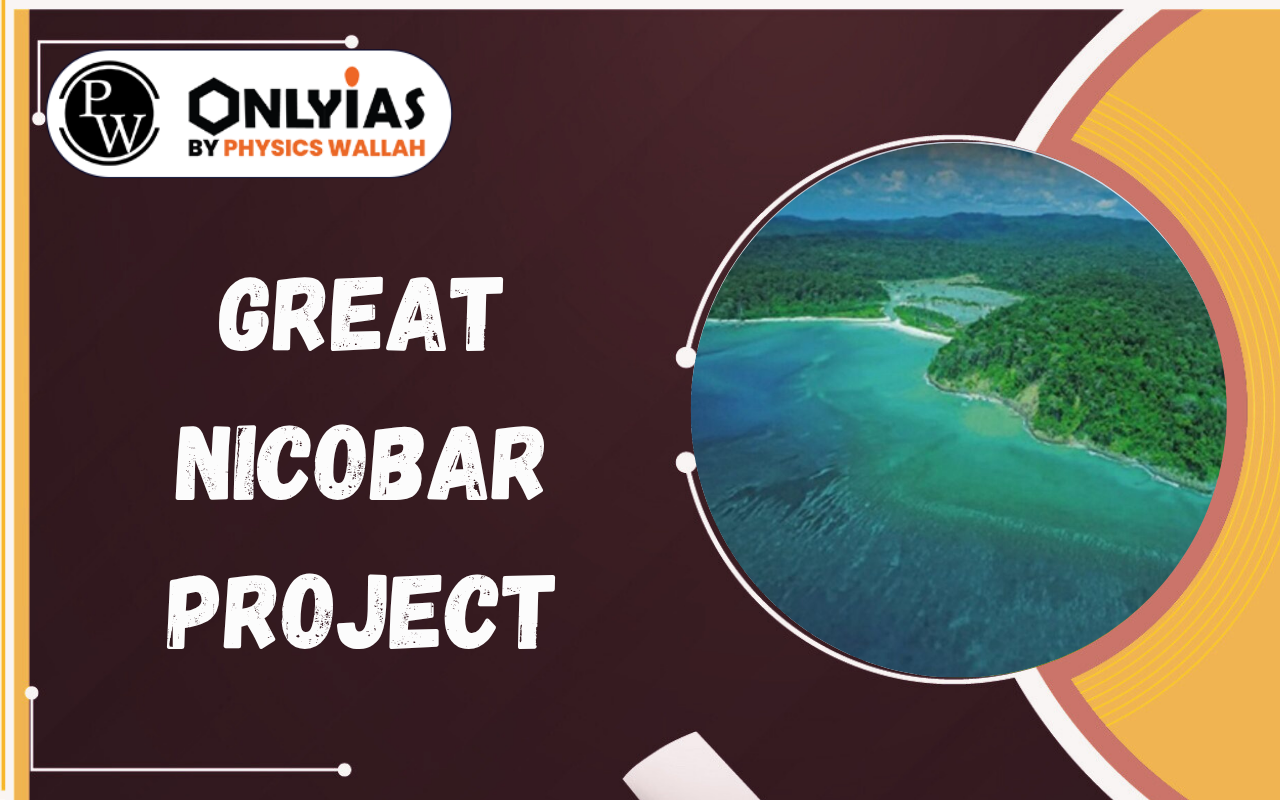
Great Nicobar Project – Key Features, Strategic Importance, Environmental Issues, & PYQs

The Great Nicobar Project is a major infrastructure development initiative planned on Great Nicobar Island, the southernmost part of India. This Great Nicobar Island project includes the development of a transshipment port, an international airport, a township, and a power plant. It is one of the most ambitious parts of the Andaman Nicobar infrastructure project aimed at boosting India’s economic and strategic strength.

At the same time, the project has sparked a major debate between economic development and environmental protection due to its possible impact on forests, biodiversity, and indigenous communities.

This topic of ‘Great Nicobar Project’ is important from the perspective of the UPSC IAS Examination, falling under General Studies Paper I (Geography), General Studies Paper III (Environment & Internal Security), and Prelims.

UPSC Online Classes

UPSC Previous Year Questions and Practice Questions

Practice these UPSC PYQs and mains questions on the Great Nicobar Project to understand exam trends, improve answer writing, and strengthen conceptual clarity. 

Q. Which of the following is geographically closest to Great Nicobar? (Prelims 2017)
A. Sumatra
B. Borneo
C. Java
D. Sri Lanka

Answer: (a) Sumatra

Great Nicobar lies south of the Nicobar Islands, and Sumatra is located just to its south.

Mains Practice Questions

Q1. Large-scale development plans in Great Nicobar threaten extensive forest areas and fragile ecosystems. Discuss the environmental risks and the conflict between development and sustainability. (250 words, 15 marks)

Q2. The Great Nicobar Project highlights the balance between development, environmental conservation, and tribal rights. Critically examine the challenges and suggest solutions. (250 words, 15 marks)

What is the Great Nicobar Project?

The Great Nicobar Project is a large-scale infrastructure development initiative planned by the Government of India on Great Nicobar Island, the southernmost island of India, located in the Andaman and Nicobar Islands. The project aims to develop the island into a major maritime, trade, and logistics hub in the Indian Ocean Region.

Great Nicobar Island is strategically located near the Malacca Strait, one of the busiest international shipping routes in the world. Due to this location, the project is considered important for India’s trade connectivity, maritime security, and regional development.

The project includes the development of multiple infrastructure facilities, such as:

  • International Container Transshipment Terminal (ICTT) at Galathea Bay
  • Greenfield International Airport
  • Township development for residential and commercial activities
  • Gas and solar-based power plant

According to government data, the proposed ICTT at Galathea Bay is expected to handle around 14.2 million TEUs, which can help India reduce dependence on foreign transshipment ports like Singapore and Colombo.

Major Features of the Great Nicobar Project

The Great Nicobar Project is a major infrastructure initiative aimed at improving India’s maritime trade, connectivity, and strategic presence in the Indian Ocean Region.

  • Estimated Cost: The total estimated cost of the project is over ₹72,000 crore. The investment includes the development of the port, airport, township, and power infrastructure.
  • Strategic Location: Great Nicobar Island is located near the Malacca Strait, one of the busiest international shipping routes in the world. Its location gives the project high strategic and trade importance.
  • Importance in Global Trade: The project includes an International Container Transhipment Terminal (ICTT) at Galathea Bay transhipment port. It is expected to improve India’s cargo handling capacity and reduce dependence on foreign transshipment ports like Singapore and Colombo.
  • Multi-Phase Development: The project is planned in multiple phases with long-term infrastructure development up to 2047. It includes the gradual development of transport, logistics, residential, and energy facilities on the island.

Strategic Importance of Great Nicobar Island

The Great Nicobar Project is strategically important for India because of its location in the Indian Ocean Region and its proximity to major international shipping routes.

Proximity to Major Shipping Routes: Great Nicobar Island is located near the Malacca Strait, one of the busiest maritime trade routes in the world. A large share of global trade and energy transportation passes through this route, making the island important for international connectivity and trade.

Strengthening India’s Maritime Security: The project can strengthen India’s naval presence and maritime surveillance capabilities in the Indian Ocean Region. Improved infrastructure in the Andaman and Nicobar Islands can support faster deployment and monitoring activities in nearby sea routes.

UPSC Coaching Classes

Countering China’s Presence in the Indo-Pacific: The development of strategic infrastructure in Great Nicobar is considered important for balancing China’s growing influence in the Indo-Pacific region. The project can strengthen India’s strategic position in the Indian Ocean Region.

Boost to Act East Policy: The project supports India’s Act East Policy by improving connectivity with Southeast Asian countries and enhancing trade and strategic cooperation in the Indo-Pacific region.

Environmental Concerns Related to the Project

The environmental impact of the Nicobar project has become a major concern because Great Nicobar Island is an ecologically sensitive region known for its tropical rainforests, coral reefs, and diverse wildlife species. 

  • Impact on Tropical Rainforests: The project involves the diversion of around 130.75 sq. km of forest land, which is nearly 1.82% of the total forest cover of the Andaman and Nicobar Islands. 
  • Threat to Biodiversity (Endemic Species): Great Nicobar Island is home to endemic species such as the Nicobar megapode, Nicobar long-tailed macaque, and dugong. Experts fear habitat loss due to large-scale infrastructure development.
  • Impact on Coral Reefs and Coastal Ecosystems: The proposed port development and dredging activities may affect coral reefs, mangroves, and coastal ecosystems around Galathea Bay.
  • Concerns Over Leatherback Turtle Habitat: Galathea Bay is an important nesting site for leatherback sea turtles. Increased construction and ship movement may disturb turtle nesting habitats.
  • Deforestation and Ecological Imbalance: According to official data, around 18.65 lakh trees fall within the project area, and tree felling may take place in phases during project development. Large-scale deforestation may disturb the island’s ecological balance.

Tribal and Social Concerns in Great Nicobar

The Great Nicobar Project has raised concerns regarding its impact on indigenous tribal communities living on the island.

Impact on Indigenous Tribes

Great Nicobar Island is home to two major tribal communities:

  • Shompen tribe – around 237 people
  • Nicobarese community – around 1,094 people

The Shompen are recognised as a Particularly Vulnerable Tribal Group (PVTG) and mainly depend on forests for survival, while the Nicobarese largely live in coastal settlements and depend on fishing and plantations.

Issues of Displacement and Cultural Loss

Environmentalists and tribal rights groups have raised concerns that large-scale infrastructure development and increased outside population may affect tribal lifestyle, culture, and traditional livelihoods.

According to official statements, no relocation of tribal communities has been proposed under the project. The only tribal habitations within the project area are located at New Chingen and Rajiv Nagar.

Legal Protections Under Tribal Laws

Great Nicobar Island has around 751.07 sq. km officially notified as a Tribal Reserve area. Out of the proposed project area, about 84.10 sq. km overlaps with Tribal Reserve land.

The project is stated to follow the Shompen Policy, 2015, Jarawa Policy, 2004, and provisions of the Forest Rights Act, 2006 for tribal protection. An independent monitoring committee has also been proposed to oversee issues related to the Shompen and Nicobarese communities

Economic Importance of the Great Nicobar Project

The Great Nicobar Project is expected to strengthen India’s trade, logistics, and infrastructure development in the Indian Ocean Region.

  • Boost to Trade and Logistics: The project includes an International Container Transshipment Terminal (ICTT) with a proposed capacity of around 14.2 million TEUs, which can reduce India’s dependence on foreign ports like Singapore and Colombo. 
  • Employment Generation: Large-scale infrastructure development with an investment of over ₹72,000 crore is expected to create employment opportunities in shipping, logistics, construction, tourism, and services.
  • Tourism Development: The proposed greenfield international airport and township development may improve tourism connectivity and support tourism growth in the Andaman and Nicobar Islands.
  • Infrastructure Growth: The project includes development of a port, airport, township, and power plant, which can improve connectivity and infrastructure facilities in Great Nicobar Island.

Click to Explore UPSC Offline Coaching

Challenges Associated with the Project

The Great Nicobar Project faces several environmental, financial, and implementation-related challenges.

  • Environmental Clearance Controversies: The project has faced criticism from environmental groups due to the diversion of around 130.75 sq. km of forest land and concerns over biodiversity loss and coastal ecosystem damage.
  • Seismic Vulnerability: Great Nicobar Island lies in Seismic Zone V, which is highly prone to earthquakes and tsunamis. The region was severely affected during the 2004 Indian Ocean tsunami.
  • High Financial Cost: The estimated project cost is over ₹72,000 crore, making it one of India’s largest infrastructure projects in the island region.
  • Implementation Challenges: Remote island location, difficult terrain, environmental sensitivity, and harsh weather conditions may make project execution complex and time-consuming.

Government Measures and Environmental Safeguards

The government has proposed several measures to reduce the environmental and social impact of the Great Nicobar Project.

  • Environmental Impact Assessment (EIA): The project received environmental clearance under the EIA Notification 2006 and CRZ Notification 2019 after environmental assessment and expert review.
  • Compensatory Afforestation: To compensate for forest diversion, compensatory afforestation has been proposed over around 97.30 sq. km of land. 
  • Wildlife Conservation Plans: The project includes wildlife conservation and biodiversity monitoring plans with support from institutions such as the Wildlife Institute of India (WII) and Zoological Survey of India (ZSI).
  • Monitoring Mechanisms: The government has proposed independent monitoring mechanisms for environmental protection, pollution control, and tribal welfare during different phases of project development.

Way Forward for Sustainable Development in Great Nicobar

A balanced and sustainable approach is important for the successful implementation of the Great Nicobar Project, which covers around 166.1 sq. km of development area.

  • Balance Between Development and Ecology: The project should minimise ecological damage because around 130.75 sq. km of forest land is proposed for diversion under the project.
  • Sustainable Infrastructure Planning: Infrastructure development should be disaster-resilient as Great Nicobar Island lies in Seismic Zone V, which is highly prone to earthquakes and tsunamis.
  • Strong Environmental Safeguards: Strict implementation of environmental safeguards, biodiversity monitoring, and compensatory afforestation over around 97.30 sq. km is necessary during all development phases.
  • Tribal Rights Protection: The rights of around 237 Shompen tribe members and about 1,094 Nicobarese people should be protected through proper consultation and legal safeguards.
  • Transparent Governance: Regular monitoring committees, environmental audits, and transparent implementation mechanisms are important for the long-term sustainability of the project.

The Great Nicobar Project highlights the challenge of balancing strategic and economic development with environmental conservation and tribal rights protection. Its long-term success will depend on sustainable planning, transparent governance, and effective ecological safeguards in one of India’s most sensitive island ecosystems. 

Check Out UPSC CSE Books

Visit PW Store

online store 1

Frequently Asked Questions

What is the Great Nicobar Project?

It is a mega infrastructure project that includes a port, airport, township, and power plant on Great Nicobar Island.

Why is Great Nicobar Island strategically important?

It is located near the Malacca Strait, making it important for global trade and maritime security.

What are the environmental concerns of the project?

Deforestation, biodiversity loss, and damage to marine ecosystems are key concerns.

Which tribes are affected by the Great Nicobar Project?

The Shompen tribe and Nicobarese community may be affected.

How is the project important for India’s economy and security?

It boosts trade, generates employment, and strengthens India’s strategic position in the Indo-Pacific region.


Great Nicobar Project – Key Features, Strategic Importance, Environmental Issues, & PYQs

Explore UPSC Foundation Course

Need help preparing for UPSC or State PSCs?

Connect with our experts to get free counselling & start preparing

Aiming for UPSC?

Download Our App

      
Quick Revise Now !
AVAILABLE FOR DOWNLOAD SOON
UDAAN PRELIMS WALLAH
Comprehensive coverage with a concise format
Integration of PYQ within the booklet
Designed as per recent trends of Prelims questions
हिंदी में भी उपलब्ध
Quick Revise Now !
UDAAN PRELIMS WALLAH
Comprehensive coverage with a concise format
Integration of PYQ within the booklet
Designed as per recent trends of Prelims questions
हिंदी में भी उपलब्ध

<div class="new-fform">


    </div>

    Subscribe our Newsletter
    Sign up now for our exclusive newsletter and be the first to know about our latest Initiatives, Quality Content, and much more.
    *Promise! We won't spam you.
    Yes! I want to Subscribe.