Thousands of workers protesting in Noida, Manesar, Gurugram, and Faridabad in April 2026 have spotlighted a deepening crisis in India’s labour relations — stagnant real wages, implementation gaps in the new Labour Codes, and rising urban living costs.

Best Online Coaching for UPSC

About the Recent Issue

  • Widespread Industrial Unrest in NCR Region: Recent protests by tens of thousands of workers in Noida, Manesar, Gurugram, and Faridabad have brought labour distress to the forefront.
    • These protests have, at times, escalated into violence, involving over 40,000 workers, leading to factory shutdowns and police intervention.
  • The Proximity Trigger: The 35% minimum wage hike in Manesar (April 9) acted as an immediate catalyst, as workers in the contiguous NCR region perceived inter-state wage disparity in addressing a common cost-of-living crisis, triggering protests in Noida.
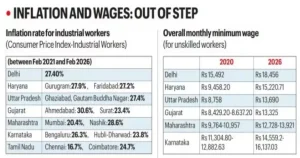
    • Uttar Pradesh followed with an interim hike of up to 21%, yet workers continue to protest, demanding surety of  ₹18,000–₹20,000/month.
  • This indicates that even substantial nominal wage hikes are perceived as inadequate, given the magnitude of cost-of-living increases.

The NCR Crisis- Migrant Vulnerability and Urban Stress

Since the unrest is concentrated in hubs like Noida, Manesar, and Gurugram, the analysis must account for the unique pressures of the National Capital Region:

  • Lack of Affordable Rental Housing: High industrial growth has not been matched by low-cost housing. Workers are often forced into overcrowded, informal settlements where they pay exorbitant rents, effectively negating any marginal wage hikes.
  • Weak Portability of Welfare: Despite the ‘One Nation One Ration Card’ initiative, many migrant workers face hurdles in accessing healthcare (ESIC) and other subsidies outside their home states, increasing their out-of-pocket expenses.
  • Information Asymmetry: Migrants often lack social networks to understand their rights under the new Labour Codes, making them more susceptible to rumors and spontaneous, leaderless protests.

The Core Issues behind such Protests

  • Wage–Inflation Mismatch- The Erosion of Real Incomes:
    • Rising Industrial Inflation Outpacing Wage Growth: The CPI-IW has increased by approximately 24.8% (2021–2026), while wage growth has remained comparatively subdued, saw increases as low as 15–20% in some cases resulting in negative real wage growth and a sustained decline in purchasing power.
      • Labour Protests in NCRThe Consumer Price Index for Industrial Workers (CPI–IW) measures the change in prices of a basket of goods and services consumed by industrial workers, and is widely used to assess cost of living and inflation for the working class.
        • CPI–IW is compiled and released by the Labour Bureau, under the Ministry of Labour and Employment.
        • The current base year is 2016.
      • Purchasing power refers to the quantity of goods and services that a unit of income can buy, reflecting the real value of money in an economy.
    • Decadal Trend of Real Wage Stagnation: Since 2016, price levels (~50% increase) have significantly outpaced wage growth (~40%), indicating a structural erosion of real incomes rather than a short-term fluctuation.
  • Delay in Base Minimum Wage Revision- Institutional Inertia:
    • Failure of Periodic Wage Revision Mechanism: Despite the mandate of five-year revision cycles, delays of nearly a decade (Haryana) and stagnation since 2012 (Uttar Pradesh) highlight institutional inefficiency and policy inertia.
    • Over-Reliance on Variable Dearness Allowance (VDA): While VDA adjustments provide partial inflation relief, the absence of base wage revision locks workers into historically depressed income benchmarks, weakening the wage system’s responsiveness.
      • Variable Dearness Allowance (VDA) is an inflation-linked component of wages provided to workers to offset the erosion of real income due to rising prices, particularly for essential commodities.
  • Rising Cost of Living- Intensification of Urban Economic Stress:
    • Global and Domestic Inflationary Spillovers: Geopolitical disruptions (West Asia) and energy supply shocks have increased fuel and logistics costs, amplifying inflationary pressures across sectors.
    • Escalation in Essential Consumption Costs: Workers face rising costs in food, housing rents, and energy, with LPG prices touching ₹4,000 in informal markets, significantly raising the cost of urban survival.
      • Essential consumption costs refer to the minimum expenditure required to meet basic human needs, including food, housing, energy, healthcare, transport, and education, necessary for a decent standard of living.
    • Declining Disposable Income and Rising Vulnerability: The combined effect has resulted in shrinking disposable incomes, higher indebtedness, and increased economic precarity, especially among migrant workers.
    • The Subsistence Crisis: Beyond CPI-IW, rising energy costs (Strait of Hormuz disruptions) have pushed migrant workers toward black-market LPG (~₹4,000), intensifying livelihood stress.
    • The Rent Formula Gap: Official norms cap rent at ~10%, but in hubs like Noida and Manesar, it consumes 30–50% of income, making even revised wages insufficient.
      • The Rent Formula refers to the normative component used in minimum wage calculations to account for housing expenditure
      • Traditionally, it assumes that a worker spends around 10% of total consumption expenditure on house rent, based on standards evolved from expert committee recommendations (e.g., Indian Labour Conference norms).
  • Institutional and Policy Gaps- Transition without Clarity:
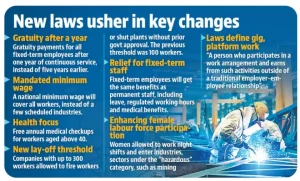
    • Implementation Vacuum in Labour Codes: The partial implementation of the Labour Codes (2025) has created a legal and administrative vacuum, resulting in ambiguity, uneven enforcement, and compliance uncertainty.
    • Labour Protests in NCRInformation Asymmetry and Expectation Mismatch: Misinterpretation of policy provisions, such as the perceived ₹20,000 minimum wage, has led to inflated expectations and subsequent dissatisfaction.
    • Flexibilisation without Adequate Safeguards: Provisions allowing extended work hours (12-hour spread-over) risk labour exploitation in the absence of robust overtime and safety regulations.
    • Weak Collective Bargaining Mechanisms: The decline of institutionalised trade unions has weakened formal negotiation channels, leading to spontaneous and disruptive protests.
    • Executive-Led Regulation: The Labour Codes (2025) shift key provisions like working hours to executive rules, creating an implementation gap and enabling perceived longer shifts without adequate overtime safeguards.
    • The ₹20,000 Misconception: A Sept 2024 wage notification (~₹20,358) for Central Sphere establishments was misread as a universal minimum, creating an expectation–reality gap that fuelled protests.
  • Structural Labour Market Weaknesses- Deep-Rooted Fault Lines:
    • High Informalisation of Workforce: With over 90% informal workforce, workers lack social security, legal protection, and bargaining power, making them highly vulnerable.
    • Regional Disparities and Competitive Federalism: Divergent state-level wage policies create inequalities and risk a “race to the bottom” in labour standards.
    • Industrial Cost Pressures and Wage Suppression: Firms facing rising input costs often resort to wage suppression or delayed payments, shifting the adjustment burden onto workers.
    • The Profit–Wage Squeeze: Factories face a “pincer pressure” from US trade tariffs and the West Asia crisis, leading firms to suppress wages and delay payments, thereby heightening shop-floor volatility.

UPSC Coaching Classes

The Constitutional and Legal Dimension

The current labor distress is not merely an economic issue; it represents a widening gap between India’s Constitutional Mandates and ground-level implementation.

  • The Constitutional Anchor: Beyond Article 43 (Living Wage), the current crisis touches upon:
    • Article 21: The Supreme Court has held that the Right to Life includes the right to live with human dignity, which is compromised by stagnant wages and poor living conditions.
    • Article 39 (Directive Principles): This directs the State to ensure citizens have the right to an adequate means of livelihood and that the health of workers is not abused for economic necessity.
  • Legislative Transition: The shift from the Code on Wages, 2019 to the newly notified Labour Codes (2025) aims to simplify 44 complex central laws. 
    • However, the lack of clear rules regarding the “social security fund” for unorganized workers remains a major point of contention.
  • The Urban-Migrant Paradox: In the NCR region, industrialization is driven by rapid urbanization, yet infrastructure for the workforce remains primitive. This results in a “floating population” that contributes to the economy but remains invisible to the state’s welfare net.

The Wide-Ranging Effects of Labor Unrest

When there is a breakdown in the relationship between employers and employees, the consequences reach far beyond the factory gates

Labour Protests in NCR

  • Impact on Workers- Financial Struggle and Long-term Stress: The most immediate harm is felt by the people who rely on their daily or monthly wages to survive.
    • Difficulty Covering Basic Costs: When wages stop or don’t keep up with the cost of living, families struggle to pay for food, housing, and medicine. This often forces them to cut back on essentials, which hurts their overall standard of living.
    • The Trap of High-interest Debt: Without a steady paycheck, many workers turn to informal moneylenders who charge very high interest. This creates a cycle where the worker stays in debt for years, even after the unrest ends and they return to work.
    • Loss of Future Opportunities: Constant financial stress makes it hard for workers to invest in training or education for themselves or their children, which keeps them stuck in low-paying roles.
  • Impact on Industry- Financial Loss and Damage to Reputation: For companies, unrest creates a chain reaction of costs that can take years to recover from.
    • Stopping the Flow of Goods: Modern businesses rely on tight schedules. A strike or protest causes production delays, which means the company cannot fulfill its contracts with customers.
    • Hidden Restart Costs: It isn’t as simple as flipping a switch. Companies face high expenses to repair machines that sit idle, pay for extra security, and handle legal battles related to the labor dispute.
    • Loss of Competitive Edge: If a business is seen as “unstable,” investors and partners will take their money elsewhere. This can lead to the company shrinking or closing down entirely because it can no longer compete in the market.
  • Impact on Government- Public Trust and Safety Pressures: The government is caught in the middle, trying to balance the needs of the economy with the rights of the citizens.
    • Weakening of Law and Order: Large-scale unrest often requires the government to move police and resources away from other areas to manage protests. This creates tension in the streets and can lead to safety concerns for the general public.
    • Loss of Investor Confidence: When a government cannot settle labor disputes effectively, it sends a signal to the world that the country is a risky place to do business. This stops foreign companies from building new offices or factories there.
    • Reduced Public Funding: Because struggling businesses pay less in taxes, the government has a smaller budget. This means there is less money available for public services like roads, hospitals, and schools.
  • Impact on Economy and Society- Slower Growth and Social Friction: At a national level, labor unrest can slow down the progress of the entire country.
    • Lower Spending in Shops: When a large group of workers loses their buying power, they stop spending money at local businesses. This causes a drop in sales for everyone from grocery stores to clothing shops, hurting the whole economy.
    • Rising Social Bitterness: When people feel they are being treated unfairly and see the gap between the rich and poor growing, it creates anger and frustration. This leads to a divided society where it is harder for people to work together.
    • Fewer Jobs for the Youth: Prolonged instability makes the economy stop growing. When the economy stalls, businesses don’t hire, leading to high unemployment for young people entering the workforce for the first time.

World’s Best Practices on Workers’ Rights & Strike Regulation:

  • Nordic Model (Sweden, Denmark, Norway): These countries rely on strong trade unions, high collective bargaining coverage, and continuous social dialogue, which reduce the need for frequent strikes. 
    • The right to strike is recognised, but it is exercised within a framework of negotiation, mediation, and mutual trust.
    • Outcome: Low industrial conflict and high wage equality.
  • Germany: Germany ensures worker participation through Works Councils and co-determination on company boards. Strikes are allowed, but they must be union-led and used only after negotiations fail.
    • Outcome: Strong worker voice with industrial stability.
  • United Kingdom: In the UK, strikes require secret ballot approval, minimum turnout, and prior notice, with added restrictions in essential services. This ensures that industrial action has a clear democratic mandate and legal legitimacy.
    • Outcome: Greater accountability and regulated strike action.
  • United States: The right to strike is protected under labour law, especially through the National Labor Relations Act (NLRA), but it is restricted in the public sector and essential services. Employers may also hire replacement workers during strikes.
    • Outcome: Flexible labour market, but weaker and more contested worker protections.
  • France: France provides constitutional protection to the right to strike, while also imposing minimum service requirements and public order safeguards in key sectors. This balances labour rights with social stability.
    • Outcome: Strong worker mobilisation with institutional regulation.
  • Japan: Japan’s labour relations are based on enterprise unions, long-term employment, and consensus-driven negotiations. Although the right to strike exists, it is used rarely because disputes are usually resolved through dialogue.
    • Outcome: Industrial harmony with minimal disruption.

Global Initiatives:

International labor governance is built on a hierarchy of legal and ethical standards that elevate labor rights to the status of fundamental human rights.

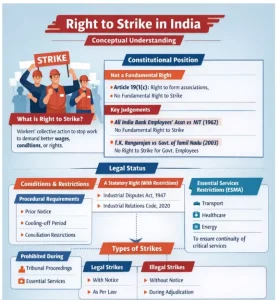
  • ILO Core Standards: The Normative Backbone The International Labour Organization (ILO) anchors global governance through its Core Conventions. While the “Right to Strike” is not explicitly written in the original treaty text, the ILO’s supervisory bodies consistently interpret it as an essential derivative of:
    • Convention 87: Freedom of Association.
    • Convention 98: Right to Organize and Collective Bargaining.
  • UN Human Rights Framework: A Rights-Based Approach The United Nations bridges labor and human dignity through two primary instruments:
    • Universal Declaration of Human Rights (1948): Establishes the right to form trade unions and enjoy fair working conditions.
    • International Covenant on Economic, Social and Cultural Rights (ICESCR) (1966): Article 8 provides the most explicit international legal recognition of the Right to Strike.
  • OECD, G20, and SDGs: Responsible Globalization
    • OECD Guidelines: Focus on supply chain due diligence and responsible business conduct.
    • G20 Labor Track: Prioritizes social protection and “Decent Work” as drivers of inclusive growth.
    • SDG Linkages: Labor rights are central to SDG 8 (Decent Work) and SDG 10 (Reduced Inequalities), positioning fair dispute resolution as a prerequisite for sustainable development.

Click to Know UPSC Coaching Centres in India

Concerns & Challenges that need to be Tackled

The current crisis in NCR is not just about wages; it highlights several structural “traps” that could derail India’s industrial growth:

  • The “Race to the Bottom”: There is a growing risk that Indian states, in a bid to attract investment, might compete by lowering labor standards
    • This “competitive federalism” can lead to a cycle where worker welfare is sacrificed for lower production costs.
  • The MSME Dilemma: Small and medium businesses (MSMEs) are the backbone of these hubs but operate on thin margins. 
    • For them, sudden wage hikes or high compliance costs are a disproportionate burden, which may lead to business closures or a shift back to informal, “off-the-books” hiring.
  • Enforcement Vacuum: Even the best-designed laws fail without oversight capacity
    • Currently, labor departments often lack the manpower to monitor the massive informal sector, leaving over 90% of the workforce without actual protection.
  • Constitutional Disconnect: The persistent struggle for a “living wage” highlights the gap between Article 43 of the Constitution (which directs the State to secure a living wage) and the ground reality of urban poverty. 
    • This creates an ethical and governance crisis that fuels social unrest.

Way Forward

To move from conflict to collaboration, India must adopt a multi-pronged strategy:

  • Wage and Income Reforms:
    • Institutionalizing Fair Compensation: Move away from stagnant wage cycles by mandating periodic base wage revisions every five years. This ensures that the floor wage reflects current economic realities rather than historical benchmarks.
    • Automatic Inflation Indexation: Base wages must be automatically adjusted for inflation. This prevents the “real wage erosion” that currently forces workers into debt during price spikes.
    • Productivity-Linked Wage Growth: To make wage hikes sustainable, the government must invest in skill-building and technology. When workers are more productive, businesses can afford higher wages without losing their competitive edge in the global market.
  • Governance and Digital Implementation:
    • Clarity in Labour Code Rules: The government must notify clear, unambiguous rules across all states. Reducing legal ambiguity is the first step toward improving compliance and reducing worker anxiety.
    • Compliance via Digital Trails: The focus should shift toward using digital payment trails and integrated labor databases to improve monitoring. This ensures that minimum wage increments and overtime pay actually reach the worker’s bank account.
    • Leveraging e-Shram for Targeting: Databases such as e-Shram should be used to support better identification, targeting, and portability of benefits, especially for the migrant workforce who often fall through the cracks of state-specific schemes.
  • Comprehensive Worker Protection:
    • Universal Social Security: Social protection must be de-linked from the employer. Every worker—whether a gig worker, contractor, or permanent employee—should have access to a universal safety net including health (ESIC) and retirement (EPFO) benefits.
    • Regulating “Flexibility”: While the economy requires flexible work arrangements, the state must enforce strict norms for overtime compensation and occupational safety to prevent “flexibility” from becoming “exploitation.”
    • Portability for Migrant Workers: Ensure that welfare benefits are truly portable, allowing workers to access food and healthcare subsidies regardless of their home state, thereby reducing the urban cost-of-living distress.
  • Strengthening Industrial Partnership:
    • Supporting MSMEs in Transition: Smaller firms face higher compliance costs relative to their capacity. The government should offer compliance subsidies, tax incentives, and easier access to credit to help them adopt the new Labour Codes without reducing their workforce.
    • Reviving Tripartite Dialogue: Instead of protests in the streets, grievances must be solved at the table. Re-establishing formal negotiation channels between the government, labor unions, and industry leaders is essential to prevent spontaneous and violent disruptions.
    • Skilling and Formalization: A concerted effort to formalize the workforce through certification and digital registration will improve bargaining power and industrial efficiency simultaneously.

Click to Know UPSC Offline Courses

Conclusion

The surge in labour protests signals a deep structural imbalance in India’s industrial economy. While the Labour Codes (2025) aim to modernise regulation, their success hinges on credible enforcement and inclusive design. Achieving Viksit Bharat requires balancing efficiency with social justice, recognising that secure and protected workers are central to sustainable growth, not merely a cost.

Check Out UPSC CSE Books

Visit PW Store

online store 1

The Indian Army has unveiled a technology roadmap for Unmanned Aerial System and Loitering Munitions in New Delhi.

  • The event brought together key stakeholders from the armed forces, defence industry, start-ups and academia, reinforcing a whole of nation approach towards building a resilient and self- reliant drone ecosystem.

UPSC Online Preparation

What Are UAVs?

  • Unmanned Aerial Vehicles (UAVs), commonly known as drones, are aircraft that operate without a human pilot on board. 
  • They can be controlled remotely by an operator or operate autonomously using pre-programmed flight paths and AI-based navigation systems.

Unmanned Aerial Systems

Types of UAVs

  • Based on Size:
    • Micro and Nano UAVs: Small drones used for close-range surveillance (e.g., quadcopters).
    • Tactical UAVs: Medium-sized drones for military reconnaissance and border patrol.
    • Strategic/Combat UAVs: Large drones with long endurance and combat capabilities (e.g., MQ-9 Reaper, Bayraktar TB-2).
  • Based on Function:
    • Surveillance UAVs: Used for intelligence gathering and border security.
    • Combat UAVs (UCAVs): Armed drones that carry missiles and bombs for military strikes.
    • Logistics UAVs: Used to transport supplies, medicines, or weapons in remote areas.
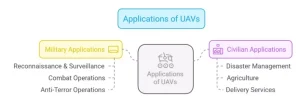
    • Commercial UAVs: Used for photography, agriculture, and delivery services.
  • Based on Operational Range:
    • Short-Range UAVs: Can fly within a few kilometers, used for local reconnaissance.
    • Medium-Range UAVs: Operate within 100-300 km, commonly used for tactical missions.
    • Long-Endurance UAVs: Can stay airborne for 24 hours or more, used for strategic operations.

Key Features

  • Structured Development of Ecosystem: This initiative is a significant step towards providing long term visibility of the Indian Army’s requirement in the field of Unmanned Aerial Systems. 
  • Clear Guidance to Stakeholders: It provides clear, actionable visibility to industry, academia and research and development institutions to channelize investments and technological efforts towards priority areas identified by it.
  • Bridging Operational Gaps: The document serves as a critical bridge between operational requirements and technological development, ensuring that India’s drone ecosystem evolves in a structured, demand-driven manner.
  • Unmanned Aerial Systems (UAS): It emphasizes the development and deployment of UAS for roles such as surveillance, reconnaissance, and logistics support to enhance situational awareness and operational efficiency.
  • Loitering Munitions (Kamikaze Drones): It focuses on advancing loitering munitions capable of carrying out precision strikes with high accuracy, thereby improving targeted offensive capabilities.
  • Balance in Warfare: The roadmap highlights the need to achieve a balance between mass deployment of drones, such as swarm technologies, and precision targeting to adapt to the evolving nature of modern warfare.

Click to Know UPSC Offline Courses

Significance

  • Changing Nature of Warfare: Modern conflicts, particularly drone-intensive wars, highlight a shift towards cost-effective warfare, reduced human risk, and enhanced real-time intelligence gathering capabilities.
  • Boost to Aatmanirbhar Bharat: The roadmap contributes to Aatmanirbhar Bharat by reducing dependence on imports and promoting indigenous defence manufacturing and innovation.
  • Strengthening Defence Preparedness: The initiative enhances defence preparedness by improving surveillance capabilities, enabling precision strike abilities, and increasing overall tactical flexibility in military operations.

Check Out UPSC CSE Books

Visit PW Store
online store 1

The Constitution (131st Amendment) Bill, 2026 proposes ending the delimitation freeze to revise State Assembly size and constituency boundaries based on updated population data.

UPSC Online Courses

Key Provisions of the Constitution (131st Amendment) Bill, 2026

  • Removal of Freeze: Deletes the 1976 freeze under Article 170, enabling fresh seat readjustment after a future Census.
  • Redefining Population Basis: “Population” for seat allocation will be based on a Census specified by Parliament.
  • Change in Assembly Size: Total number of seats in State Assemblies to vary according to demographic changes.
  • Women’s Reservation Operationalisation: Implements 33% reservation for women (via Article 334A) post-delimitation, with rotational allocation for 15 years.
  • Safeguards for Tribal Representation: Ensures ST seat share is not reduced, especially in Northeastern States like Arunachal Pradesh, Mizoram, and Nagaland.

Need for the Proposed Amendments

  • Ensuring Equal Representation: Population changes since 1971 have distorted the “one person, one vote” principle.
  • Updating Electoral Boundaries: Urbanisation and migration require rational redrawing of constituencies.
  • Enabling Women’s Political Participation: Delimitation is necessary to implement women’s reservation effectively.
  • Addressing Regional Imbalance: Reallocation of seats ensures fair representation across States.
  • Strengthening Federal Democracy: Improves legitimacy and responsiveness of representative institutions.

Click to Know UPSC Coaching Centres in India

About Delimitation Commission

  • Delimitation commission is an independent statutory body constituted under the Delimitation Commission Act to redraw constituencies based on Census data, ensuring electoral fairness.
  • Key Delimitation Commissions in India
    • 1952 Commission: Based on the 1951 Census.
    • 1963 Commission: Followed the 1961 Census and state reorganization.
    • 1973 Commission: Conducted under the 1972 Act, following the 1971 Census, freezing total seat counts until 2001.
    • 2002 Commission: Act 2002 was enacted to update boundaries using 2001 Census data.
    • 2020 Commission: Specifically established for the Union Territory of Jammu & Kashmir and previously selected North Eastern states
  • Composition
    • Chairperson: Retired/Sitting Supreme Court Judge
    • Members: Chief Election Commissioner or nominee
    • State Election Commissioners (concerned States)
    • Associate Members: MPs and MLAs (advisory role)
  • Role
    • Readjustment of Boundaries: Redraws Lok Sabha and Assembly constituencies to ensure population parity.
    • Reservation of Seats: Identifies constituencies for SC/ST and women reservation.
    • Allocation of Seats: Determines number of seats for States/UTs and Assemblies.
  • Powers and Legal Status
    • Final and Binding Decisions: Orders laid before Parliament/Assemblies cannot be altered.
    • Immunity from Judicial Review: Decisions cannot be challenged in courts.
    • Force of Law: Orders become legally enforceable upon publication in the Gazette of India.

Check Out UPSC CSE Books

Visit PW Store
online store 1

As global finance shifts to programmable systems, India explores deposit tokens and asset tokenisation to modernise banking while preserving trust and regulatory stability.

Best Online Coaching for UPSC

About Digital Token 

  • Digital Token  are digital representations of bank deposits issued on permissioned blockchain networks.
    • It is fully backed by traditional deposits and subject to regulation, enabling real-time settlement, programmability, and no additional credit risk issued by regulated banks on permissioned blockchains
  • Programmable & Instant Settlement: Enable 24×7 real-time transactions (T+0), replacing delayed batch-based systems in interbank and corporate payments.
  • Asset Tokenisation: Conversion of real-world assets (real estate, gold, bonds) into digital tokens for easier transfer, liquidity, and fractional ownership.
  • Atomic Settlement (DvP): Simultaneous exchange of assets and money reduces counterparty risk and improves efficiency.
  • RBI’s Role: Pilot projects (e.g., tokenised Certificates of Deposit) using wholesale CBDC as settlement layer.

Significance for India

  • Preserving Trust in Banking: Unlike cryptocurrencies, deposit tokens operate within the regulated framework, ensuring stability.

RBI’s CBDC

  • The RBI’s Central Bank Digital Currency (CBDC), known as the Digital Rupee (e₹), is a digital form of legal tender issued by the Reserve Bank of India.
  • It is a direct liability on the RBI, providing a secure, efficient alternative to cash with one-to-one convertibility.
  • The e₹ enables 24/7, peer-to-peer (P2P) or peer-to-merchant (P2M) transactions via mobile wallets, featuring offline functionality and programmable payments. 

  • Enhancing Efficiency: Reduces transaction time, cost, and reconciliation delays in domestic and cross-border payments.
  • Unlocking Liquidity: Tokenization enables fractionalisation of illiquid assets, improving credit access and collateral usage.
  • Leveraging Digital Public Infrastructure: Builds on systems like UPI and Aadhaar to create global leadership in fintech.
  • Strategic Global Positioning: Helps India shape standards for regulated, programmable digital finance.

Challenges in Adapting Tokenisation

  • Regulatory Uncertainty: Lack of clarity in Forex laws, Anti-Money Laundering and Know Your Customer (KYC) norms, and cross-border compliance frameworks.
  • Sandbox Limitations: Most initiatives remain confined to pilot stages, limiting scalability.
  • Cybersecurity & Technological Risks: Blockchain infrastructure must be secure against systemic vulnerabilities.
  • Interoperability Issues: Integration with existing banking systems and global platforms remains complex.

Click to Know UPSC OnlyIAS Coaching Centres

Way Forward

  • Clear Regulatory Framework: Define legal status of tokenised assets and deposit tokens.
  • Expand RBI Pilots: Scale up use cases in trade finance, interbank settlements, and capital markets.
  • Global Coordination: Align with international standards for cross-border tokenised finance.
  • Strengthen Digital Infrastructure: Ensure robust, secure, and interoperable blockchain ecosystems.

Conclusion

Deposit tokens and asset tokenisation represent a natural evolution of banking combining innovation with regulation positioning India to lead in the next phase of global financial architecture.

Check Out UPSC CSE Books

Visit PW Store
online store 1

Telangana has joined the list of nine States where the Reserve Bank of India (RBI) is rolling out the Benchmark Issuance Strategy (BIS) for State development loans, starting from the current financial year.

  • The RBI said it has decided to introduce BIS on a pilot basis in nine States including Telangana based on the concurrence of the respective State Governments, starting the financial year 2026-27.
  • The State Government has accordingly submitted an indent for raising market borrowings to the tune of ₹18,900 crore during the first quarter of the current fiscal.

UPSC Online Classes

What are State Development Loans?

  • State Development Loans are dated securities (bonds) issued by State Governments through auctions conducted by the Reserve Bank of India on behalf of the states.

Key Features

  • Issuer: State Development Loans are issued by individual State Governments, not by the Union Government, to meet their borrowing requirements.
    • For Example: The Government of Maharashtra or Tamil Nadu raises funds through SDL auctions conducted by the Reserve Bank of India.
  • Purpose: SDLs are primarily used to finance developmental expenditure and bridge fiscal deficits of states.
    • States borrow through SDLs to fund infrastructure projects like rural roads under PMGSY, irrigation projects in Telangana, or health sector expansion such as new medical colleges.
  • Tenure: SDLs are medium- to long-term debt instruments, typically ranging from 5 to 30 years, enabling states to plan long-term investments.
    • A state may issue a 10-year SDL to finance a highway project, aligning repayment with future revenue generation.
  • Interest Rate: The interest rate on SDLs is market-determined through auctions and is generally higher than Central Government securities (G-Secs) due to relatively higher risk perception.
  • Repayment Responsibility: The concerned State Government is solely responsible for repayment of principal and interest, which is serviced through its own revenues. There is no explicit sovereign guarantee from the Centre.
    • States like Punjab or Rajasthan repay SDL obligations through tax revenues (GST share, excise, etc.) and non-tax revenues.

About Benchmark Issuance Strategy (BIS)

  • Aim
    • To enhance transparency and provide greater clarity to investors.
    • To create larger, more liquid benchmark bonds, improving price discovery and providing investors with better visibility into supply in the State bond market. 
  • Strategy: The Strategy involves issuing securities in specific benchmark tenor buckets as per the pre-announced calendar.
  • Reduction of Market Fragmentation: It envisages the issuance of standardised benchmark bonds across specific tenors to reduce market fragmentation.
  • Long-Term Borrowing Strategy: In line with the BIS, the State has decided to avail loans with different tenures ranging from six to 10 years to over 25 years. 

Click to Explore UPSC Offline Coaching

Feature SDLs G-Secs
Issuer State Governments Central Government
Risk Slightly higher Lowest (sovereign)
Interest Rate Higher Lower
Guarantee No explicit sovereign guarantee Sovereign guarantee

Check Out UPSC CSE Books

Visit PW Store
online store 1

Scarborough Shoal Tensions in the South China Sea

Context: China has reportedly deployed fishing boats, coast guard vessels, and a floating barrier at the entrance of Scarborough Shoal, intensifying tensions with the Philippines in the South China Sea

  • Satellite imagery indicates attempts by China to restrict access to the shoal’s lagoon, a historically rich fishing ground.

UPSC Online Courses

About Scarborough Shoal

  • Scarborough Shoal is a disputed atoll in the South China Sea, claimed by both China and the Philippines as part of their territory.
  • Geographical Position: It lies roughly 220 km west of Luzon, the Philippines’ main island, and more than 800 km southeast of Hong Kong.
  • Local Names:
    • Bajo de Masinloc (Philippines)
    • Huangyan Island (China)

Strategic Importance of the Scarborough Shoal

  • Rich Fishing Grounds: The shoal has long served as a productive fishing area, traditionally used by fishermen from the Philippines, China, and Vietnam.
  • Maritime Position: It lies about 120 nautical miles from the Philippine coast, placing it entirely within the Philippines’ Exclusive Economic Zone (EEZ) under the United Nations Convention on the Law of the Sea (UNCLOS).
  • Control of Sea Lanes: The shoal lies in the South China Sea, a major global shipping route carrying around one-third of global maritime trade.
  • Potential Military Value:  Control of the shoal would enable surveillance of maritime activities and enhance the ability to project naval power in the region.

Legal and Diplomatic Background

  • 2012 Standoff: China seized effective control of the shoal following a 2012 standoff with the Philippines.
  • 2016 International Arbitration Ruling: The Permanent Court of Arbitration in the South China Sea Arbitration Case (Philippines v. China) held that China’s blockade violated international law and recognised the shoal as a traditional fishing ground.
  • Unresolved Sovereignty Issue: The ruling clarified maritime rights but did not determine sovereignty over the shoal.
  • China’s Rejection of the Verdict: China rejected the ruling and continues to assert claims based on the Nine-Dash Line.
    • Nine-Dash Line: A demarcation line used by China to claim historic rights over most of the South China Sea, overlapping with the maritime claims of several Southeast Asian countries.

Growing Geopolitical Dimensions

  • Philippines–US Defence Cooperation: Under Ferdinand Marcos Jr., the Philippines has strengthened military ties with the United States.
  • Joint Military Exercises: Large-scale drills involving thousands of troops are planned across the Philippine archipelago, including Zambales, about 120 nautical miles from Scarborough Shoal.

UPSC Online Coaching

BRICS Health Working Group (HWG) Meeting 2026

Context:  The first Health Working Group (HWG) meeting under the BRICS framework for 2026 was held under the chairship of India.

Key Points

  • Participation:  The virtual meeting was chaired by India’s Health Secretary and attended by delegates from several BRICS member countries. 
  • Theme: India’s BRICS presidency theme is “Building for Resilience, Innovation, Cooperation and Sustainability.”
  • New Priorities Proposed by India:
    • BRICS Mission for Healthy Lifestyles to address risk factors such as unhealthy diet, inactivity, tobacco and alcohol use.
    • Mental Health and Wellness Promotion to strengthen services and reduce stigma.
  • Key Areas Discussed:
    • BRICS TB Research Network collaboration.
    • Integrated Early Warning System for infectious diseases.
    • Digital health architecture for continuum of care.
    • Cooperation in traditional and integrative medicine.
    • Addressing social determinants of health and strengthening public health institutions.

About BRICS

  • BRICS is a grouping of eleven major emerging economiesBrazil, Russia, India, China, South Africa, Egypt, Ethiopia, Iran, Saudi Arabia, the United Arab Emirates, and Indonesia.
  • Formation (2006): BRIC was formalised at a meeting of BRIC Foreign Ministers on the sidelines of the United Nations General Assembly in New York in 2006.
  • First Summit (2009): The inaugural BRIC Summit was held in Yekaterinburg, Russia.
  • Partner Countries (2025): Belarus, Bolivia, Kazakhstan, Cuba, Malaysia, Nigeria, Thailand, Uganda, Uzbekistan, and Vietnam joined as BRICS Partner Countries. 

Key Declarations under BRICS

  • Fortaleza Declaration (2014): The Fortaleza Declaration was adopted at the 6th BRICS Summit, and it marked the establishment of the New Development Bank (NDB).
  • Ufa Declaration (2015): Adopted at the 7th BRICS Summit in Ufa, Russia
    • It emphasised reforms in global governance, international security cooperation, and strengthening economic collaboration among BRICS countries.
  • Beijing Declaration (2022): Adopted at the 14th BRICS Summit in Beijing, China.
    • It supported dialogue between Russia and Ukraine, and emphasised cooperation on COVID-19 response, digital transformation, resilient supply chains, and low-carbon development.


Cyclone Maila (2026)

Context: Recently , Severe Tropical Cyclone Maila, a Category 5 system, has claimed 23 lives in Papua New Guinea, triggering a state of emergency in the Bougainville region.

About Cyclone Maila

  • Type: Categorized as a Severe Tropical Cyclone (Category 5)  over Solomon Sea
  • Origin: Northeastern Coral Sea/Solomon Sea.
  • Course: Followed an erratic, sluggish path between Papua New Guinea (PNG) and the Solomon Islands before moving west-southwest toward the Cape York Peninsula.
  • Named by : Tropical Cyclone Warning Centre Port Moresby, PNG.
  • Impact: Widespread landslides and flooding caused 23 deaths in PNG, displaced thousands, and destroyed critical infrastructure across the Bougainville, East New Britain, and Milne Bay provinces.

Click to Know UPSC Coaching Centres in India

About Tropical Cyclones

  • A tropical cyclone is a powerful circular storm originating over warm tropical oceans, defined by extremely low atmospheric pressure, torrential rain, and violent winds. 
  • These systems intensify by drawing energy from warm sea surfaces, often maturing from minor depressions into massive storms like hurricanes or typhoons when sustained winds exceed 119 km/h.
  • Regional Names: 
    • Hurricanes: North Atlantic Ocean, Northeast Pacific (off the coast of North America), and the Caribbean Sea.
    • Typhoons: Northwest Pacific Ocean (impacting East Asian countries like China, Japan, and the Philippines).
    • Cyclones: North Indian Ocean (Bay of Bengal and Arabian Sea) and South Pacific Ocean.
    • Willy-Willies: Occurring in the waters off Western Australia.
  • Formation Conditions (Cyclogenesis)
    • Sea Surface Temperature (SST): Warm ocean waters exceeding 27°C provide the necessary moisture and energy.
    • Coriolis Force: Must be strong enough to initiate a cyclonic vortex; hence, they do not form exactly at the Equator.
    • Vertical Wind Shear: Low variations in vertical wind speed are required to maintain the storm’s structure.
    • Energy Source: Driven by the latent heat of condensation released during the formation of cumulonimbus clouds.
  • Structural Characteristics
    • The Eye: A central region of calm, sinking air with lowest pressure and abnormally high temperatures (warm core).
    • The Eyewall: The zone surrounding the eye with the most violent winds and heaviest rainfall.
  • Direction of Rotation: Clockwise in the Southern Hemisphere and Counter-clockwise in the Northern Hemisphere due to the Coriolis Effect.
  • Path: Generally move westward due to trade winds (Easterlies) before “re-curving” poleward.
  • Landfall: The storm weakens rapidly over land as the supply of moisture (energy) is cut off and surface friction increases.


Age Tokens

Context: Andhra Pradesh government has proposed “age tokens” integrated with DigiLocker to enable privacy-preserving age authentication for social media access.

  • Legislative Initiative: A Group of Ministers (GoM) is working on legislation inspired by global models to regulate social media usage for minors under 16.
  • Age-Based Social Media Policy: The policy proposes a complete ban on social media for children below 13 and restricted, age-appropriate access for those aged 13–16.

About Age Tokens

  • Age tokens are a digital proof of age that confirms how old a person is without revealing his full identity.
  • Integration with Digital Infrastructure: Proposed to be issued via DigiLocker, leveraging existing government-backed digital identity infrastructure.
  • Privacy Mechanism: Platforms will only see age eligibility instead of sensitive personal data like name or Aadhaar number.
  • Regulatory Tool: They will facilitate enforcement of age-based restrictions (e.g., banning under-13 users, limiting 13–16 usage on social media).
  • Implementation Concerns: Includes privacy risks, digital divide issues, and technological complexity in large-scale adoption.

Click to Know UPSC Offline Courses

Urban Challenge Fund (UCF)

Context: Recently the operational guidelines for the Urban Challenge Fund (UCF) to boost market-driven financing for sustainable urban infrastructure in emerging cities was launched.

Urban Challenge Fund (UCF)

  • Urban Challenge Fund is an initiative aimed at catalysing large-scale urban infrastructure investments through market-based financing mechanisms.
  • Objective: To promote reform-driven, financially sustainable urban development by enabling cities to access diverse funding sources like municipal bonds, loans, and PPPs.
  • Nodal Ministry:  Ministry of Housing and Urban Affairs.
  • Implementation: Supported by the Credit Repayment Guarantee Sub-Scheme to enhance creditworthiness of Urban Local Bodies (ULBs) and attract private investment.
  • Budget Outlay: Total central assistance of ₹1 lakh crore, aiming to leverage nearly ₹4 lakh crore in overall investments; includes allocations for projects, capacity building, and credit guarantees.
  • Focus Areas: Targets Tier-II and Tier-III cities, including hilly and North-Eastern regions; prioritises urban mobility, redevelopment, water and sanitation, last-mile connectivity, and climate-resilient infrastructure.
  • Significance: Strengthens financial autonomy of ULBs, promotes investment-ready urban hubs, and aligns with long-term goals like Viksit Bharat @2047 and sustainable urban transformation.

Check Out UPSC CSE Books

Visit PW Store
online store 1

Aiming for UPSC?

Download Our App

      
Quick Revise Now !
AVAILABLE FOR DOWNLOAD SOON
UDAAN PRELIMS WALLAH
Comprehensive coverage with a concise format
Integration of PYQ within the booklet
Designed as per recent trends of Prelims questions
हिंदी में भी उपलब्ध
Quick Revise Now !
UDAAN PRELIMS WALLAH
Comprehensive coverage with a concise format
Integration of PYQ within the booklet
Designed as per recent trends of Prelims questions
हिंदी में भी उपलब्ध

<div class="new-fform">


    </div>

    Subscribe our Newsletter
    Sign up now for our exclusive newsletter and be the first to know about our latest Initiatives, Quality Content, and much more.
    *Promise! We won't spam you.
    Yes! I want to Subscribe.