Bar Council of India (BCI)
Context: Recently, the Supreme Court restricted the BCI’s pro-tem leadership to routine functioning and required AG-SG participation in policy decisions.
UPSC Online Classes
Supreme Court Order for BCI
- The Supreme Court held that Manan Kumar Mishra is only the pro-tem Chairman of the BCI until fresh elections, limiting the interim leadership to day-to-day functioning.
- The Court directed the BCI to give prior notice to and invite the Attorney-General and Solicitor-General before taking decisions having policy implications, while facilitating time-bound elections to the BCI and State Bar Councils.
About the Bar Council of India
- The Bar Council of India (BCI) is a statutory and autonomous body established under Section 4 of the Advocates Act, 1961.
- Structure: The BCI operates at the national level, while State Bar Councils (SBCs) function at the State level.
- State Bar Councils elect representatives to the BCI, creating a federal/decentralised structure for regulation of the legal profession.
- Composition: The BCI comprises members elected by State Bar Councils, along with the Attorney-General of India and Solicitor-General of India as ex-officio members.
-
- The BCI elects its Chairman and Vice-Chairman from among its members.
- Appointment & Tenure
- State representatives: Each State Bar Council elects one member from among its members to the BCI.
- Chairman/Vice-Chairman: They are elected by the BCI from among its members; their tenure is governed by the Advocates Act and BCI Rules.
- Powers and Functions
- Professional Standards: The BCI prescribes standards of professional conduct and etiquette for advocates and exercises disciplinary functions under the Advocates Act.
- Legal Education: It lays down standards of legal education, recognises law degrees and institutions, and can inspect institutions to ensure prescribed standards.
- Regulation of Legal Practice: The BCI conducts the All India Bar Examination (AIBE) and provides for the Certificate of Practice framework for advocates.
- Disciplinary & Welfare Functions: It exercises appellate jurisdiction over disciplinary matters arising from State Bar Councils and promotes legal aid and welfare measures for advocates.
ISRO to Launch Earth Observation Satellite EOS-05
Context: The Indian Space Research Organisation (ISRO) is scheduled to launch the EOS-05 Earth Observation Satellite from the Satish Dhawan Space Center (SDSC), Sriharikota, Andhra Pradesh, India’s primary spaceport.
About EOS-05
- Nature: EOS-05 is a state-of-the-art Earth Observation Satellite developed by ISRO.
- Orbital Significance: It is India’s first imaging satellite to be placed in a geosynchronous orbit, marking an important advancement in India’s satellite-imaging capabilities.
- Geosynchronous Orbit: An orbit in which a satellite’s orbital period matches Earth’s rotation period of approximately 24 hours, allowing it to return to the same position over Earth at the same time each day.
- Capability Enhancement: The satellite will strengthen India’s Earth observation and imaging capabilities and enhance the delivery of Earth observation services for developmental and strategic applications.
Launch Vehicle: GSLV-F17
- Vehicle Type: GSLV stands for Geosynchronous Satellite Launch Vehicle, an Indian launch vehicle designed primarily to place satellites into geosynchronous and geostationary orbits.
- Mission Role: GSLV-F17 will launch and deploy EOS-05 into its designated geosynchronous orbit.
Larak Island
Context: Recently, the U.S. forces struck two Iranian launchers on Iran’s Larak Island, marking the first known American strikes on Iran since late July.
About Larak Island

- Location: Larak Island is a small Iranian island in the Strait of Hormuz, in the Persian Gulf.
- Administrative status: It is part of Hormozgan Province, Iran, and lies near Qeshm Island.
- Qeshm Island is Iran’s largest island.
- Strategic Importance: Located near the Strait of Hormuz, a major global oil and energy shipping chokepoint.
- Military significance: The island has been used for Iranian military and missile-related facilities.
- Economic significance: Larak lies near maritime routes through which a substantial share of global oil and liquefied natural gas (LNG) trade passes.
Tenzing Norgay National Adventure Awards 2024
Context: Recently, the Ministry of Youth Affairs and Sports announced four recipients of the Tenzing Norgay National Adventure Awards 2024.
- The awards will be presented by the President of India at Rashtrapati Bhavan along with the National Sports Awards 2025.
UPSC Online Courses
About Tenzing Norgay National Adventure Awards
- The Tenzing Norgay National Adventure Awards (TNNAA) are India’s highest national honours for outstanding achievements in adventure activities, recognising courage, endurance, discipline, risk-taking and teamwork.
- Origin: The awards were instituted in 1993 as the National Adventure Awards and were later named after Tenzing Norgay, who, along with Edmund Hillary, became the first to summit Mount Everest in 1953.
- The award is placed at par with the Arjuna Award in the field of adventure sports.
- Each awardee receives a statuette, certificate and ₹15 lakh cash prize.
- Key Categories
- Land Adventure: Activities such as mountaineering and trekking.
- Water Adventure: Activities such as sailing and open-water swimming.
- Air Adventure: Activities such as skydiving and hang gliding.
- Lifetime Achievement: Recognises sustained contributions to adventure activities throughout a career.
- 2026 Awardees: The Ministry announced the recipients for the 2024 award cycle:
- Baljeet Kaur: Land Adventure.
- Skalzang Rigzin: Land Adventure.
- Rimo Saha: Water Adventure.
- Shiv Prasad Chamoli: Lifetime Achievement.
- Notable Indian Winners
- Chandraprabha Aitwal (1994, 2009): The only double recipient, receiving the award for Land Adventure and Lifetime Achievement.
- Love Raj Singh Dharmshaktu (1999): Has summited Mount Everest seven times.
- Shital Mahajan (2005): Acclaimed Indian skydiver who has jumped over both the North and South Poles.
- Dilip Donde (2010): First Indian to complete a solo, unassisted circumnavigation of the world under sail.
- Arunima Sinha (2014): First female amputee to summit Mount Everest.
- Tashi and Nungshi Malik (2015): First twins to complete the Explorers Grand Slam.
Nancy Grace Roman Space Telescope
Context: NASA successfully launched the Nancy Grace Roman Space Telescope on August 30, 2026, to investigate dark matter, dark energy and exoplanets.
About the Nancy Grace Roman Space Telescope
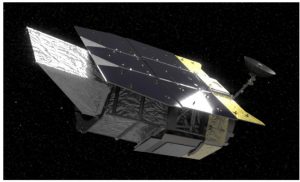
- The Nancy Grace Roman Space Telescope is NASA’s next-generation infrared space observatory, designed to conduct wide-field surveys of the universe and complement the capabilities of the Hubble and James Webb Space Telescopes.
- Key Features
- Wide-Field Survey Capability: The telescope can image an area of the sky nearly 100 times larger than Hubble in a single observation, enabling rapid surveys of vast regions of the cosmos.
- Advanced Scientific Instruments: It carries a 300-megapixel Wide Field Instrument for infrared imaging and spectroscopy, along with a Coronagraph Instrument to directly image planets around nearby stars.
- Lagrange Point (L2) Orbit: The telescope operates from the Sun–Earth Lagrange Point 2 (L2), about 1.5 million km from Earth, providing a stable thermal environment and an unobstructed view of deep space.
- High Data Collection Capacity: The mission is expected to transmit around 1.4 terabytes of data daily and generate nearly 20 petabytes of scientific data during its planned five-year mission.
- Potential Applications
- Understanding Dark Matter: The telescope will map the distribution of dark matter through gravitational lensing, revealing how invisible matter shapes galaxies.
- Studying Dark Energy: It will investigate dark energy, the force believed to drive the accelerated expansion of the universe, by observing billions of distant galaxies.
- Discovering Exoplanets: Using wide-field observations and direct imaging, the telescope will detect and characterise exoplanets, including planets around nearby stars.
- Mapping the Universe: The mission will produce one of the most detailed three-dimensional maps of galaxies and galaxy clusters, improving understanding of cosmic evolution.
- Advancing Astronomical Research: Roman’s observations will complement those of the Hubble Space Telescope and the James Webb Space Telescope, providing deeper insights into the origin, evolution and large-scale structure of the universe.
Click to Explore UPSC Offline Coaching
 3 Sep 2026