UPSC PYQs

Prelims, Mains & Optional PYQs

UPSC Notes

Comprehensive & Short Notes

News In Shorts 05 October 2026: Ramappa Temple, PIL, Edible Oils & Asian Games

5 Oct 2026

News In Shorts 05 October 2026: Ramappa Temple, PIL, Edible Oils & Asian Games

Ramappa Temple

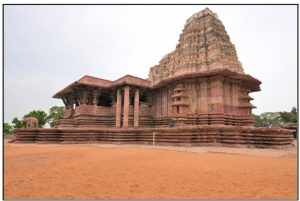
Context: Heritage activists oppose a proposed PVNR opencast coal mine near Ramappa Temple, citing risks to its structure, lake, environment and UNESCO World Heritage status.
UPSC Online Courses

Key Concerns

Ramappa Temple

  • Mining and Structural Stability: The proposed opencast mine, located about 5 km downstream, could alter groundwater movement through geological lineaments and faults and potentially affect the temple’s foundation.
  • Vibrations and Heritage Impact: Although immediate blasting impact was assessed as low, repeated mining-induced vibrations could cumulatively affect the nearly 800-year-old structure, which already shows fractures and differential settlement.

About Ramappa Temple

  • Ramappa Temple, officially known as Rudreshwara Temple, is located at Palampet in Mulugu district, Telangana, and represents the distinctive architectural achievements of the Kakatiya period.
  • Origin: The temple was constructed in 1213 AD during the reign of Kakatiya ruler Ganapati Deva by his general Recherla Rudra.
  • Dedicated to: Ramalingeswara Swamy, a form of Lord Shiva.
  • Key Features
    • Star-Shaped Platform: The temple stands on a 6-feet-high star-shaped platform, with intricately carved walls, pillars and ceilings showcasing the craftsmanship of Kakatiya sculptors.
    • Distinctive Construction: The lower structure is built primarily of red sandstone, while the gopuram uses lightweight bricks reportedly capable of floating on water.
    • Kakatiya Architectural Style: Its gateways and temple-town proportions represent the distinctive Kakatiya architectural style, particularly evident in the region’s highly evolved temple gateways.
  • UNESCO Recognition: Rudreshwara (Ramappa) Temple was inscribed on the UNESCO World Heritage List in 2021, recognising its outstanding representation of the Kakatiyan architectural tradition.


Positive Indigenisation List (PIL)

Context: The Defence Ministry has reviewed the sixth Positive Indigenisation List, which is in the final approval stage and is likely to be promulgated within the next few months.

About Positive Indigenisation List (PIL)

  • PILs identify defence equipment that must be procured from Indian industry, progressively reducing dependence on imported military equipment and components.
  • Origin: The PIL framework was introduced under the Defence Acquisition Procedure (DAP) 2020 to promote import substitution and indigenous defence production.
  • Nodal Ministry: The Ministry of Defence, particularly the Department of Military Affairs (DMA) for major defence items, oversees the relevant PILs.
  • Objective: To strengthen Aatmanirbhar Bharat in defence, create assured domestic demand and encourage Indian private companies and DPSUs.
  • Key Features
    • Mandatory Domestic Procurement: Items placed on the PIL are to be sourced from domestic manufacturers, including private-sector companies and Defence Public Sector Undertakings (DPSUs).
    • SRIJAN Portal: Launched to facilitate indigenisation, the SRIJAN portal has listed 19,509 previously imported items for local production. To date, 4,006 items have attracted interest from the Indian industry
    • Progressive Indigenisation: The successive lists progressively restrict imports while providing Indian industry opportunities to develop and manufacture defence equipment.
  • About the Sixth PIL
    • Army and Navy Focus: The sixth PIL is expected to primarily include strategically important equipment required by the Indian Army and Indian Navy.
    • LRUs and Sub-systems: It is expected to cover additional Line Replaceable Unit (LRU) , sub-systems, assemblies and other equipment with significant indigenisation potential.
    • Current Status: The DMA has reviewed the proposed list, which is currently at the final approval stage and is expected within a few months.

UPSC Online Classes

Edible Oils And Food Inflation

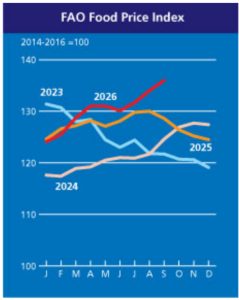
Context: The United Nations’ Food and Agriculture Organization (FAO) benchmark Food Price Index averaged 136 points in September 2026, its highest level since November 2022.
About FAO Food Price Index

Edible Oils And Food Inflation

  • FAO Food Price Index is a measure of the monthly change in international prices of a basket of food commodities, with 2014–2016 = 100 as the base period 
  • Vegetable Oil Prices: FAO Vegetable Oil Price Index reached 198.6 points, up 18.3% year-on-year.
    • The FAO Vegetable Oil Price Index measures the monthly change in international prices of vegetable oils, including palm, soybean, rapeseed, and sunflower oils. 
  • Previous Peak: The index had earlier reached an all-time high of 251.8 points in March 2022 following Russia’s invasion of Ukraine.

Major Drivers Of Rising Edible Oil Prices

  • Biofuel Demand:
    • Biodiesel Feedstock: Palm, soybean, and rapeseed oils can be converted into Fatty Acid Methyl Esters (FAME) through transesterification.
    • Growing Diversion: Around 25% of soybean oil, 28% of palm oil, and 29% of rapeseed oil production is estimated to be used for biodiesel.
    • Food-Fuel Competition: Biofuel blending mandates are increasingly diverting edible oils from food use to energy production.
  • Indonesia’s Biofuel Mandate:
    • Rising Blend Target: Indonesia raised its palm oil-based biodiesel mandate from B20 in 2018 to B50 in July 2026.
    • Domestic Demand: The shift from B40 to B50 could absorb an additional 4.7 MT of palm oil, reducing export availability.
    • Energy Security: The policy also helps Indonesia reduce dependence on imported petroleum.
  • El Nino:
    • Production Impact: El Nino-induced water stress affects oil palm flowering and fruit formation.
    • Delayed Effect: Its impact on palm oil production generally appears after 8–12 months.
    • Indonesian Output: Production is projected to decline from 58.5 MT in 2026 to 56.6 MT in 2027, further limiting export availability.
  • Russia-Ukraine War:
    • Production Availability: Russia and Ukraine are expected to produce more sunflower seeds and sunflower oil in 2026-27.
    • Export Disruptions: Damage to ports and storage infrastructure, along with restrictions in the Sea of Azov and Black Sea, is disrupting supplies.
    • Higher Logistics Costs: Alternative routes through the Baltic, Caspian, and Far East and overland rail networks are costly and congested.
    • Supply Constraint: Thus, adequate production is not translating into smooth international availability.

Implications And Concerns For India

  • Production Shortfall: El Niño could lower India’s edible oil production from 9.7 MT in 2025-26 to 9.2 MT in 2026-27.
  • Record Import Requirement: Imports are projected to rise from 16.8 MT to 17.2 MT, including 8.2 MT of palm oil, 5 MT of soybean oil, and 3.5 MT of sunflower oil.
  • Exposure to Global Prices: Higher international vegetable oil prices can be transmitted directly into Indian food inflation due to import dependence.
  • Climate Risk: El Nino-related production losses in India and major producing countries could tighten global edible oil supplies.
  • Food-Fuel Competition: Indonesia’s shift to B50 could absorb an additional 4.7 MT of palm oil, reducing supplies available to importing countries such as India.

UPSC Online Coaching

Asian Games 2026

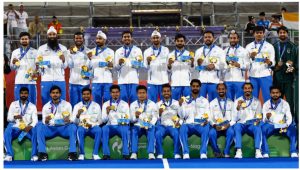
Context: India concluded the 2026 Asian Games in Aichi-Nagoya, Japan.
About the Asian Games

Asian Games 2026

  • The Asian Games are a continental multi-sport event for athletes from Asian countries, organised under the Olympic Council of Asia (OCA).
  • Inception: The first Asian Games were held in New Delhi, India, in 1951.
  • Frequency: They are held once every four years.
  • Organising Body: The Olympic Council of Asia (OCA) is responsible for the Asian Games.

Overall Performance of India in Asian Games 2026 

  • Medal Tally: India won 85 medals — 21 gold, 27 silver and 37 bronze, making it the country’s second-highest medal haul at the Asian Games. 
  • Overall Ranking: India finished fourth, behind China (341), Japan (269) and South Korea (150). 
  • Team-Sport Dominance: India achieved a clean sweep of gold medals in men’s and women’s cricket, kabaddi and hockey, winning all six team events in these sports.
  • Strongest Disciplines: Athletics led with 24 medals, followed by shooting with 15 and archery with 9, highlighting India’s broad-based performance.

Historic Firsts

  • Golf: Pranavi Sharath Urs became the first Indian woman to win an individual gold medal at the Asian Games.
  • Sailing: India won its first-ever Asian Games silver in men’s skiff.
  • Pole Vault: Baranica Elangovan became India’s first Asian Games medallist in women’s pole vault.
  • Mixed Martial Arts: Suchika Tariya won India’s maiden Asian Games medal in the discipline.
  • Soft Tennis: Jay Meena won India’s first Asian Games medal in soft tennis.
  • Weightlifting: Mirabai Chanu won her maiden Asian Games medal, taking silver in the 49kg category.


Guru Nanak Dev

Context: Lok Sabha Speaker Om Birla paid tribute to Guru Nanak Dev on his Jyoti Jyot Day, recalling his message of truth, compassion, equality and service.

Click to Know UPSC Coaching Centres in India

About Guru Nanak Dev

Guru Nanak Dev

  • Guru Nanak Dev (1469–1539) was the founder of Sikhism and the first of the ten Sikh Gurus.
  • Early Life: Guru Nanak was born on 15 April , 1469 at Rai Bhoi di Talvandi, now Nankana Sahib in Pakistan.
  • Key Contributions
    • Oneness of God: He propagated ‘Ik Onkar’, emphasising the oneness of God and the universal presence of the divine.
    • Equality and Social Reform: He opposed caste discrimination, social inequality, superstition and ritualism, advocating equality irrespective of caste, gender or social status.
    • Three Pillars of Sikhism: His teachings emphasised Naam Japna (remembering God), Kirat Karni (honest living) and Vand Chakna (sharing with others).
    • Guru Granth Sahib: His hymns and teachings form an important part of the Guru Granth Sahib, the central scripture of Sikhism.
    • Universal Message: His teachings of truth, equality, brotherhood, compassion and service continue to influence Sikh religious and social traditions.
      • He started foundational practices of  Langar, Sangat, and Pangat  encouraging people to come together in spiritual fellowship while emphasising selfless service, compassion and mutual respect.
  • Death: He left his mortal form on September 22, 1539, at 70 years old.
    • In Sikh tradition, this event is referred to as Joti Jot Samauna (merging with the eternal light) and  is observed as Jyoti Jyot Day every year falling on different dates.
    • In 2026, the official SGPC Nanakshahi calendar designates the observance on October 5, 2026
  • Birth Anniversary: His birth anniversary is celebrated annually as Guru Nanak Gurpurab on the full moon day of the lunar month of Kartik (Kartik Purnima or Kartik Puranmashi) in the traditional calendar.

Check Out UPSC CSE Books

Visit PW Store

online store 1

News In Shorts 05 October 2026: Ramappa Temple, PIL, Edible Oils & Asian Games

Need help preparing for UPSC or State PSCs?

Connect with our experts to get free counselling & start preparing

Free Counselling for UPSC Aspirants

Connect with our experts and take the right next step.

Expert Guidance
Personalized Strategy
100% Free

Book Your Free Session

NEED ASSISTANCE?

Request a Callback

Our counsellor will connect with you and help you choose the right course and centre.

  • Expert Guidance
  • Course & Fee Information
  • Quick Callback Support

Request a Callback

Books
UPSC PYQs
UPSC Notes
Current Affairs
Quick Revise Now !
AVAILABLE FOR DOWNLOAD SOON
UDAAN PRELIMS WALLAH
Comprehensive coverage with a concise format
Integration of PYQ within the booklet
Designed as per recent trends of Prelims questions
हिंदी में भी उपलब्ध
Quick Revise Now !
UDAAN PRELIMS WALLAH
Comprehensive coverage with a concise format
Integration of PYQ within the booklet
Designed as per recent trends of Prelims questions
हिंदी में भी उपलब्ध

<div class="new-fform">


    </div>

    Subscribe our Newsletter
    Sign up now for our exclusive newsletter and be the first to know about our latest Initiatives, Quality Content, and much more.
    *Promise! We won't spam you.
    Yes! I want to Subscribe.