UPSC PYQs

Prelims, Mains & Optional PYQs

UPSC Notes

Comprehensive & Short Notes

India–Switzerland Relations: Defence, Nuclear Energy, Trade and Strategic Cooperation

6 Oct 2026

India–Switzerland Relations: Defence, Nuclear Energy, Trade and Strategic Cooperation

Subject: GS 02: International Relations

Context: During the Swiss President’s visit to New Delhi, India and Switzerland identified new avenues for cooperation in defence, civil nuclear energy, infrastructure, research and innovation, marking the first anniversary of the India–European Free Trade Association Trade and Economic Partnership Agreement.

  • Cultural Diplomacy: The Indian PM gifted the Swiss President Gulmarg, Konark and Yeoor cheeses, along with a Kashmiri walnut-wood wall panel, while a Kutchi shawl in a Sadeli box was gifted to his wife, showcasing India’s culinary heritage, traditional handicrafts, weaving and regional craftsmanship. 

UPSC Coaching Classes

Key Outcomes of the 2026 Meeting

  • Defence Cooperation: India and Switzerland identified new opportunities for military exchanges, defence production and related industrial cooperation, broadening the relationship into the strategic-security domain.
  • Civil Nuclear Energy: Both sides agreed to deepen cooperation in civil nuclear energy, creating scope for technological, scientific and institutional collaboration.
  • Migration and Mobility Partnership: The two countries signed an agreement providing for multiple-entry visas of up to five years, with stays of up to six months per visit, along with renewable one-year student permits.
  • Young Professionals Exchange: The agreement provides for an annual exchange of 300 young professionals from each country, with the possibility of increasing the number to 500, facilitating professional and language-skill development.
  • Transport and Infrastructure: India and Switzerland signed an agreement covering transport technologies, mobility systems and infrastructure, with India inviting Swiss companies to participate in design, manufacturing, capacity building and infrastructure development.
  • Research and Innovation: The Department of Science and Technology (DST) and the Swiss National Science Foundation (SNSF) agreed to strengthen long-term research cooperation, while a separate arrangement with the Zurich University of Applied Sciences focuses on innovation, technology transfer and entrepreneurship.

Evolution of India–Switzerland Relations

  • Early Diplomatic Foundation: India and Switzerland established diplomatic relations through a Treaty of Friendship in 1948, making Switzerland one of the early European partners of independent India.
  • Industrial Cooperation: Swiss technical expertise contributed to India’s early industrialisation and infrastructure development, creating a longstanding foundation for engineering and manufacturing cooperation.
  • Financial Transparency: Bilateral engagement gradually moved beyond concerns surrounding Swiss banking secrecy towards greater tax transparency and financial cooperation, including implementation of the Automatic Exchange of Information (AEOI) on financial accounts in 2018.
  • Technology and Innovation: In recent years, cooperation has expanded into deep technology, research, startups and innovation, including platforms such as Swissnex Bengaluru.
  • Economic Partnership: The relationship received a major economic boost with the India–EFTA Trade and Economic Partnership Agreement (TEPA), signed in 2024 and entering into force on 1 October 2025.

India–EFTA TEPA- Economic Foundation

  • EFTA Framework: The European Free Trade Association (EFTA) comprises Switzerland, Norway, Iceland and Liechtenstein, providing India with a broader platform for engagement with European economies.
  • Trade and Investment: TEPA seeks to expand trade, investment, market access and economic cooperation between India and EFTA countries.
  • Swiss Investment: Switzerland is an important source of investment and technology for India, particularly in engineering, manufacturing, pharmaceuticals, food processing and infrastructure-related sectors.
  • Industrial Linkages: Major Swiss companies operating in India contribute to employment, technology transfer and integration into global production networks.

Areas of Emerging Cooperation

  • Defence and Manufacturing: Greater military exchanges and defence production can provide opportunities for technology cooperation, industrial partnerships and capability development, subject to Switzerland’s domestic regulations governing military exports.
  • Nuclear Energy: Civil nuclear cooperation can contribute to India’s efforts to diversify its low-carbon energy mix and strengthen technological collaboration in nuclear science and safety.
  • Sustainable Mobility: Swiss expertise in transport systems, tunnelling, ropeways, mobility technologies and infrastructure engineering can complement India’s large-scale infrastructure expansion.
  • Research and Innovation: Cooperation between DST, SNSF and Swiss academic institutions can facilitate joint research, technology transfer and commercialisation of innovations.
  • Deep-Tech Entrepreneurship: Collaboration with Swiss universities and innovation institutions can strengthen India’s startup ecosystem, advanced technology capabilities and academia-industry linkages.
  • Human Capital: Expanded student and young-professional mobility can facilitate skill development, knowledge exchange and people-to-people connectivity.

UPSC Online Preparation

About Switzerland

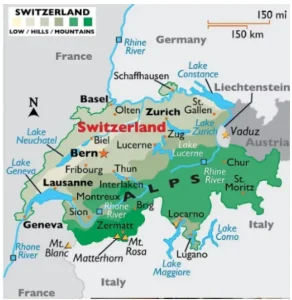
  • Location: Switzerland is a landlocked country in Central Europe, bordered by France, Germany, Austria, Liechtenstein and Italy.
  • India–Switzerland RelationsCapital: Bern is the federal city and de facto capital.
  • Major Physical Features: It lies within the Alps, with the Swiss Plateau and Jura Mountains forming other major physiographic regions.
  • Key Rivers: The Rhine, Rhône, Inn and Ticino originate in or pass through Switzerland.
  • Political System: Switzerland is a federal republic comprising 26 cantons.
  • Neutrality: It is internationally known for its policy of permanent neutrality.
  • International Significance: Geneva hosts the headquarters or major offices of several international organisations, including the United Nations Office at Geneva (UNOG) and the World Health Organization (WHO).

Significance for India

  • Strategic Diversification: Defence and nuclear cooperation can help India diversify its partnerships in advanced technology and strategic sectors.
  • Technology Transfer: Switzerland’s strengths in precision engineering, advanced manufacturing, research and innovation complement India’s large market, manufacturing capacity and skilled workforce.
  • Infrastructure Modernisation: Swiss expertise in specialised infrastructure can support India’s efforts to develop safer, cleaner and more efficient transport systems.
  • Economic Integration: TEPA can provide greater opportunities for India to integrate with European value chains, investment networks and high-technology markets.
  • Talent Mobility: Easier movement of students and young professionals can strengthen human-capital linkages and address skill requirements in specialised sectors.
  • Clean-Energy Transition: Cooperation in nuclear energy, clean technologies and sustainable mobility can support India’s broader energy-transition and climate goals.

Key Challenges

  • Investment Protection: Differences over a potential Bilateral Investment Treaty (BIT), particularly concerning investor–state dispute settlement, remain an important issue for expanding investment.
  • Intellectual Property: Differences over intellectual property protection and pharmaceutical interests require a balance between innovation incentives and India’s access to affordable medicines.
  • Swiss Neutrality: Switzerland’s neutrality and domestic rules governing war-material exports and technology transfers may place limitations on defence cooperation.
  • Regulatory Differences: Divergent standards and regulatory frameworks can affect the ease of technology transfer, investment and market access.
  • Mobility Constraints: Existing professional exchange quotas may remain modest compared with the scale of India’s skilled workforce and STEM talent pool.
  • Implementation Gap: The effectiveness of TEPA and the newly signed agreements will depend on their timely implementation, regulatory coordination and private-sector participation.

Way Forward

  • Complete the Investment Framework: India and Switzerland should work towards resolving outstanding issues relating to investment protection and dispute settlement to unlock greater private investment.
  • Deepen Strategic Cooperation: Defence and nuclear cooperation should focus on technology, research, manufacturing and capacity building, while remaining consistent with the two countries’ legal and regulatory frameworks.
  • Leverage Swiss Expertise: India should actively integrate Swiss capabilities in precision engineering, tunnelling, mobility, clean technology and advanced manufacturing into domestic infrastructure programmes.
  • Strengthen Research Networks: Joint research programmes should prioritise clean energy, health, advanced technology, space and emerging technologies, with greater academia-industry collaboration.
  • Expand Talent Mobility: Effective implementation of student and young-professional arrangements can create stronger knowledge and innovation linkages between the two countries.
  • Maximise TEPA: The India–EFTA framework should be used not merely for increasing trade but for promoting investment, technology transfer, resilient supply chains and higher-value manufacturing.

Click to Know UPSC OnlyIAS Coaching Centres

Conclusion

India–Switzerland ties are evolving into a multidimensional strategic partnership spanning trade, defence, nuclear energy, technology and mobility. Effective implementation of TEPA and new cooperation agreements can unlock greater investment, innovation and resilient economic linkages. 

News Source: The Hindu

Check Out UPSC CSE Books

Visit PW Store

online store 1

India–Switzerland Relations: Defence, Nuclear Energy, Trade and Strategic Cooperation

Need help preparing for UPSC or State PSCs?

Connect with our experts to get free counselling & start preparing

Free Counselling for UPSC Aspirants

Connect with our experts and take the right next step.

Expert Guidance
Personalized Strategy
100% Free

Book Your Free Session

NEED ASSISTANCE?

Request a Callback

Our counsellor will connect with you and help you choose the right course and centre.

  • Expert Guidance
  • Course & Fee Information
  • Quick Callback Support

Request a Callback

Books
UPSC PYQs
UPSC Notes
Current Affairs
Quick Revise Now !
AVAILABLE FOR DOWNLOAD SOON
UDAAN PRELIMS WALLAH
Comprehensive coverage with a concise format
Integration of PYQ within the booklet
Designed as per recent trends of Prelims questions
हिंदी में भी उपलब्ध
Quick Revise Now !
UDAAN PRELIMS WALLAH
Comprehensive coverage with a concise format
Integration of PYQ within the booklet
Designed as per recent trends of Prelims questions
हिंदी में भी उपलब्ध

<div class="new-fform">


    </div>

    Subscribe our Newsletter
    Sign up now for our exclusive newsletter and be the first to know about our latest Initiatives, Quality Content, and much more.
    *Promise! We won't spam you.
    Yes! I want to Subscribe.