UPSC PYQs

Prelims, Mains & Optional PYQs

UPSC Notes

Comprehensive & Short Notes

News In Shorts 26 September 2026: OneSCD, SUHEP, EAS & Kallakkadal

26 Sep 2026

News In Shorts 26 September 2026: OneSCD, SUHEP, EAS & Kallakkadal

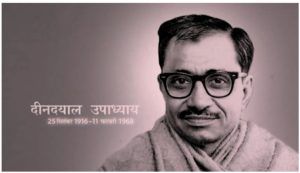
Pandit Deendayal Upadhyaya

Context: Prime Minister Narendra Modi paid tribute to Pandit Deendayal Upadhyaya on his birth anniversary.
UPSC Online Courses

About Pandit Deendayal Upadhyaya

Pandit Deendayal Upadhyaya

  • Pandit Deendayal Upadhyaya was an Indian politician and leader of the Bharatiya Jana Sangh (BJS), the forerunner of the Bharatiya Janata Party (BJP). 
  • Early Life And Education
    • Born: 25 September 1916 at Nagla Chandraban, Mathura, Uttar Pradesh.
    • Education: Studied in Sikar and Pilani before pursuing his B.A. at Sanatan Dharma College, Kanpur.
    • RSS Association: Joined the RSS in 1937 and later became a full-time Pracharak (full-time worker/organiser of the RSS). 
  • Political Career
    • Bharatiya Jana Sangh: Played a key organizational role in its establishment in 1951.
    • Leadership: Served as its General Secretary, strengthening the party’s organisational structure and cadre base.
    • Presidency: Became President of the Jana Sangh in December 1967. His major contribution was building a disciplined cadre and expanding the party’s presence.
  • Writings: 
    • Publishing: Established Rashtra Dharma Prakashan in Lucknow.
    • Publications: Associated with Rashtra Dharma, Panchjanya, and Swadesh.
  • Death: He died on 11 February 1968.

Core Philosophy

  • Integral Humanism
    • ‘Integral Humanism’ aimed to present an ‘Indigenous socio-economic model’ in which human beings are at the center of development.
    • Critique Of The “Economic Man”: Integral Humanism challenges the conception of human beings merely as “economic men” driven by material needs and economic self-interest.
    • Official Doctrine: Integral Humanism was adopted as the Jana Sangh’s official doctrine in 1965.
  • Antyodaya: Antyodaya refers to the upliftment of the person at the lowest or most disadvantaged end of society.
    • It is closely associated with his broader conception of welfare-oriented and inclusive development.


OneSCD

Context: India co-hosted the launch of OneSCD on the sidelines of the 81st UN General Assembly (UNGA 81) in New York. 
About OneSCD

OneSCD

  • OneSCD is a Global Partnership to Advance Equity and Transform Sickle Cell Care.
  • Hosted by: It is co-hosted by the Government of the Federal Republic of Nigeria and India, along with other partners such as UNICEF and WHO.
  • Purpose: It seeks to promote an equitable, coordinated, and sustainable global response to Sickle Cell Disease (SCD).
    • The partnership focuses on ensuring timely diagnosis and quality care for people living with SCD.

About Sickle Cell Disease

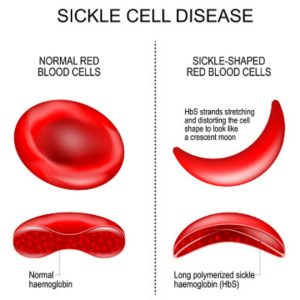
  • Genetic Blood Disorder: Sickle Cell Disease (SCD) is an inherited disorder of hemoglobin, the protein in red blood cells that carries oxygen.
  • Genetic Mutation: It is caused by a mutation in the HBB gene located on chromosome 11, resulting in the production of abnormal hemoglobin S (HbS).
  • Sickle-Shaped RBCs: Under conditions such as low oxygen levels, red blood cells can become rigid, sticky, and sickle-shaped rather than their normal flexible, disc-like shape.
  • Vaso-Occlusion and Anemia: Sickle-shaped cells can block small blood vessels and undergo premature destruction (hemolysis), leading to reduced blood flow, recurrent severe pain, and chronic anemia.
  • Complications: SCD can cause infections, stroke, acute chest syndrome, organ damage, and other serious complications.
  • Inheritance: SCD is inherited when a child receives the abnormal HBB gene from both parents.
    • A person who inherits the abnormal gene from only one parent generally has sickle cell trait. 
  • Screening: Early diagnosis through newborn and population screening enables genetic counseling, preventive care, vaccination, monitoring, and timely treatment.

UPSC Online Classes

India’s Approach

  • National Sickle Cell Anemia Elimination Mission: Launched in 2023 with the goal of eliminating Sickle Cell Disease as a public health problem by 2047.
  • Screening and Comprehensive Care: The Mission integrates population-scale screening, early diagnosis, counseling, treatment, and follow-up into public health systems.


Upper Subansiri Hydroelectric Project

Context: The Environment Ministry’s Expert Appraisal Committee (EAC) has recommended environmental clearance for the 1,605 MW Subansiri Upper Hydroelectric Project (SUHEP) in Arunachal Pradesh, subject to Stage-I forest clearance. 
About The Subansiri Upper Hydroelectric Project

Upper Subansiri Hydroelectric Project

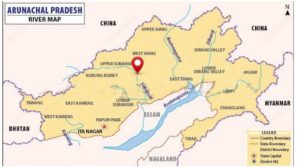
  • The Subansiri Upper Hydroelectric Project (SUHEP) is a proposed 1,605 MW run-of-the-river hydropower project on the Subansiri River in Arunachal Pradesh.
  • River System: The Subansiri is a major tributary of the Brahmaputra River.
  • Location: The project is planned near Menga, about 20 km from Daporijo, in the Upper Subansiri district of Arunachal Pradesh.
  • Dam: The project envisages a 237-meter-high storage dam.
  • Purpose: Power generation and flood moderation.
  • Reservoir: The reservoir will have a surface area of about 22.2 sq km at Full Reservoir Level (FRL) and a length of about 50 km.

Major Concerns

  • Forest and Biodiversity Impact: The project requires diversion of approximately 2,733 hectares of forest land and felling of around 1,35,733 trees.
    • Large-scale tree felling may affect forest structure, habitat continuity, biodiversity, wildlife movement and ecosystem services.
  • Compensatory Afforestation Framework: Since Arunachal Pradesh has high forest cover, compensatory afforestation obligations can be fulfilled on suitable land in other states with lower forest cover.
    • For SUHEP, around 5,466 hectares of degraded forest land in Madhya Pradesh have been identified for compensatory afforestation.
    • Plantation outside the project area may not fully compensate for the local biodiversity, habitat, and ecosystem services lost due to forest diversion in Arunachal Pradesh.

UPSC Coaching Classes

East Asia Summit (EAS)

Context: India participated in the 14th EAS Economic Ministers’ Meeting in Manila, where regional economic developments and ASEAN-India trade were discussed.

Key Outcomes of the Meet

  • Regional Economic Outlook: Ministers exchanged views on regional and global economic developments, including the expected impact on trade and investment flows in 2027.
  • Energy & Industrial Cooperation: The Economic Research Institute for ASEAN and East Asia (ERIA) presented an integrated approach linking energy security, digital demand, industrial clusters and trade policies.
  • AITIGA Review: India highlighted the ongoing review of the ASEAN-India Trade in Goods Agreement (AITIGA) to address trade asymmetries and facilitate greater trade flows.
    • India-ASEAN bilateral trade reached US$128.38 billion in 2025-26, accounting for 10.55% of India’s global trade.

About East Asia Summit

  • The EAS is an ASEAN-led, leaders-led forum for dialogue and cooperation on strategic, political and economic issues affecting the region.
  • Origin: The first EAS was held in Kuala Lumpur, Malaysia, in 2005 with 16 participating countries.
    • The United States and Russia joined in 2011, expanding the strategic scope of the forum.
  • Members: 19 Participating Countries
  • 11 ASEAN members: Brunei, Cambodia, Indonesia, Laos, Malaysia, Myanmar, Philippines, Singapore, Thailand, Timor-Leste and Vietnam.
  • 8 other participants: Australia, China, India, Japan, New Zealand, South Korea, Russia and the United States.
  • Objectives
    • Strategic Cooperation: The EAS promotes peace, stability and dialogue on regional strategic and security concerns.
    • Economic Cooperation: It facilitates cooperation in trade, finance, connectivity, sustainable development and economic integration.
    • Sectoral Cooperation: Major areas include climate and energy, health, education, disaster management, maritime cooperation, food security and poverty alleviation.
  • Indo-Pacific Engagement: EAS provides India with an ASEAN-led platform to engage major Indo-Pacific powers on economic, strategic, maritime and regional issues.


Kallakkadal

Indian National Center for Ocean Information Services (INCOIS)  issued a red alert along the Kerala coast, warning of high waves and possible Kallakkadal conditions.

Click to Know UPSC Coaching Centres in India

What is ‘Kallakkadal’?

  • ‘Kallakkadal’ refers to sudden and powerful swell surges that cause unexpected coastal flooding, especially along parts of the Indian coastline, especially Kerala.
    • These swell surges, with periods ranging from 30 to 300 seconds, can substantially elevate coastal water levels. 
  • Meaning of Kallakkadal: The term ‘Kallakkadal’ comes from Malayalam words Kallan (thief) and Kadal (sea), describing sudden “thief-like” sea waves that unexpectedly strike coastal areas.
  • Cause: The phenomenon is mainly triggered by long-period ocean swells generated by distant storms in the southern Indian Ocean.
  • Long-Distance Travel: These swells can travel nearly 10,000 kilometres before reaching the Indian coastline.
  • Seasonality: Kallakkadal events are most common during the pre-monsoon season, particularly along the Kerala coast.
  • Impact: The surges pose serious threats to fishing communities, coastal infrastructure, harbours and low-lying coastal regions.
  • Scientific Cause: Scientists have linked Kallakkadal events to infragravity waves and wave shoaling processes in shallow coastal waters.
    • Infragravity Waves: Infragravity waves are low-frequency ocean waves generated through interactions among shorter surface waves in the open ocean.
    • Wave Shoaling: Wave shoaling is the process in which wave height increases as ocean waves move from deep waters to shallow coastal regions.
    • Coastal bathymetry, or underwater topography, further amplifies these surges and contributes to sudden coastal flooding.

Check Out UPSC CSE Books

Visit PW Store

online store 1

News In Shorts 26 September 2026: OneSCD, SUHEP, EAS & Kallakkadal

Need help preparing for UPSC or State PSCs?

Connect with our experts to get free counselling & start preparing

Free Counselling for UPSC Aspirants

Connect with our experts and take the right next step.

Expert Guidance
Personalized Strategy
100% Free

Book Your Free Session

NEED ASSISTANCE?

Request a Callback

Our counsellor will connect with you and help you choose the right course and centre.

  • Expert Guidance
  • Course & Fee Information
  • Quick Callback Support

Request a Callback

Books
UPSC PYQs
UPSC Notes
Current Affairs
Quick Revise Now !
AVAILABLE FOR DOWNLOAD SOON
UDAAN PRELIMS WALLAH
Comprehensive coverage with a concise format
Integration of PYQ within the booklet
Designed as per recent trends of Prelims questions
हिंदी में भी उपलब्ध
Quick Revise Now !
UDAAN PRELIMS WALLAH
Comprehensive coverage with a concise format
Integration of PYQ within the booklet
Designed as per recent trends of Prelims questions
हिंदी में भी उपलब्ध

<div class="new-fform">


    </div>

    Subscribe our Newsletter
    Sign up now for our exclusive newsletter and be the first to know about our latest Initiatives, Quality Content, and much more.
    *Promise! We won't spam you.
    Yes! I want to Subscribe.