GS III: Conservation, environmental pollution and degradation.
Context: Recently, the Ministry of Environment, Forest and Climate Change (MoEF&CC) reissued the draft notification on the Western Ghats Ecologically Sensitive Area (ESA) amid continuing disagreements with the Western Ghats States.
- The debate has highlighted the need to balance ecological conservation, livelihood security and cooperative federalism through science-based and participatory decision-making.
Key Highlights
- Western Ghats Significance: The Western Ghats are one of the world’s 36 Biodiversity Hotspots and were inscribed as a UNESCO World Heritage Site in 2012 due to their exceptional biodiversity, high endemism and ecological importance.
- Purpose of ESA Notification: The proposed Ecologically Sensitive Area (ESA) notification seeks to regulate environmentally harmful activities such as mining, quarrying, red-category industries and large-scale construction in ecologically fragile regions under the Environment (Protection) Act, 1986.
- Evolution of the ESA Proposal: The proposal has evolved through successive expert committees and draft notifications, reflecting efforts to reconcile ecological protection with developmental concerns.
- Present Status: Between 2015 and 2026, the Centre issued five draft notifications without reaching consensus with all stakeholder States. Following the expiry of the latest notification, the MoEF&CC extended the tenure of the Sanjay Kumar Expert Committee by another year in July 2026.
- State-wise Progress: Gujarat and Goa have broadly agreed to the proposed notification, while Maharashtra has sought a fresh review. Discussions with Karnataka, Kerala and Tamil Nadu are continuing, with the possibility of a phased or State-wise implementation.
UPSC Course Fees Online
Evolution of the Western Ghats ESA Proposal
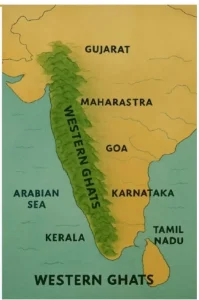
- Western Ghats Ecology Expert Panel (WGEEP), 2010: Constituted under the chairmanship of Prof. Madhav Gadgil, the Committee recommended declaring the entire Western Ghats as an Ecologically Sensitive Area, covering 142 talukas across 44 districts, and classifying them into Ecologically Sensitive Zones (ESZ-I, ESZ-II and ESZ-III) based on ecological sensitivity.
- High-Level Working Group (HLWG), 2012: Chaired by Dr. K. Kasturirangan, the Committee recommended a more balanced approach by limiting ESA status to approximately 37% of the Western Ghats (about 59,940 sq km), primarily covering natural landscapes, while excluding most human settlements, agricultural lands and plantations.
- MoEF&CC Draft Notifications: Based on the Kasturirangan Committee recommendations, the Ministry issued the first draft notification in 2014, followed by multiple revisions in consultation with the States.
- Sanjay Kumar Expert Committee (2022): The Committee was constituted to examine concerns raised by the States and recommend a consensus-based approach for finalising the ESA notification.
Why has Karnataka Opposed the ESA Notification?
- Large Population Dependence: Around 23.4% of Karnataka’s population resides in the 10 Western Ghats districts, where approximately 20,668 sq km has been identified for ESA notification.
- Livelihood Concerns: The State argues that restrictions may adversely affect agriculture, plantations, mining, infrastructure projects and local economic activities.
- Forest Rights Issues: Communities have expressed concerns regarding restrictions on minor forest produce, agricultural practices and unresolved claims under the Forest Rights Act, 2006.
- Use of Satellite Mapping: Local communities contend that satellite imagery cannot accurately distinguish between natural forests and plantation crops such as coffee, arecanut, rubber and coconut, leading to possible errors in ESA demarcation.
- Fear of Displacement: Many residents believe that ESA notification could eventually lead to eviction, land-use restrictions and reduced livelihood opportunities despite existing legal rights.
Challenges in Implementing the ESA Notification
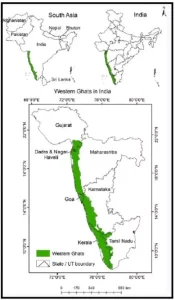
- Conservation vs Development: Balancing ecological protection with livelihood security remains the principal challenge.
- Federal Coordination: Differences between the Union Government and the Western Ghats States have delayed the final notification.
- Stakeholder Participation: Local communities have demanded greater consultation, ground verification and transparency before finalising ESA boundaries.
- Scientific Mapping: Reliance solely on remote sensing without adequate field verification has generated concerns regarding the accuracy of land classification.
Importance of Indigenous Communities
- Traditional Conservation Practices: Indigenous communities have historically protected forests through sustainable resource use and possess valuable traditional ecological knowledge.
- Biocultural Diversity: Conserving indigenous communities alongside forests helps preserve both biodiversity and cultural heritage, strengthening long-term ecological resilience.
- Community Participation: Effective conservation requires recognising local communities as partners in conservation rather than treating them solely as beneficiaries or stakeholders.
About Ecologically Sensitive Area (ESA)
- Definition: An Ecologically Sensitive Area (ESA) is a region notified under the Environment (Protection) Act, 1986, where environmentally harmful activities are regulated to conserve fragile ecosystems.
- Legal Basis: The Central Government is empowered under Section 3 of the Environment (Protection) Act, 1986 to notify Ecologically Sensitive Areas for environmental protection.
- Activities Regulated: ESA notifications generally regulate mining, quarrying, red-category industries, thermal power projects and other activities that may adversely affect ecological integrity.
- Objective: The primary objective is to promote sustainable development by balancing environmental conservation with livelihood and developmental needs.
Way Forward
- Science-Based Delineation: ESA boundaries should be finalised through a combination of remote sensing, ground verification and independent scientific assessment.
- Participatory Governance: Greater consultation with State Governments, Gram Sabhas, indigenous communities and other stakeholders is essential to build trust and improve implementation.
- Livelihood Protection: Conservation measures should be accompanied by adequate compensation, alternative livelihood opportunities and effective implementation of the Forest Rights Act, 2006.
- Landscape-Level Conservation: Conservation planning should integrate ecological connectivity, watershed management, climate resilience and community participation rather than focusing only on regulatory restrictions.
- Cooperative Federalism: The Centre and States should adopt a consensus-based approach that safeguards both ecological security and sustainable development, ensuring long-term conservation of the Western Ghats.
Click to Know UPSC Offline Courses
Conclusion
The Western Ghats ESA should evolve as a model of science-based conservation, community participation, and cooperative federalism, ensuring that ecological protection and sustainable development reinforce rather than undermine each other.
 1 Aug 2026