Udaan, Prahaar, Q&A Bank etc.
CA Magazines & Editorials
International Day against Drug Abuse and Illicit Trafficking 2026 is observed on 26 June to raise awareness about drug abuse, drug trafficking, and their social impacts. Established by the UN in 1987 and led by UNODC, the day promotes prevention, rehabilitation, international cooperation, and initiatives such as India's Nasha Mukt Bharat Abhiyan.
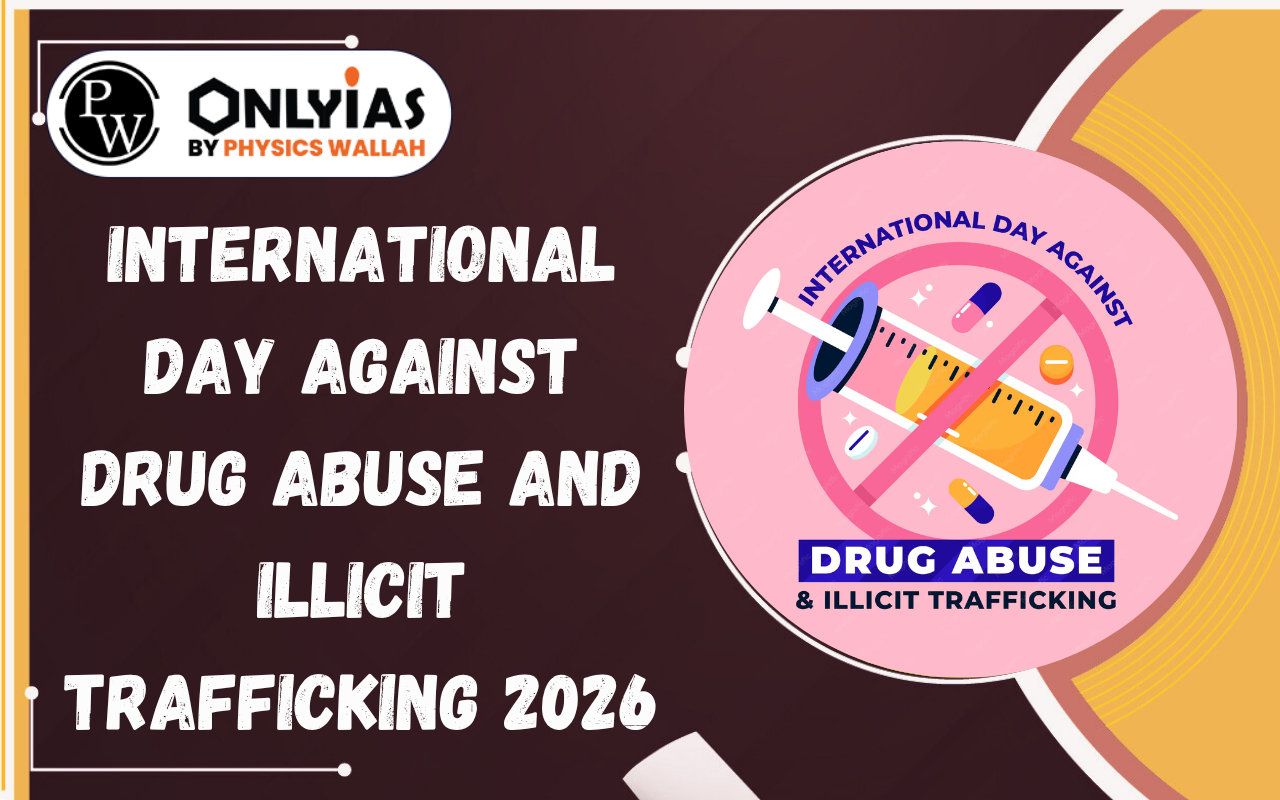
International Day against Drug Abuse and Illicit Trafficking 2026 is observed on 26 June to raise awareness about drug abuse, illicit drug trafficking, and the need for global cooperation to address these challenges. Established by the United Nations General Assembly in 1987, the observance promotes prevention, treatment, rehabilitation, and stronger international efforts to combat the illegal drug trade.
As of June 2026, the official International Day against Drug Abuse and Illicit Trafficking Theme 2026 has not been announced by UNODC.
This topic is important for the UPSC IAS Examination, particularly for Prelims, GS Paper II (Governance and International Relations), GS Paper III (Internal Security and Social Issues), and the Essay paper.
The International Day against Drug Abuse and Illicit Trafficking 2026 is a global observance dedicated to raising awareness about the dangers of drug abuse and the challenges posed by illicit drug trade. The day promotes prevention, rehabilitation, and international cooperation while highlighting the role of governments, communities, and organisations in creating a drug-free society. The key highlights of the observance are provided below.
| International Day against Drug Abuse and Illicit Trafficking 2026: Key Highlights | |
| Particulars | Details |
| Observance | International Day against Drug Abuse and Illicit Trafficking 2026 |
| Date | 26 June 2026 |
| Established By | United Nations General Assembly |
| Year of Establishment | 1987 |
| Implementing Agency | United Nations Office on Drugs and Crime (UNODC) |
| Popular Name | World Drug Day 2026 |
| Objective | Prevent Drug Abuse and Combat Illicit Trafficking |
| Focus Areas | Prevention, Treatment, Rehabilitation, Drug Awareness, International Cooperation |
| UPSC Relevance | GS II, GS III, Essay, Prelims |
The International Day against Drug Abuse and Illicit Trafficking, also known as World Drug Day 2026, is a global observance dedicated to raising awareness about the dangers posed by illegal drugs and organised criminal networks involved in Drug Trafficking.
The observance serves as a platform to:
The United Nations General Assembly adopted Resolution 42/112 on 7 December 1987, declaring 26 June as the International Day against Drug Abuse and Illicit Trafficking. The resolution reflected the international community’s commitment to achieving a society free from drug abuse through stronger global cooperation and awareness campaigns.
Since then, governments, civil society organisations, educational institutions, healthcare agencies, and international bodies have observed the day annually through awareness programmes, policy discussions, rehabilitation initiatives, and anti-drug campaigns.
At the time of writing, the official International Day against Drug Abuse and Illicit Trafficking Theme 2026 has not been announced on the United Nations observance page. This section should be updated once the theme is officially released by UNODC.
Candidates should regularly check updates from the United Nations Office on Drugs and Crime (UNODC) for the official campaign theme and related awareness materials.
The observance remains significant because the global drug problem continues to evolve through new trafficking routes, synthetic drugs, organised crime networks, and digital platforms used for illegal drug distribution. According to the United Nations, illicit drug markets continue to pose serious threats to health, security, governance, and sustainable development.
The International Day against Drug Abuse and Illicit Trafficking is important because the impact of drug abuse extends beyond individual health and affects families, communities, economies, and national security. The observance encourages governments and societies to address the root causes of substance abuse while strengthening prevention and rehabilitation efforts.
Drug Abuse contributes to addiction, mental health disorders, infectious diseases, overdoses, and long-term social consequences. Awareness programmes encourage prevention and early intervention.
Drug Trafficking generates enormous profits for criminal organisations and often supports other illegal activities such as money laundering, human trafficking, and arms smuggling.
Young people are particularly vulnerable to Substance Abuse. Educational campaigns help create awareness regarding the risks associated with narcotic drugs and psychotropic substances.
The day promotes collaboration among countries to tackle cross-border drug trafficking and dismantle criminal networks.
It highlights the importance of treatment, counselling, and rehabilitation services for individuals affected by Drug Addiction.
The United Nations Office on Drugs and Crime (UNODC) is the principal UN agency responsible for addressing the world’s drug problem.
UNODC plays a central role in coordinating World Drug Day campaigns and promoting evidence-based solutions to drug-related challenges.
Drug abuse and illicit trafficking continue to pose significant challenges to public health, social stability, and national security across the world. Understanding these challenges is essential for developing effective prevention, rehabilitation, and enforcement strategies.
India has adopted a multi-dimensional approach combining law enforcement, awareness generation, rehabilitation, and community participation.
The Nasha Mukt Bharat Abhiyan (NMBA) is one of India’s flagship initiatives aimed at reducing Drug Abuse through:
The NDPS Act provides the legal framework for controlling and regulating operations relating to Narcotic Drugs and Psychotropic Substances.
Explore UPSC Foundation Courses

Explore UPSC Foundation Courses

The NCB coordinates anti-drug enforcement activities across India and works with international agencies to combat Drug Trafficking.
Addressing Drug Abuse and Illicit Trafficking requires a comprehensive approach that combines prevention, enforcement, rehabilitation, and international cooperation. Governments, communities, educational institutions, and law enforcement agencies must work together to reduce drug demand and disrupt illegal drug supply networks.
This topic is highly relevant for UPSC because it intersects with governance, internal security, international cooperation, public health, organised crime, and social justice.
Aspirants must solve PYQs and practice questions to strengthen their understanding of this topic:
Q. India’s proximity to two of the world’s biggest illicit opium-growing states has enhanced her internal security concerns. Explain the linkages between drug trafficking and other illicit activities such as gunrunning, money laundering and human trafficking. What counter-measures should be taken to prevent the same? (250 words, 15 Marks) – CSE 2018
Q. Discuss the types of organised crimes. Describe the linkages between terrorists and organised crime that exist at the national and transnational levels. (150 words, 10 Marks) – CSE 2022
Q. Discuss the significance of International Day against Drug Abuse and Illicit Trafficking 2026. Examine the challenges posed by Drug Abuse and Drug Trafficking and suggest measures to strengthen prevention, rehabilitation, and international cooperation.
International Day against Drug Abuse and Illicit Trafficking 2026 highlights the need for collective action against Drug Abuse and Drug Trafficking. Through awareness, rehabilitation, law enforcement, and international cooperation, governments and communities can work towards reducing substance abuse and creating a healthier society.
Check Out UPSC CSE Books
Visit PW Store
International Day against Drug Abuse and Illicit Trafficking 2026 is observed on 26 June 2026 every year across the world.
The United Nations General Assembly established the observance in 1987 through Resolution 42/112.
The objective is to strengthen global action against Drug Abuse and Illicit Trafficking while promoting prevention, treatment, rehabilitation, and international cooperation.
UNODC monitors global drug trends, supports governments, publishes the World Drug Report, and coordinates international efforts against Drug Trafficking and organised crime.
Nasha Mukt Bharat Abhiyan is a Government of India initiative aimed at reducing Drug Abuse through awareness generation, community participation, treatment, and rehabilitation support.
The topic is relevant for Prelims, GS-II, GS-III, Internal Security, Social Issues, Governance, International Relations, and Essay papers due to its links with public health, organised crime, and global cooperation.


Explore UPSC Foundation Batches


Connect with our experts to get free counselling & start preparing
Join India’s trusted platform for expert guidance, quality content, proven success.
Learn anytime, anywhere.



India's leading UPSC coaching platform helping aspirants prepare for IAS, IPS, IFS and other Civil Services examinations with the best faculty and proven strategies.
<div class="new-fform">
</div>