Udaan, Prahaar, Q&A Bank etc.
CA Magazines & Editorials
Prepare for UPSC CSE 2027 with PhysicsWallah. Explore the complete UPSC Syllabus 2027, including Prelims, Mains, CSAT, Optional Subjects, Exam Pattern, preparation strategy, books, PYQs, and the latest syllabus PDF.
UPSC Syllabus 2027 serves as the foundation for preparing for the Civil Services Examination (CSE), one of India’s most competitive examinations. Conducted by the Union Public Service Commission (UPSC), the examination consists of three stages: the Preliminary Examination, the Main Examination, and the Personality Test (Interview). Understanding the syllabus is essential for planning a focused preparation strategy and covering every important topic systematically.
Since the official notification for 2027 is yet to be announced, the information provided below is based on the UPSC CSE 2026 Notification and will be updated after the release of the latest notification. The rules generally remain unchanged unless UPSC announces any revision in the official notification.
The UPSC syllabus outlines the subjects and topics from which questions are asked in the Civil Services Examination. It covers the syllabus for Prelims, Mains, Optional Subjects, Essay Paper, and the Personality Test. Aspirants should use the official syllabus as a roadmap to prepare effectively and avoid studying irrelevant topics.
As per the official UPSC syllabus, no major changes are expected, and the UPSC Syllabus 2027 is likely to remain largely the same.
The table below provides a quick overview of the UPSC Syllabus 2027:
| Particular | Details |
| Conducting Body | Union Public Service Commission (UPSC) |
| Examination | UPSC Civil Services Examination (CSE) 2027 |
| Examination Stages | Prelims, Mains & Personality Test |
| Prelims Papers | GS Paper I & CSAT (GS Paper II) |
| Mains Papers | Essay, GS I-IV, Optional Papers, Language Papers |
| Mode of Examination | Offline |
| Official Syllabus PDF | To be updated after UPSC CSE 2027 Notification |
The table below highlights the key details of the UPSC Civil Services Examination (CSE) 2027:
| Particulars | Details |
| Prelims Exam Date | 23rd May 2027 |
| Mains Exam Date | August 20, 2027 (5 days) |
| Application Start Date | 13th January 2027 |
| Application End Date | 02nd February 2027 |
| Official Notification PDF | To be released on 13th January 2027 |
| Official Website | https://www.upsc.gov.in |
UPSC releases the Civil Services Examination syllabus along with the official notification on its website. Since the UPSC CSE 2027 Notification has not yet been released, aspirants can refer to the syllabus prescribed in the UPSC CSE 2026 Notification. The official UPSC Syllabus 2027 PDF will be updated here after the notification is released.
Download Link: Available Soon
Candidates are advised to go through the Syllabus published in this Section for the Preliminary Examination and the Main Examination, as periodic revision of syllabus has been done in several subjects.
Part A—Preliminary Examination
The UPSC Preliminary Examination is the first stage of the Civil Services Examination. It consists of two objective-type papers: General Studies Paper I and CSAT (General Studies Paper II). Marks obtained in GS Paper I are considered for the Prelims cutoff, while CSAT is qualifying in nature.
Part B—Main Examination
Candidates who qualify the Preliminary Examination appear for the UPSC Main Examination. It consists of nine descriptive papers, out of which seven papers are considered for merit, while two language papers are qualifying in nature.
Download UPSC Syllabus PDF:
Candidates must choose one optional subject for the UPSC Main Examination. Each optional subject comprises Paper I and Paper II, carrying 250 marks each, for a total of 500 marks.
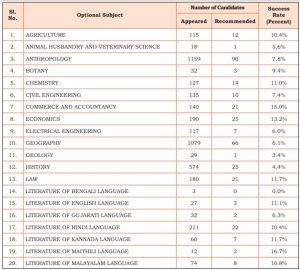
The following is the list of Optional subjects for UPSC Mains 2027 along with their success rate:
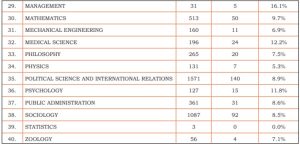
Candidates can download the official UPSC Optional Subject Syllabus PDF from the link below:
The Personality Test is the final stage of the UPSC Civil Services Examination and carries 275 marks. It is designed to assess a candidate’s overall personality rather than academic knowledge.
The Interview Board evaluates qualities such as:
There is no prescribed syllabus for the Personality Test, as questions are generally based on the candidate’s Detailed Application Form (DAF), current affairs, and situational awareness.
UPSC Exam Pattern 2027 consists of three stages—Prelims, Mains, and Interview—conducted by the Union Public Service Commission:
| Stage | Papers/Components | Marks | Nature |
| Preliminary Examination | Paper I: General Studies (GS) | 200 | Objective (MCQs) |
| Paper II: CSAT | 200 | Objective (Qualifying) | |
| Main Examination | Essay Paper, GS Paper I–IV, Optional Subject (2 Papers), Language Papers (Qualifying) | 1750 | Descriptive (Merit + Qualifying) |
| Personality Test (Interview) | Interview | 275 | Final Stage: Assesses personality traits, decision-making ability, communication skills, and suitability for public service |
The marking scheme varies across different stages of the examination.
| Examination Stage | Marks |
| Prelims GS Paper I | 200 |
| Prelims CSAT | 200 (Qualifying) |
| Mains (7 Merit Papers) | 1750 |
| Personality Test | 275 |
| Final Merit | 2025 |
UPSC follows a negative marking system in the Preliminary Examination.
Follow a subject-wise preparation strategy aligned with the official UPSC syllabus to build conceptual clarity and ensure comprehensive coverage of every topic.
| Subject | Preparation Tips |
| History & Art and Culture | Build a strong foundation with NCERTs and standard books like Spectrum Modern History. Cover Ancient, Medieval, and Modern Indian History along with Indian Art and Culture. Revise timelines, important events, and solve PYQs regularly. |
| Geography | Study NCERTs, maps, and standard reference books such as G.C. Leong. Link physical and human geography with current affairs. |
| Indian Polity & Governance | Cover the Constitution, governance, Parliament, Judiciary, and recent legislative developments using Indian Polity by M. Laxmikanth. |
| Economy | Focus on economic concepts, budgeting, banking, inflation, and government schemes. Follow the Economic Survey, Union Budget, and current economic developments. |
| Environment & Ecology | Prepare biodiversity, climate change, environmental conventions, protected areas, and environmental issues from both static and current affairs sources. |
| Science & Technology | Understand basic scientific concepts and regularly follow developments in space, biotechnology, AI, defence, health, and emerging technologies. |
| Current Affairs | Read a reliable newspaper daily and revise monthly current affairs. Integrate current events with static topics for both Prelims and Mains. |
| Essay | Practise writing one essay every week. Develop a balanced, multidimensional approach supported by facts, examples, and relevant quotations where appropriate. |
| Ethics (GS Paper IV) | Understand ethics, integrity, aptitude, emotional intelligence, and public service values. Practise case studies to improve application-based answers. |
| Optional Subject | Complete the syllabus thoroughly, prepare concise notes, solve PYQs, and revise regularly with answer-writing practice. |
Aspirants should begin with NCERT textbooks and gradually move to standard reference books for each subject. For a comprehensive subject-wise list of recommended books, refer to the PhysicsWallah UPSC Book List.
A strong UPSC current affairs plan 2027 is essential for both Prelims and Mains.
Daily Approach:
Monthly Approach:
Previous Year Questions help candidates understand the examination pattern, topic-wise weightage, and the nature of questions asked by UPSC. Solving PYQs also improves answer-writing skills and helps identify important areas of the syllabus.
Candidates can download the official UPSC Previous Year Question Papers from the official UPSC website to understand the exam pattern, identify important topics, and improve preparation for both the Preliminary and Main Examinations.
| UPSC Prelims | UPSC Mains |
| Objective-type examination | Descriptive examination |
| Focuses on conceptual understanding | Tests analytical and writing skills |
| Includes GS Paper I and CSAT | Includes Essay, GS Papers, Optional, and Language Papers |
| Qualifying stage for Mains | Determines the final written merit |
Candidates should avoid these common mistakes during preparation:
A clear understanding of the UPSC Syllabus 2027 is the first step towards effective Civil Services preparation. By following the official syllabus, practising Previous Year Questions, staying updated with current affairs, and maintaining regular revision, aspirants can build a strong foundation for every stage of the examination.
Prepare with PhysicsWallah’s expert guidance, comprehensive study materials, mock tests, and mentorship to strengthen your UPSC 2027 preparation and move closer to your dream of becoming a civil servant.
Check Out UPSC CSE Books
Visit PW Store
The UPSC CSE 2027 Notification has not been released yet. Until then, aspirants should prepare according to the UPSC CSE 2026 syllabus and official notification.
Yes. The Preliminary Examination focuses on objective-type questions, whereas the Main Examination evaluates descriptive and analytical writing across General Studies, Essay, Optional Subjects, and Language Papers.
UPSC offers 48 optional subjects, including literature subjects. Candidates must choose one optional subject for the Main Examination.
Yes. CSAT (General Studies Paper II) is a qualifying paper, and candidates must secure the minimum qualifying marks prescribed by UPSC.
The official UPSC Syllabus 2027 PDF will be available after the release of the UPSC CSE 2027 Notification. Until then, candidates can refer to the syllabus prescribed in the UPSC CSE 2026 Notification.




Connect with our experts to get free counselling & start preparing
Join India’s trusted platform for expert guidance, quality content, proven success.
Learn anytime, anywhere.



India's leading UPSC coaching platform helping aspirants prepare for IAS, IPS, IFS and other Civil Services examinations with the best faculty and proven strategies.
<div class="new-fform">
</div>