Core Demand of the Question
- Challenges in implementing V2V technology in India
- Phased roadmap for integration
|
Answer
Introduction
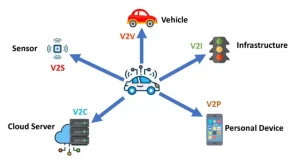 Vehicle-to-Vehicle (V2V) communication is a technology that enables vehicles to exchange real-time data on speed, location, and movement to enhance road safety. However, its effective implementation in India is constrained by various challenges that limit large-scale operationalisation.
Body
Challenges in implementing V2V technology in India
- Chicken-and-Egg Problem of Scale: V2V benefits depend on widespread adoption, but early adopters bear high costs with limited utility, as fewer connected vehicles reduce network effectiveness.
- Lack of Standardisation and Interoperability: India has not finalised a communication standard (DSRC vs C-V2X), creating uncertainty and preventing development of a unified ecosystem.
- High Compliance and Cost Burden: Vehicle owners already bear costs for tracking devices and registration systems; V2V hardware adds further financial pressure without adequate subsidies or vendor competition.
- Weak Infrastructure and Ecosystem Readiness: Poor road design, mixed traffic (two-wheelers, pedestrians), and absence of V2I systems limit the effectiveness of advanced technologies like V2V.
Eg: India records over 1.7 lakh road deaths annually (MoRTH 2022), largely due to poor road design and mixed traffic conditions.
- Low Digital and Operational Readiness: Many drivers lack training to interpret real-time alerts, reducing usability and potentially increasing confusion or misuse.
Eg: According to MoRTH data, a significant share of drivers lack formal training or certification.
Phased roadmap for integration
- Phase 1
- Foundational Standardisation and Pilot Testing: Finalize communication protocols (DSRC/C-V2X) and implement pilot projects in controlled environments like highways and select smart cities.
- Phase 2
- Infrastructure Development and Capacity Building: Develop V2I infrastructure (smart signals, toll systems) and invest in backend data systems while training drivers and enforcement agencies.
- Phase 3
- Incentivised Adoption and Subsidisation: Provide subsidies, tax incentives, and promote competitive vendor markets to reduce cost burden and encourage early adoption.
- Phase 4
- Gradual Mandate and Ecosystem Expansion: Introduce phased mandates for new vehicles, especially commercial fleets, ensuring network scale while expanding coverage to urban and inter-city corridors.
- Phase 5:
- Strengthening Security and Regulation: Establish robust cybersecurity frameworks, data protection norms, and traffic governance reforms to ensure safe and reliable operation.
Conclusion
V2V technology can improve road safety, but in India its success depends on gradual adoption, better infrastructure, and driver readiness. A phased and practical approach, aligned with ground realities, can help build a reliable and effective connected mobility system in the future.
 April 30, 2026