Core Demand of the Question
- Role of the Vice-President of India as the Chairman of the Rajya Sabha
- Issues faced by the Vice-President while presiding over Rajya Sabha
|
Answer
The Vice-President of India serves as the ex-officio Chairman of the Rajya Sabha under Article 64 of the Indian Constitution. This dual role, outlined in Articles 89 and 90, makes the Vice-President responsible for conducting proceedings and maintaining order in the Upper House.
Role of the Vice-President of India as the Chairman of the Rajya Sabha
- Presiding Over Sessions: As the Chairman, the Vice-President oversees Rajya Sabha sessions, ensures smooth proceedings, maintains decorum, and handles disruptions.
- Administering Oath: The Chairman formally inducts newly elected Rajya Sabha members by administering their oath of office.
Eg: Article 99 deals with the oath or affirmation by Members of Parliament.
- Casting Vote: Under Article 100(1), the Chairman has no vote in the first instance, but has a casting vote in case of a tie.
- Referring Bills and Matters to Committees: The Chairman refers bills and issues to Parliamentary Committees for detailed scrutiny and recommendations.
- Facilitating Discussion and Debate: The Chairman ensures fair allocation of time for members to speak, fostering healthy debate and deliberation.
- Protecting the Privileges of Members: The Chairman safeguards the parliamentary privileges of Rajya Sabha members and ensures their rights are not curtailed.
Issues faced by the Vice-President while presiding over Rajya Sabha
- Frequent Disruptions and Productivity Loss: Rising political polarisation often leads to adjournments, sloganeering, and suspension of members, affecting legislative business.
Eg: 2023 Winter Session saw mass suspension of MPs leading to repeated adjournments
- Allegations of Partisanship: Opposition parties sometimes question the neutrality of rulings on notices, debates, or procedural decisions, putting the Chair under scrutiny.
Eg: Opposition criticism in 2022 over rejection of Rule 267 notices for urgent discussions.
- Disciplinary Limitations: Delays in deciding disqualification petitions under the Tenth Schedule reflect procedural complexities.
- Rule 267 Conflicts: Frequent demands to suspend listed business create procedural strain and political friction.
Eg: Monsoon Sessions (2021–23) witnessed adjournments over demands to suspend listed business for Pegasus/Manipur debates.
- Balancing Government Agenda with Opposition Rights: Ensuring adequate debate while enabling passage of Bills amid time constraints is challenging.
Eg: Debates during passage of the Jammu and Kashmir Reorganisation Bill, 2019 saw sharp procedural contestation.
![]()
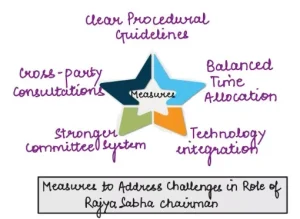
The Vice-President, as Chairman of the Rajya Sabha, plays a pivotal role in ensuring smooth legislative functioning. However, strong leadership, upholding parliamentary norms, and objective decision-making are crucial to address rising challenges and maintain order.
 April 24, 2026