The Union government’s ₹92,000 crore mega-infrastructure project for Great Nicobar Island (GNI) has gained momentum with the notification of a draft master plan. While aimed at transforming GNI into a strategic transshipment and tourism hub, the project faces significant legal and ethical challenges regarding tribal rights and ecological stability.
Geographic and Strategic Significance
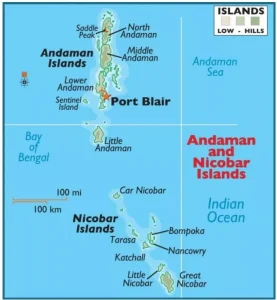
- Strategic Location: GNI is home to Indira Point (India’s southernmost point) and sits just 150 km from Sumatra, Indonesia.
- The “Malacca Dilemma”: The island is positioned at the western entrance to the Malacca Strait, the world’s busiest sea route.
- This project acts as a strategic “choke point” capability, allowing India to monitor or secure vital supply lines during regional conflicts.
- Economic Hub: By developing a transshipment hub, India aims to reduce its heavy reliance on the Colombo Port, allowing large “mother” ships to unload cargo for distribution by smaller vessels within Indian waters.
Best Online Coaching for UPSC
Project Overview- The Four Pillars
The project is built on a holistic development model with four primary components:
- International Container Transshipment Port (ICTP): To capture a significant share of global sea trade.
- International Airport: To facilitate global connectivity for both civilian and strategic use.
- Power Plants: To provide energy self-sufficiency for the island’s industrial and residential needs.
- Greenfield Township: A planned seaside destination featuring biodiversity tourism and social infrastructure.
Key Concepts & Terms
- Transshipment: The act of offloading a container from one ship and loading it onto another to reach the final destination.
- Malacca Strait: A narrow stretch of water between the Malay Peninsula and Sumatra, serving as the main shipping channel between the Indian and Pacific Oceans.
- PVTG (Particularly Vulnerable Tribal Group): A government classification for tribes with declining populations, low literacy, and pre-agricultural technology.
- Greenfield Project: A project that is built from scratch on previously undeveloped land.
|
Demographic and Environmental Concerns
- Massive Population Influx: The Draft Master Plan projects the population to grow from current levels of under 10,000 to 3.36 lakh by 2055.
- Ecological Pressure: Experts question if the island’s fragile geography can handle one million tourists annually and the massive infrastructure required to support them.
- Biodiversity Risk: The project may irreversibly alter the island’s “pristine” rainforests and the habitat of the Giant Leatherback Turtle.
Impact on Indigenous Tribes
- Affected Groups: The project directly impacts the Nicobarese and the Shompen.
- Vulnerability of the Shompen: The Shompen are a Particularly Vulnerable Tribal Group (PVTG). As hunter-gatherers largely disconnected from the outside world, they are physically and immunologically vulnerable to new diseases brought by a massive settler population.
- Relocation Conflicts: There are reported contradictions between administrative plans regarding where existing populations will be moved, leading to renewed fears of displacement and loss of identity.
Click to Explore UPSC Offline Coaching
Legal and Administrative Challenges
- Forest Rights Act (FRA) 2006: Tribal communities have opposed the project since 2022, alleging that their forest rights have not been settled before granting clearances.
- Judicial Scrutiny: While the National Green Tribunal (NGT) cited “strategic importance” to set aside certain concerns, challenges regarding environmental and tribal clearances remain active in the Calcutta High Court.
- Consultation Transparency: Critics point out that the draft master plan lacks a clear notification date, making the 30-day window for public objections ambiguous.
Way Forward
- Holistic Consensus: The government should prioritize a consensus-based approach that reconciles maritime ambitions with the ancestral rights of the indigenous people.
- Settling Rights First: Immediate and transparent settlement of rights under the Forest Rights Act is essential to prevent long-term legal and social friction.
- Scientific Carrying Capacity: Conduct an independent study on the island’s carrying capacity to determine if a population of 3.3 lakh is ecologically sustainable.
- Strategic-Environmental Balance: While the “Malacca Dilemma” necessitates a presence, the scale of the “Greenfield Township” could be moderated to reduce the permanent ecological footprint.
Conclusion
The Great Nicobar Project is a high-stakes test of India’s ability to balance national security and global trade ambitions with ethical governance. Success will be measured not just by the volume of containers handled, but by the protection of the island’s unique human and natural heritage.


 13 Apr 2026




.png)






 Current Affairs




 GS Foundation
 Optional Course
 Combo Courses
 Degree Program