Mining Buffer Zone for Ramsar Sites
Context: Recently, the Supreme Court clarified that the 10-km mining buffer zone around Uttarakhand’s Asan Wetland Conservation Reserve (a Ramsar site) will apply uniformly to all wetland conservation reserves across India.
UPSC Online Courses
Laws on Mining in Ramsar Weland
- No Blanket Ban : Neither the Ramsar Convention nor the Wetlands (Conservation and Management) Rules, 2017 prescribes a mandatory buffer zone around Ramsar sites or specifically bans mining within a fixed distance.
- Wetlands (Conservation and Management) Rules, 2010: It had a stricter framework. They prohibited activities such as land reclamation, setting up new industries, dumping solid waste, and other activities harmful to wetlands.
- Wetlands Rules 2017: It replaced this with a decentralised approach, giving State Wetland Authorities the responsibility to identify, manage, and regulate wetlands. Unlike the 2010 Rules, they do not provide a specific list of prohibited activities, allowing States greater flexibility in wetland management.
- Current Status: The constitutional validity of these rules is currently under challenge before the Supreme Court.
About Asan Wetland Conservation Reserve
- The Asan wetland conservation reserve, also known as Asan Barrage, is a 444-hectare stretch of the Asan River in Dehradun district, Uttarakhand.
- Ramsar site declaration: The Asan Wetland Conservation Reserve was declared a Ramsar site in 2020.
- This makes it the first Ramsar site in Uttarakhand, India
- It was declared a Conservation Reserve in 2005 under Section 36A of the Wildlife (Protection) Act, 1972.
- Conservation reserves denoted a protected areas which typically act as buffer zones to or connectors and migration corridors between established national parks, wildlife sanctuaries and reserved and protected forests of India.
- It is an important habitat for migratory waterbirds and supports rich aquatic biodiversity.
- The reserve is also an Important Bird Area (IBA) by the Bombay Natural History Society (BNHS) and BirdLife International.
IARC Classifies Three Medicines as Carcinogenic
Context: The World Health Organisation’s cancer research arm has classified three widely used medicines as carcinogenic to humans.
- The International Agency for Research on Cancer (IARC) has classified the following three widely-prescribed medicines as “carcinogenic to humans” (Group 1):
- Hydrochlorothiazide: Used for high blood pressure, linked to squamous cell skin carcinoma and lip cancer.
- Voriconazole: Used for fungal infections, associated with squamous cell skin carcinoma in transplant recipients.
- Tacrolimus: Used as an immunosuppressant, linked to non-Hodgkin lymphoma and post-transplant lymphoproliferative disorder.
- Usage in India: In India, hydrochlorothiazide is a common first-line hypertension therapy, voriconazole is routinely used in immunocompromised patients, and tacrolimus underpins post-transplant care.
Reasons for classification
- According to IARC, there is sufficient evidence that hydrochlorothiazide causes squamous cell carcinoma of the skin and cancer of the lip.
- Voriconazole has also been linked to squamous cell carcinoma of the skin, particularly among transplant recipients receiving prolonged treatment. The risk again appears to be mediated by heightened sensitivity to ultraviolet light combined with long-term exposure.
- Tacrolimus suppresses the immune system to prevent rejection of transplanted organs. While this action is essential for transplant survival, reduced immune surveillance may allow abnormal cells or virus-infected cells to proliferate
About International Agency for Research on Cancer
- The International Agency for Research on Cancer (IARC) is the specialized cancer research agency of the World Health Organization (WHO).
- It evaluates scientific evidence on substances, occupations, lifestyles, and environmental factors that may cause cancer in humans.
- Established: 1965
- Headquarters: Lyon, France
- IARC Classification of Carcinogens
- Group 1: Carcinogenic to humans.
- Group 2A: Probably carcinogenic to humans.
- Group 2B: Possibly carcinogenic to humans.
- Group 3: Not classifiable as to its carcinogenicity.
- Group 4: Probably not carcinogenic to humans (very rarely used).
Dr. M. S. Swaminathan Award
Context: Recently, Dr. M. S. Swaminathan Award for Environment Protection 2026 was announced.
Winners of 2026 Award
- P. Pechiyammal: She hails from Ramanathapuram (Tamil Nadu), and has pioneered ghost gear collection efforts to protect marine ecosystems.
- Ghost gear refers to abandoned, lost, or discarded fishing nets and other fishing equipment that continue to drift in oceans, trapping and killing marine species such as fish, turtles, dolphins, and seabirds for years.
- Govindhammal: She is from Villupuram (Tamil Nadu), and has promoted sustainable agriculture practices that enhance soil fertility, conserve water resources, and minimise the use of chemical fertilisers and pesticides.
About Dr. M. S. Swaminathan Award for Environment Protection
- Eligibility: The award is open to grassroots environmental champions, community workers, smallholder farmers, fisherfolk, and non-governmental organisations working across India.
- Instituted in: 1999
- Awarded by: The award is presented by the Rotary Club of Madras East in the name of the late Dr. M. S. Swaminathan, an acclaimed agricultural scientist and the father of India’s Green Revolution.
- The award recognizes grassroots efforts that address global challenges like marine pollution and agricultural sustainability.
About M.S Swaminathan
- Dr. M. S. Swaminathan (1925–2023) was an eminent Indian agricultural scientist and geneticist, widely regarded as the Father of India’s Green Revolution.
- Born in Kumbakonam, Tamil Nadu, he spearheaded the introduction of high-yielding varieties (HYVs) of wheat and rice, significantly enhancing agricultural productivity and ensuring India’s food security.
UPSC Online Coaching
COSPAR Vikram Sarabhai Medal 2026
Context: Astrophysicist Annapurni Subramaniam has been awarded the COSPAR Vikram Sarabhai Medal 2026 at the 46th COSPAR Scientific Assembly held in Florence, Italy.
About Annapurni Subramaniam

- Annapurni Subramaniam is the director of the Indian Institute of Astrophysics (IIA), Bengaluru.
- She is a Fellow of the Indian Academy of Sciences and a member of the International Astronomical Union.
- The award recognizes her outstanding contributions to space research in developing countries.
- Subramaniam is the only fourth Indian to receive this medal, in addition to being the first Indian woman scientist and only the third female recipient of this honour.
- Other Indian recipients: ISRO scientist and director of ISRO’s Physical Research Laboratory, Anil Bharadwaj (2024), Physicist Gurbax Singh Lakhina (2014) and eminent space scientist and former ISRO chairman, UR Rao, (1996).
About COSPAR Vikram Sarabhai Medal
- The COSPAR Vikram Sarabhai Medal is an international award presented to scientists from developing countries for their outstanding contributions to space research.
- Origin: The medal was instituted in 1990 in memory of Vikram Sarabhai, the founder of India’s space programme and the Indian Space Research Organisation (ISRO).
- Organised By: It is awarded biennially by the Committee on Space Research, an international scientific body affiliated with the International Science Council and associated with the United Nations Committee on the Peaceful Uses of Outer Space, jointly with ISRO.
- Eligibility: Scientists from developing countries demonstrating exceptional scientific contributions to the advancement of space research.
RBI Monetary Policy Committee (MPC) Keeps Repo Rate Unchanged
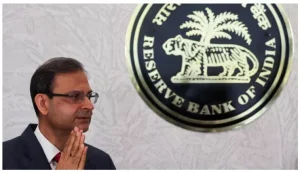
Context: The Reserve Bank of India’s (RBI) Monetary Policy Committee (MPC), in its August 2026 meeting, kept the policy repo rate unchanged.
Key Decisions of the MPC
- Policy Repo Rate: Retained at 5.25% under the Liquidity Adjustment Facility (LAF).
- The Liquidity Adjustment Facility (LAF) is a monetary policy tool of the Reserve Bank of India (RBI) that enables it to inject or absorb short-term liquidity from the banking system.
- Standing Deposit Facility (SDF) Rate: Unchanged at 5.00%.
- SDF Rate is the interest rate at which the RBI accepts overnight deposits from commercial banks without requiring collateral.
- Marginal Standing Facility (MSF) Rate & Bank Rate: Unchanged at 5.50%.
- MSF is a window under which scheduled commercial banks can borrow overnight funds from the RBI against the collateral of government securities.
- The Bank Rate is the interest rate at which the RBI lends long-term funds to banks and financial institutions without any repurchase agreement (repo).
- Policy Stance: The MPC continued with the Neutral stance.
About Policy Repo Rate (Repo Rate)
- The policy repo rate is the interest rate at which the RBI lends short-term funds to commercial banks against government securities under the Liquidity Adjustment Facility (LAF).
- Purpose: It is the RBI’s key policy rate for regulating liquidity, inflation, and credit in the economy.
- Impact: An increase in the repo rate makes borrowing costlier and helps contain inflation, while a decrease encourages borrowing, investment, and economic growth.
- Reverse Repo Rate: The RBI absorbs excess liquidity from the market by borrowing from banks.
About the Monetary Policy Committee (MPC)
- Constituted under: Reserve Bank of India Act, 1934 (amended through the Finance Act, 2016).
- Purpose: Determines the RBI’s policy interest rate (repo rate) to achieve the inflation target while supporting economic growth.
- Composition: 6 members
- RBI Governor (Chairperson)
- RBI Deputy Governor in charge of Monetary Policy
- One RBI officer nominated by the Central Board
- Three external members appointed by the Central Government
- Decision-making: Each member has one vote; decisions are taken by majority.
- In case of a tie, the Governor has a casting vote.
- Meetings: At least four meetings every year.
- Inflation Target: 4% CPI inflation, with a tolerance band of ±2% (i.e., 2%–6%)
Safe Harbour Under IT Act
Context: The Government is reconsidering safe harbour protections after concerns over Meta’s content moderation, alleged algorithmic bias, and the spread of illegal online content.
About Safe Harbour
- Safe harbour is a legal protection which grants intermediaries conditional immunity from liability for third-party content hosted on their platforms, provided they comply with statutory obligations.
- Legal Basis: Section 79 of the Information Technology Act, 2000 provides conditional immunity to intermediaries, broadly comparable to Section 230 of the U.S. Communications Act, while the detailed due diligence requirements are prescribed under the IT (Intermediary Guidelines and Digital Media Ethics Code) Rules, 2021.
- Purpose of Safe Harbour: The provision seeks to encourage digital innovation, facilitate the growth of online platforms, and protect freedom of expression by preventing intermediaries from being automatically treated as publishers of user-generated content.
Conditions for Immunity for Intermediaries
- Compliance with Due Diligence: Intermediaries must comply with the IT Rules, 2021, including appointing a Grievance Officer, a Nodal Contact Person, and publishing periodic compliance reports.
- Prompt Removal of Unlawful Content: Immunity is available only if intermediaries act expeditiously to remove or disable access to unlawful content after receiving valid directions from a court or the appropriate government authority.
- No Active Role in Illegal Content: Safe harbour protection does not extend to intermediaries that knowingly promote, facilitate, or materially contribute to unlawful activities or violate statutory obligations under the IT Act.
- Platform Accountability: Failure to comply with legal obligations relating to misinformation, deepfakes, cyber fraud, child sexual abuse material (CSAM), or other unlawful content may result in the intermediary losing protection for the specific instance, subject to judicial determination under the law.
Lesotho
Context: The sixth India-Lesotho Joint Bilateral Commission for Cooperation (JBCC) meeting was held in New Delhi.
- The sixth JBCC meeting covered the entire spectrum of bilateral cooperation, including trade and economic relations, development partnership, skilling and capacity building, and collaboration at regional and multilateral forums.
Click to Know UPSC Offline Courses
About Lesotho
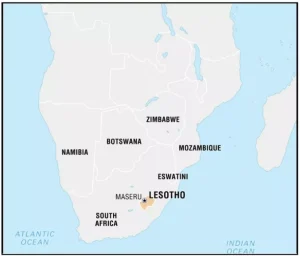
- Location: Lesotho is a landlocked country in Southern Africa.
- It is nestled within the Maloti Mountains, which has earned it the title ‘The Mountain Kingdom’.
- It is entirely surrounded by South Africa, making it the largest of only three sovereign enclaves in the world, the others are San Marino and Vatican City.
- Capital: Maseru is the capital, largest city, and the country’s principal administrative and commercial centre.
- Geographical features: It has temperate; cool to cold, dry winters; hot, wet summers climate.
- Its geographical high Point is Thabana Ntlenyana 3,482 m.
- It is the world’s only independent nation with its entire territory situated at an altitude of over 1,400 metres above sea level.
 6 Aug 2026