UPSC PYQs

Prelims, Mains & Optional PYQs

UPSC Notes

Comprehensive & Short Notes

News In Shorts 10 October 2026: World Mental Health Day, Nobel Peace Prize, INS Mangrol & Hydrogen

10 Oct 2026

News In Shorts 10 October 2026: World Mental Health Day, Nobel Peace Prize, INS Mangrol & Hydrogen

World Mental Health Day 2026

Context: The Ministry of Health and Family Welfare observed World Mental Health Day on 10 October 2026.

About World Mental Health Day

  • World Mental Health Day was first observed on 10 October 1992, following an initiative by the World Federation for Mental Health (WFMH).
  • Theme 2026: “Lived experiences heard: real voices, real change.”
  • Objective: To raise awareness of mental health issues around the world and to mobilize efforts in support of mental health.

UPSC Online Courses

India’s Efforts To Improve Access To Mental Healthcare

  • Tele-MANAS (Tele Mental Health Assistance and Networking Across States)
    • Launched on 10 October 2022 under the National Tele Mental Health Programme.
    • Provides free, confidential, 24×7 mental health counselling through helpline 14416.
    • As of October 2026, received over 47.75 lakh calls, with 53 operational cells across all 36 States and Union Territories.
  • MANN Jaagriti Initiative
    • Aims to improve mental health literacy, reduce stigma and encourage early help-seeking.
    • Promotes community engagement through schools, colleges, workplaces and healthcare facilities.
  • National Mental Health Programme (NMHP)
    • Seeks to improve the availability and accessibility of mental healthcare.
    • Its District Mental Health Programme (DMHP) has been sanctioned for 767 districts, providing counselling, treatment, medicines, follow-up care and referrals.
  • Ayushman Arogya Mandirs
    • Mental health services have been integrated into over 1.83 lakh Ayushman Arogya Mandirs.
    • Supports early identification, basic mental healthcare and referrals to higher healthcare facilities.


Nobel Peace Prize 2026: Navanethem “Navi” Pillay

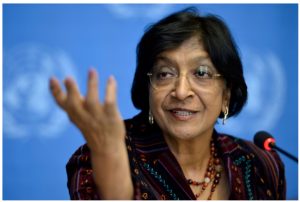
Context: The Norwegian Nobel Committee awarded the 2026 Nobel Peace Prize to South African jurist Navi Pillay for promoting peace, international law and human rights.
About the Nobel Peace Prize

Nobel Peace Prize 2026

  • The Nobel Peace Prize recognises individuals and organisations that make outstanding contributions to peace, international cooperation and conflict resolution.
  • Established: 1901, with the first Nobel Peace Prize awarded that year.
  • Founder: Alfred Nobel, Swedish inventor and industrialist.
  • Awarding body: Norwegian Nobel Committee, appointed by the Norwegian Parliament (Storting).
  • Award ceremony: Held annually on December 10 in Oslo, Norway, marking Alfred Nobel’s death anniversary.
  • Prize components: A medal, a diploma and a monetary award of 12 million Swedish kronor (SEK).

2026 Winner: Navanethem “Navi” Pillay

  • Navi Pillay is a South African jurist of Tamil Indian descent who became a prominent advocate of international law, justice and human rights.
    • Born in Durban, South Africa, she challenged racial discrimination, segregation and exclusion during the apartheid era.
  • Key Contributions
    • South African judiciary: Served as a judge of the High Court of South Africa.
    • Rwanda tribunal: Served at the International Criminal Tribunal for Rwanda, which prosecuted individuals responsible for the 1994 genocide.
    • International Criminal Court (ICC): Served as a judge at the ICC, which prosecutes individuals for genocide, crimes against humanity, war crimes and the crime of aggression.
    • United Nations High Commissioner for Human Rights: Led the United Nations human rights office from 2008 to 2014.
    • Palestine and Israel inquiry: Chaired the UN Independent International Commission of Inquiry on the Occupied Palestinian Territory and Israel, which reported findings concerning genocide in Gaza.
    • International Court of Justice (ICJ): Serves as a judge in the genocide case concerning Myanmar and the Rohingya population.

Notable Facts About the Nobel Peace Prize

  • First recipients (1901): Henry Dunant and Frédéric Passy shared the inaugural Peace Prize.
  • Most awarded organisation: The International Committee of the Red Cross has received the Peace Prize three times — 1917, 1944 and 1963.
  • Youngest laureate: Malala Yousafzai received the prize in 2014 at age 17.
  • Oldest laureate: Joseph Rotblat received the prize in 1995 at age 87.
  • Posthumous award: Dag Hammarskjöld received the prize posthumously in 1961.
  • Indian laureate: Mother Teresa received the Nobel Peace Prize in 1979 for her work among poor and vulnerable people in India.
  • 2025 laureate: María Corina Machado of Venezuela received the Nobel Peace Prize for her efforts to promote democratic rights in Venezuela.

UPSC Online Classes

INS Mangrol

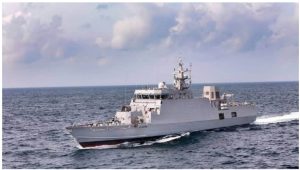
Context: Indian navy set to commission indigenous anti-submarine warfare shallow water craft ‘mangrol’
About INS Mangrol

INS Mangrol

  • INS Mangrol is the third Anti-Submarine Warfare Shallow Water Craft (ASW-SWC) built by Cochin Shipyard Limited (CSL).
  • Indigenous content: Over 80%, supporting Make in India and Aatmanirbhar Bharat initiatives.
  • Naming: Named after Mangrol, a coastal town and fishing harbour in Gujarat’s Junagadh district.
  • Historical connection: Carries forward the legacy of the erstwhile INS Mangrol (M85), a minesweeper that served until 7 April 2004.
  • Key Features and Equipment
    • Sonar: Equipped with the indigenous Abhay hull-mounted sonar for detecting underwater threats.
    • Anti-submarine weapons: Carries lightweight torpedoes and an indigenous anti-submarine rocket launcher.
    • Torpedo defence: Equipped with the Maareech Advanced Torpedo Decoy System to counter incoming torpedoes.
    • Propulsion: Powered by three diesel engines with waterjet propulsion, enabling high manoeuvrability in shallow waters.
    • Additional capabilities: Supports underwater surveillance, Low-Intensity Maritime Operations (LIMO) and mine warfare-related tasks.
  • Strategic Significance: It strengthens coastal security, shallow-water anti-submarine warfare, networked maritime operations and indigenous defence manufacturing.


World Hydrogen and Fuel Cell Day

Context: The Ministry of New and Renewable Energy (MNRE) organised an event in New Delhi on World Hydrogen and Fuel Cell Day to discuss hydrogen standards, safety and deployment in India.

  • The event highlighted the need for clear standards for hydrogen production, storage, transportation and utilisation, alongside improved testing, workforce training and institutional coordination

About World Hydrogen and Fuel Cell Day

  • World Hydrogen and Fuel Cell Day is observed annually on 8 October to highlight hydrogen and fuel-cell technologies in the clean-energy transition.
  • Origin: The initiative was launched by the Fuel Cell and Hydrogen Energy Association (FCHEA), with the first observance held in 2015 in the United States.
    • The date 10/08 refers to hydrogen’s atomic weight of approximately 1.008.
  • Objectives
    • Awareness: Promote understanding of hydrogen and fuel-cell technologies.
    • Sustainability: Highlight hydrogen’s potential to reduce emissions in hard-to-abate sectors.
    • Collaboration: Encourage cooperation among governments, researchers and industries.
    • Innovation: Accelerate research, safety standards and commercial deployment.

About Hydrogen

  • Hydrogen, represented by H and atomic number 1, is the lightest chemical element and an energy carrier that must be produced from compounds such as water or methane.
  • Applications as a Fuel
    • Transportation: Fuel cells power buses, trucks and trains, producing electricity with water and heat as by-products.
    • Industrial decarbonisation: Green hydrogen can replace fossil-based hydrogen in steelmaking, fertiliser production and oil refining.
    • Energy storage: Stores surplus renewable electricity for later power generation, supporting grid stability.
    • Global Hydrogen Production: China is the world’s largest hydrogen producer and consumer, with production predominantly based on fossil fuels.
    • India is a major hydrogen consumer, particularly in refineries and fertiliser industries, seeking to expand green hydrogen production and exports.
  • National Green Hydrogen Mission: Launched in January 2023, the mission aims to establish India as a global hub for green hydrogen production, utilisation and export, targeting at least 5 million metric tonnes annually by 2030.

UPSC Online Coaching

Nameri Tiger Reserve

Context: Nameri Tiger Reserve in Assam received Conservation Assured | Tiger Standards (CA|TS) Approved status on 10 September 2026, following international assessment.
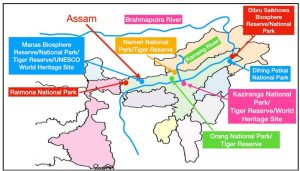
  • With Nameri’s approval, all four tiger reserves in Assam—Kaziranga, Manas, Orang and Nameri have achieved CA|TS Approved status.

About Nameri Tiger Reserve, Assam

Nameri Tiger Reserve

  • Nameri Tiger Reserve is located in Sonitpur district, Assam, at the foothills of the Eastern Himalayas, and covers approximately 464 sq. km.
  • Establishment: 
    • 1985: The area was declared a wildlife sanctuary.
    • 1998: It was designated Nameri National Park.
    • 2000: It became Assam’s second tiger reserve under Project Tiger, after Manas.
  • Key Features
    • River: The Jia-Bhoroli River, known as the Kameng River in Arunachal Pradesh, flows through the reserve and supports the Golden Mahseer.
    • Biodiversity: The reserve supports tigers, Asian elephants and the endangered White-winged Wood Duck.
    • Landscape connectivity: Nameri is connected to Arunachal Pradesh’s Pakke Tiger Reserve through forested landscapes, facilitating wildlife movement.
    • Anti-poaching measures: The reserve has 39 anti-poaching camps supported by regular patrols and scientific wildlife monitoring.

Click to Know UPSC Coaching Centres in India

About CA|TS Status

  • Conservation Assured | Tiger Standards (CA|TS) is a voluntary international framework launched in 2013 to assess and improve the management of tiger conservation areas.
  • CA|TS has been agreed upon as an accreditation tool by the global coalition of Tiger Range Countries (TRCs) and has been developed by tiger and protected area experts. 
    • The framework evaluates wildlife protection, habitat management, tiger populations, monitoring, administration and community participation.
  • Significance: CA|TS approval recognises Nameri’s conservation practices, strengthens accountability in tiger management and promotes international standards for protected-area governance.

Check Out UPSC CSE Books

Visit PW Store

online store 1

News In Shorts 10 October 2026: World Mental Health Day, Nobel Peace Prize, INS Mangrol & Hydrogen

Need help preparing for UPSC or State PSCs?

Connect with our experts to get free counselling & start preparing

Free Counselling for UPSC Aspirants

Connect with our experts and take the right next step.

Expert Guidance
Personalized Strategy
100% Free

Book Your Free Session

NEED ASSISTANCE?

Request a Callback

Our counsellor will connect with you and help you choose the right course and centre.

  • Expert Guidance
  • Course & Fee Information
  • Quick Callback Support

Request a Callback

Books
UPSC PYQs
UPSC Notes
Current Affairs
Quick Revise Now !
AVAILABLE FOR DOWNLOAD SOON
UDAAN PRELIMS WALLAH
Comprehensive coverage with a concise format
Integration of PYQ within the booklet
Designed as per recent trends of Prelims questions
हिंदी में भी उपलब्ध
Quick Revise Now !
UDAAN PRELIMS WALLAH
Comprehensive coverage with a concise format
Integration of PYQ within the booklet
Designed as per recent trends of Prelims questions
हिंदी में भी उपलब्ध

<div class="new-fform">


    </div>

    Subscribe our Newsletter
    Sign up now for our exclusive newsletter and be the first to know about our latest Initiatives, Quality Content, and much more.
    *Promise! We won't spam you.
    Yes! I want to Subscribe.