UPSC PYQs

Prelims, Mains & Optional PYQs

UPSC Notes

Comprehensive & Short Notes

News In Shorts 15 September 2026: NMBA, Thirukkural, Rajbhasha Kirti Award, MERCOSUR & More

15 Sep 2026

News In Shorts 15 September 2026: NMBA, Thirukkural, Rajbhasha Kirti Award, MERCOSUR & More

Nasha Mukt Bharat Abhiyaan (NMBA)

Context: The Nasha Mukt Bharat Abhiyaan marked its sixth year with 34.54 crore citizens reached and a target of mobilising 10 crore+ citizens for a national pledge.

UPSC Online Courses

About Nasha Mukt Bharat Abhiyaan

  • The Nasha Mukt Bharat Abhiyaan (NMBA), or Substance-Free India Campaign, is a nationwide mass movement aimed at preventing substance abuse, promoting awareness, and strengthening treatment and rehabilitation through community participation.
  • Origin: The campaign was launched on 15 August 2020, initially covering 272 vulnerable districts identified using inputs from the Narcotics Control Bureau (NCB) and substance-use trends.
    • It was expanded to all districts of India on 15 August 2023.
  • Nodal Ministry: The Ministry of Social Justice and Empowerment (MoSJE) is the nodal ministry.
  • Implementation: The campaign works through district-level mechanisms led by the District Collector/District Magistrate, while the National Action Plan for Drug Demand Reduction (NAPDDR) supports prevention, counselling, treatment and rehabilitation.
  • Key Initiatives
    • Demand Reduction: The campaign conducts awareness, sensitisation and community outreach programmes targeting youth, women, educational institutions and vulnerable groups.
    • Community Participation: Nasha Mukti Mitras (NMMs), master volunteers and community leaders are trained to identify substance dependence and facilitate support.
    • Early Prevention: Navchetna modules promote preventive education among students, teachers and parents.
    • Digital Support: The NMBA digital ecosystem facilitates e-pledges, campaign monitoring and locating nearby de-addiction centres.
    • Treatment & Rehabilitation: Under NAPDDR, financial assistance supports de-addiction, counselling and rehabilitation facilities.
  • Achievements So Far
    • Beneficiaries: More than 34.54 crore citizens, including 13.70 crore youth and 10.64 crore women, have been reached.
    • Community Network: Over 1.67 lakh Nasha Mukti Mitras have joined the campaign.
    • Outreach: More than 31.40 lakh awareness and outreach activities have been conducted.
    • Infrastructure: More than 755 new de-addiction facilities were established during the last two years, including DDACs, ATFs and jail-based centres.
    • Pledges: More than 34 lakh Nasha Mukti pledges have been recorded.
  • New Target: The Ministry aims to mobilise 10 crore+ citizens through physical and online participation for a National Mass Pledge Against Drug Abuse, strengthening the campaign as a nationwide Jan Andolan.


Thirukkural

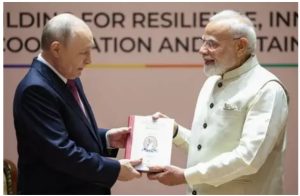
Context: Prime Minister Narendra Modi gifted Russian President Vladimir Putin a Russian translation of Thirukkural during their bilateral meeting ahead of the BRICS Summit in New Delhi. 
About Thirukkural

Thirukkural

  • Thirukkural is a seminal work of ancient Tamil literature and philosophy, authored by Thiruvalluvar (Valluvar).
  • The title means “sacred verses” or “sacred couplets.”
    • It consists of 1,330 couplets, arranged into 133 chapters, with 10 couplets per chapter.
    • Each couplet consists of seven words.
  • Three Books Of Thirukkural:
    • Aram (Virtue/Dharma): Deals with morality, ethics, and individual values- 38 chapters.
    • Porul (Polity): Deals with governance, socio-economic values and material life- 70 chapters.
    • Inbam (Love): Deals with love and human relationships- 25 chapters.
  • Key Themes: Emphasises morality, kindness, wisdom, education, charity and love.
    • Advocates ethical conduct irrespective of caste, creed, religion, or race.
    • The first chapter, Kadavul Vazhthu (Praise of God), discusses the concept of God and divine qualities such as wisdom, compassion, and morality.
    • The section on love is divided into Kalaviyal (pre-marital love) and Karpiyal (marital love).
  • Global Influence: First translated into English in 1840.
    • Has since been translated into more than 60 languages.
    • The Russian edition gifted to Putin was translated by Naira Mkrtchyan and published by the Central Institute of Classical Tamil in 2026.
    • French translator E. S. Ariel described it as “a book without a name by an author without a name.”
    • George Uglow Pope (1820–1908) was an Anglican Christian missionary, Tamil scholar and translator who extensively studied Thiruvalluvar and translated Tamil works into English. He called Thiruvalluvar the “Bard of Universal Man.”

UPSC Online Classes

Rajbhasha Kirti Award 2025–26

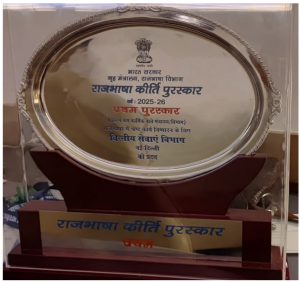
Context: The Department of Financial Services (DFS) won the First Prize under Rajbhasha Kirti for 2025–26 at the 6th All India Official Language Conference and Hindi Diwas. 
About the Award

Rajbhasha Kirti Award 2025–26

  • The Rajbhasha Kirti awards are awarded by the Department of Official Language of the Ministry of Home Affairs for making outstanding contributions to the implementation and promotion of Hindi in official work.
  • Category: Ministries/Departments with fewer than 300 personnel.


Ramanathaswamy Temple

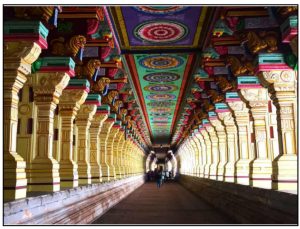
Context: At the 18th BRICS Summit 2026, Prime Minister Narendra Modi and Chinese President Xi Jinping were seen before a projection of the Ramanathaswamy Temple’s iconic corridor.
About Ramanathaswamy Temple

Ramanathaswamy Temple

  • The Ramanathaswamy Temple is a renowned Hindu temple dedicated to Lord Shiva, located at Rameswaram on Pamban Island, Tamil Nadu.
  • Location: Ramanathapuram district, between the Palk Strait and Gulf of Mannar, giving it an important geographical and pilgrimage significance.
  • Ramayana Association: According to tradition, Lord Rama worshipped Shiva at Rameswaram after returning from Lanka
  • Associated Rulers: The temple evolved through several phases of construction and patronage, with the Sethupathi rulers of Ramanathapuram playing a major role in developing its present monumental form.
  • Religious Significance: It is one of the 12 Jyotirlingas, where Shiva is worshipped as a Jyotirlinga, meaning a “pillar of light”.
    • It is one of the four Char Dham pilgrimage sites, along with Badrinath, Dwarka and Puri.
  • Architecture: The temple represents the Dravidian architectural style, characterised by monumental gopurams, granite structures, intricate carvings and extensive pillared corridors.
  • Iconic Corridor: The outer third corridor contains 1,212 carved granite pillars, each approximately 6.9 metres high, creating a striking linear-perspective effect.
    • The combined corridors extend for about 3,850 feet (1.17 km).
  • Sacred Water Network: The temple contains 22 sacred theerthams (wells) within its precincts, which are traditionally associated with ritual purification.

UPSC Online Coaching

MERCOSUR

Context: India and MERCOSUR have signed the First Additional Protocol to the India–MERCOSUR Preferential Trade Agreement (PTA) to facilitate electronic Certificates of Origin (CoO) and promote paperless trade.

  • The India-MERCOSUR PTA was signed on the 25th of January in 2004 and entered into force on the 1st of June in 2009. 
  • The Agreement provides preferential tariff concessions on 450 tariff lines by India and 452 tariff lines by the MERCOSUR side. 

About MERCOSUR (Mercado Común del Sur, or Common Market of the South)

  • Established: It is a South American trade bloc established in 1991 including 5 full member states of Brazil, Argentina, Paraguay and Uruguay and Bolivia ( Signed in 2015 and Ratified by Bolivia in July 2024).
    • Venezuela’s membership has been suspended in 2016.
  • Aim: To establish a customs union and a common market, allowing for the free movement of goods, services, capital, and people among member countries.
  • Official Working Languages: Spanish and Portuguese.

CSC Table Top Exercise

Context: The Colombo Security Conclave conducted a three-day Table Top Exercise (TTX) at Visakhapatnam from 9–11 September 2026 to strengthen coordinated maritime responses.

About CSC Table Top Exercise (TTX)

  • A TTX is a discussion-based simulation in which participating officials rehearse roles, protocols and coordinated responses to realistic crisis scenarios without deploying physical assets.
  • Host: The exercise was hosted by the Indian Navy at Eastern Naval Command (ENC), Visakhapatnam, Andhra Pradesh, under the aegis of CSC.
  • Participants: CSC member states and observer nations participated through delegations and maritime-security experts.
  • Focus Areas
    • Non-traditional security: Maritime terrorism, narcotics smuggling, human trafficking and Illegal, Unreported and Unregulated (IUU) fishing were simulated.
    • SOP Harmonisation: Existing Standard Operating Procedures (SOPs) were reviewed to facilitate coordinated responses.
    • Information Sharing: Arrangements were streamlined to strengthen Maritime Domain Awareness (MDA) and collective maritime surveillance.
    • Regional Vision: The exercise supported India’s MAHASAGAR ( Mutual and Holistic Advancement for Security and Growth Across Regions ) vision

Click to Know UPSC Coaching Centres in India

About Colombo Security Conclave (CSC)

  • The CSC is a regional maritime-security grouping focused on addressing common security challenges in the Indian Ocean Region (IOR).
  • Objective: It promotes cooperation in maritime security, counter-terrorism, transnational organised crime, cybersecurity, critical infrastructure protection, and Humanitarian Assistance and Disaster Relief (HADR).
  • Origin: The mechanism began in 2011 as a trilateral maritime-security arrangement among India, Sri Lanka and Maldives and was subsequently revived and institutionalised as the CSC.
  • Current Partners: India, Sri Lanka, Maldives, Mauritius, Bangladesh and Seychelles, along with designated observer states.
  • Secretariat: The Permanent Secretariat is located in Colombo, Sri Lanka, and the grouping brings together National Security Advisors (NSAs) and Deputy NSAs for security cooperation.
  • Five Pillars of Cooperation
    • Maritime Safety and Security (Core focus).
    • Countering Terrorism and Radicalisation.
    • Combating Trafficking and Transnational Organised Crime.
    • Cyber Security and Protection of Critical Infrastructure.
    • Humanitarian Assistance and Disaster Relief (HADR)

Check Out UPSC CSE Books

Visit PW Store

online store 1

News In Shorts 15 September 2026: NMBA, Thirukkural, Rajbhasha Kirti Award, MERCOSUR & More

Need help preparing for UPSC or State PSCs?

Connect with our experts to get free counselling & start preparing

Free Counselling for UPSC Aspirants

Connect with our experts and take the right next step.

Expert Guidance
Personalized Strategy
100% Free

Book Your Free Session

NEED ASSISTANCE?

Request a Callback

Our counsellor will connect with you and help you choose the right course and centre.

  • Expert Guidance
  • Course & Fee Information
  • Quick Callback Support

Request a Callback

Books
UPSC PYQs
UPSC Notes
Current Affairs
Quick Revise Now !
AVAILABLE FOR DOWNLOAD SOON
UDAAN PRELIMS WALLAH
Comprehensive coverage with a concise format
Integration of PYQ within the booklet
Designed as per recent trends of Prelims questions
हिंदी में भी उपलब्ध
Quick Revise Now !
UDAAN PRELIMS WALLAH
Comprehensive coverage with a concise format
Integration of PYQ within the booklet
Designed as per recent trends of Prelims questions
हिंदी में भी उपलब्ध

<div class="new-fform">


    </div>

    Subscribe our Newsletter
    Sign up now for our exclusive newsletter and be the first to know about our latest Initiatives, Quality Content, and much more.
    *Promise! We won't spam you.
    Yes! I want to Subscribe.