PRAXIS Mission
Context: NASA selected PRAXIS for NIAC 2026 Phase-I funding to develop an AI-driven robotic explorer capable of directly sampling planetary ring particles.
UPSC Online Classes
About PRAXIS Mission
- PRAXIS stands for Planetary Rings Autonomous EXploration with In-situ Sampling and is a NASA Innovative Advanced Concepts (NIAC) mission concept.
- The NIAC program is a specialized NASA initiative designed to fund and cultivate early-stage, high-risk, and revolutionary aerospace ideas that could “change the possible” in space exploration.
- Objective: To directly collect and analyse particles from planetary ring systems to understand their formation, evolution and composition.
- Key Components
- AI-Driven Robotic Explorer: The bio-inspired spacecraft will use an artificial intelligence model to identify and analyse suitable ring particles.
- Touch-and-Go Sampling: Instead of flying through the hazardous ring plane, the spacecraft will graze the rings and use a long deployable boom to collect particle surfaces.
- In-situ Analysis: Instruments will study sampled particles to determine their size, porosity and composition, enabling sampling from different regions or gaps in the rings.
About Planetary Rings
- Planetary rings are disc-shaped systems of particles that orbit planets and are particularly prominent around Saturn, whose rings are highly reflective.
- Key Composition
- Water Ice: Saturn’s rings are predominantly composed of water ice, making them highly reflective.
- Rock and Dust: Ring systems also contain varying quantities of rocky material and dust particles.
- Diverse Particles: Particles differ in size, porosity and composition, providing clues about the origin and evolution of ring systems.
- Significance: Studying planetary rings can reveal how celestial structures form and evolve while improving understanding of planetary systems and their history.
Chandipura Virus (CHPV)
Context: Two children from Rajasthan died while undergoing treatment in Gujarat after testing positive for Chandipura virus (CHPV).
About Chandipura Virus (CHPV)
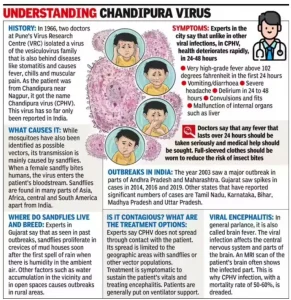
- It is a viral infection caused by the Chandipura virus (CHPV).
- Belongs to the Rhabdoviridae family, which also includes the rabies-causing lyssavirus.
- Transmission: It is transmitted by the bites of infected vectors such as sandflies, mosquitoes, and ticks.
- The principal vectors include Phlebotomine sandflies, Phlebotomus papatasi, and certain mosquito species such as Aedes aegypti.
- The virus resides in the salivary glands of infected vectors and is transmitted to humans and other vertebrates through their bites.
- Disease Progression: The virus can spread to the central nervous system (CNS), causing encephalitis (inflammation of brain tissue).
- The disease progresses rapidly, and death may occur within 24–48 hours of hospitalisation.
- Symptoms: Sudden fever, headache, and body ache, Respiratory distress, bleeding tendencies, and anaemia.
- Susceptible Population: Primarily affects children below 15 years of age.
- Treatment: No specific antiviral therapy or vaccine is currently available.
- Treatment is supportive, with emphasis on managing brain inflammation and complications.
- Epidemiology in India: First isolated in 1965 during investigation of a dengue/chikungunya outbreak in Chandipura village, Maharashtra.
- Major outbreaks occurred during 2003–04 in: Maharashtra, Northern Gujarat, Andhra Pradesh
- The infection has largely remained endemic to central India, where the population of CHPV infection-spreading sandflies and mosquitoes is higher.
East Asia Summit (EAS)
Context: At the 21st East Asia Summit (EAS) in Manila (Philippines), External Affairs Minister S. Jaishankar reaffirmed India’s commitment to ASEAN centrality and a free, open and prosperous Indo-Pacific.
About East Asia Summit (EAS)
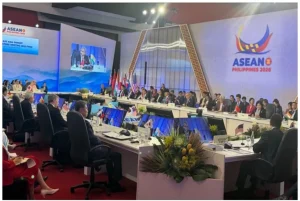
- Nature: Leaders-led strategic forum for dialogue on political, security and economic issues in the Indo-Pacific.
- Established: 2005 (first EAS held in Kuala Lumpur, Malaysia, in December 2005)
- Administrative and operational support is provided by the ASEAN Secretariat located in Jakarta, Indonesia
- Membership: The East Asia Summit comprises nineteen participating countries, including eleven ASEAN Member States (Brunei Darussalam, Cambodia, Indonesia, Lao PDR, Malaysia, Myanmar, Philippines, Singapore, Thailand, Timor-Leste, Viet Nam) and Australia, China, India, Japan, New Zealand, the Republic of Korea, the Russian Federation, and the United States of America.
- Leadership: Led by ASEAN, with the Chair rotating annually among ASEAN member states.
- Priority Areas: Environment and Energy, Education, Finance, Global Health & Pandemic Diseases, Natural Disaster Management, and ASEAN Connectivity.
- Meeting Structure: The EAS convenes an annual Leaders’ Summit, while Foreign Ministers, Economic Ministers, and Senior Officials meet periodically to advance the Summit’s agenda.
- India’s Participation: India is a founding member and actively participates in discussions on regional security, maritime cooperation and connectivity.
Sarbat.AI Project
Context: Punjab has become the first Indian State to introduce Artificial Intelligence (AI) as a mainstream subject from Classes I to XII under the Sarbat.AI project.
About the Sarbat.AI Project
- Sarbat.AI is a statewide AI education initiative launched by the Punjab School Education Board (PSEB) to integrate AI into school education and develop future-ready technological skills among students.
- Key Features
- Phased Implementation: Phase I will introduce AI through the Computer Science curriculum for Classes VIII to XII, while Phase II will extend age-appropriate AI education to Classes I to VII.
- Global Standards: The curriculum has been developed using international best practices from Singapore, Finland, the UAE and the US and aligned with UNESCO’s Ethical AI Framework.
- Technology-Enabled Learning: Students will learn through live online classes, recorded lectures, project-based learning, continuous assessments and a dedicated Learning Management System (LMS).
- Large-Scale Capacity Building: The initiative is expected to cover 25,172 schools and nearly 31.5 lakh students, with 12,424 Computer Science teachers initially leading implementation and more than two lakh teachers progressively trained.
- Significance: The initiative aims to create an AI-literate and ethically responsible generation equipped with digital, innovative and entrepreneurial skills for the future economy.
Corporate Mitra Scheme
Context: The Indian Institute of Corporate Affairs (IICA), Shillong, under the Ministry of Corporate Affairs (MCA), organised an awareness webinar on the ‘Corporate Mitra Scheme’ in Arunachal Pradesh.
About the Corporate Mitra Scheme
- The Corporate Mitra Scheme is a central government initiative announced in the Union Budget 2026–27 by the Ministry of Corporate Affairs (MCA).
- It aims to develop a skilled network of certified para-professionals (called “Corporate Mitras”) to assist Micro, Small, and Medium Enterprises (MSMEs) with regulatory compliance, accounting, and taxation at an affordable cost.
- Nodal Ministry: Ministry of Corporate Affairs (MCA).
- Objective: Empower MSMEs, especially in Tier-2 and Tier-3 cities, by building a support ecosystem of trained para-professionals called “Corporate Mitras.”
- Eligibility: Graduates and final-year graduation students up to 30 years of age are eligible to apply for the scheme.
- Implementation: The scheme will be implemented through the SWAYAM Plus portal.
UPSC Online Courses
Key Partner Institutions
- Rajiv Gandhi University (RGU), Arunachal Pradesh — collaborating university for the webinar.
- Institute of Cost Accountants of India (ICMAI) — lead co-host.
- Institute of Company Secretaries of India (ICSI) and Institute of Chartered Accountants of India (ICAI) — support co-hosts.
Moldova
Context: President Droupadi Murmu undertook a state visit to Moldova.
- She became the first Indian head of state to visit the country since diplomatic relations were established in 1992.
- She held bilateral talks with President Maia Sandu in Chisinau, covering UNSC/multilateral reform, counter-terrorism cooperation, and a wide range of economic and cultural engagement areas.
About Moldova
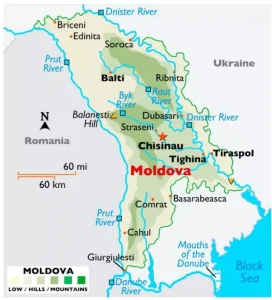
- Moldova is a landlocked country bordered by Ukraine and Romania.
- It is located in the northeastern corner of the Balkan Peninsula.
- The Balkan Peninsula is in southeastern Europe and derives its name from the Balkan mountain range.
- Most of Moldova lies between the meandering Prut and Dniester rivers.
- Moldova is situated to the east of the great arc of the Carpathian Mountains.
- Regarding the European Union, Moldova is not an EU member but attained EU candidate status in 2022.
Kargil Vijay Diwas
Context: India observed the 27th Kargil Vijay Diwas on July 26, 2026.
About Kargil Vijay Diwas
- Kargil Vijay Diwas is celebrated every July 26 to mark India’s victory over Pakistan in the 1999 Kargil War.
- It honours the courage, sacrifice, and unwavering resolve of the Bravehearts of Operation Vijay.
- Operation Vijay was the code name for India’s military response to the Pakistani incursion in the Kargil region.
- Kargil is a town in Ladakh, located near the Line of Control, about 200 km from Srinagar.
- Theme (2026, 27th anniversary): “One Ride, One Nation, One Salute” — the theme of the Shaurya Vijay Yatra motorcycle rally held to mark the occasion.
Click to Know UPSC Offline Courses
About Kargil
- Kargil is a prominent town and district located in the union territory of Ladakh, India.
- Geography: It is situated along the banks of the Suru River, a major tributary of the Indus River.
- Border Line: The district lies immediately adjacent to the Line of Control (LoC) separating India and Pakistan.
- Kargil Terrain: Extreme altitude, rugged mountains and harsh weather posed major operational challenges.
- Current security : It is under the primary operational command of the Indian Army, specifically overseen by the XIV Corps (Fire and Fury Corps)
 27 Jul 2026