Machilipatnam (ASW-SWC)
Context: The Indian Navy recently launched Machilipatnam (BY 529), the seventh Anti-Submarine Warfare Shallow Water Craft (ASW-SWC) of the Mahe-class.
UPSC Online Courses
About Machilipatnam
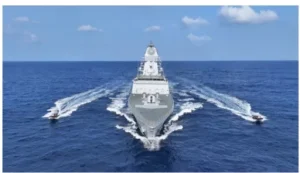
- Introduction: Machilipatnam is the seventh of eight Mahe-class Anti-Submarine Warfare Shallow Water Craft (ASW-SWC) being built for the Indian Navy.
- The warship derives its name from the historic port city of Machilipatnam in Andhra Pradesh’s Krishna district.
- Built By: The vessel has been constructed by Cochin Shipyard Limited (CSL) for the Indian Navy.
- Key Features
- Operational Capabilities: The warship is equipped for underwater surveillance, Anti-Submarine Warfare (ASW), Low Intensity Maritime Operations (LIMO), and mine warfare.
- Performance: It has a displacement of around 900 tonnes, a maximum speed of 25 knots, and an endurance of approximately 1,800 nautical miles.
- Advanced Systems: It incorporates indigenously developed systems, including hull-mounted sonar and low-frequency variable-depth sonar, to strengthen underwater detection capabilities.
- Indigenous Content: The vessel has more than 80% indigenous content, reflecting India’s growing domestic shipbuilding and defence manufacturing capabilities.
- Significance: Machilipatnam will strengthen coastal defence, underwater surveillance and maritime domain awareness while enhancing the Indian Navy’s operational readiness in the Indian Ocean Region.
Madanapalle’s Zero Waste City Model
Context: Andhra Pradesh’s Madanapalle Municipality is emerging as a Zero Waste City under the Swachh Bharat Mission–Urban (SBM-U) 2.0.
Key Features of the Model
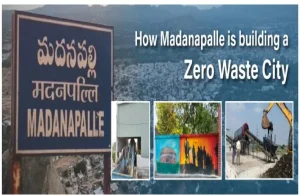
- Integrated Waste Management: Madanapalle Municipality generates 62 TPD of Municipal Solid Waste and ensures source segregation into biodegradable, non-biodegradable, and upcycling waste.
- Scientific Processing: The municipality promotes decentralised composting through Bulk Waste Generators (BWGs), home composting, and terrace gardening, while processing wet waste through windrow and vermi composting.
- Recycling & Resource Recovery: Material Recovery Facility (MRF) processes recyclable waste, while non-recyclable waste is supplied to cement plants for co-processing.
- Reduce, Reuse and Recycle (RRR) Centres: The City collect e-waste, clothes, books, toys, and footwear for repair, reuse, and redistribution to vulnerable communities.
- Waste-to-Art Initiative: The municipality has developed the Waste-to-Art Park at NVR Layout using discarded materials to beautify public spaces and promote environmental awareness.
- Legacy Waste Remediation: Through bio-mining and bio-remediation, the municipality has cleared 36,512 MT of legacy waste, reclaimed 9.4 acres of land, and supplied recovered Refuse Derived Fuel (RDF) to cement plants.
- Community Participation: Wall paintings, murals, and awareness campaigns encourage citizen participation in waste segregation, cleanliness, and hygiene.
e-Zero FIR system for Cybercrime Cases
Context: The Union Government has introduced the system of registering e-Zero FIRs in cybercrime cases across eighteen states and Union Territories.
About e-Zero FIR

- An e-Zero FIR is a digitally generated Zero FIR for the prompt registration of cyber financial fraud cases.
- Institutional Framework: Developed by the Indian Cyber Crime Coordination Centre (I4C) under the Ministry of Home Affairs (MHA).
- Legal Backing: Based on Section 173(1) of the Bharatiya Nagarik Suraksha Sanhita (BNSS), 2023, which permits electronic submission of information on cognizable offences, irrespective of location.
- Objective: Seeks to expedite police response, eliminate jurisdictional delays, and improve the chances of recovering defrauded money.
Key Features of e-Zero FIR
- Mode of Registration: It is automatically registered when eligible complaints are filed through the National Cyber Crime Reporting Portal (NCRP) or Cyber Helpline 1930.
- Jurisdiction: The e-Zero FIR is electronically transferred to the concerned territorial cybercrime police station for investigation.
- Conversion into Regular FIR: The complainant must visit the concerned police station within 3 days to convert the e-Zero FIR into a regular FIR.
- Immediate Financial Safeguards: Enables authorities to promptly place a lien on suspect bank accounts and prevent further transfer of defrauded funds.
DAANVEER Initiative
Context: Recently, the Ministry of Panchayati Raj launched DAANVEER to strengthen Gram Panchayat digital infrastructure through citizen participation.
About DAANVEER Initiative
- Introduction: DAANVEER is a technology-enabled citizen participation platform that facilitates voluntary contributions of digital equipment to eligible Gram Panchayats, supporting the vision of Viksit Bharat.
- Objective: To bridge digital infrastructure gaps in Gram Panchayats and strengthen technology-enabled local governance and digital public-service delivery.
- Nodal Ministry: Ministry of Panchayati Raj (MoPR).
- Initiative Tagline : “Give Back to Your Village”
- Key Components
- Meri Panchayat Integration: Citizens and organisations can access DAANVEER through the Meri Panchayat mobile application and identify the digital equipment requirements of eligible Gram Panchayats.
- DigiHaat Marketplace: The platform integrates with DigiHaat, enabling donors to select pre-approved, quality-verified computer bundles mapped to State-specific technical specifications without managing procurement and delivery.
- Digital Transparency: The initiative enables digital tracking of equipment delivery and installation, while donors receive a verified digital appreciation certificate upon successful installation.
- Significance: DAANVEER strengthens grassroots digital governance by improving transparency, service delivery, record management and citizen participation in rural local self-governance.
UPSC Online Classes
Indian Association for the Cultivation of Science (IACS)
Context: The Indian Association for the Cultivation of Science (IACS) completed 150 years on 29 July 2026, marking its enduring contribution to Indian scientific research.
About Indian Association for the Cultivation of Science (IACS)
- Introduction: IACS is one of India’s oldest institutions dedicated to fundamental scientific research and was established during the Bengal Renaissance.
- Origin: It was founded by physician and science advocate Mahendralal Sircar on 29 July 1876 in Calcutta to enable Indians to pursue original scientific research and promote scientific self-reliance.
- Structure: IACS functions as an autonomous research institution governed by a central Governing Council, with its historic campus located in Jadavpur, Kolkata, and an advanced campus being developed at Baruipur, West Bengal.
- Key Roles
-
- Fundamental Research: IACS promotes multidisciplinary research in areas including quantum materials, nanotechnology, artificial intelligence and polymer science.
- Scientific Talent: It conducts postgraduate and doctoral programmes while providing research scholars with advanced laboratory infrastructure and opportunities for national and international collaboration.
- Innovation and Translation: Through research-to-innovation initiatives, IACS seeks to translate scientific discoveries into practical technologies and supports entrepreneurship and technology incubation.
- C.V. Raman Association: Physicist C.V. Raman conducted pioneering research at IACS and announced the Raman Effect on 28 February 1928, based on experiments conducted there.
- His discovery earned him the Nobel Prize in Physics in 1930, making him the first Asian scientist to receive the Nobel Prize in a scientific discipline.
About Raman Effect
- The Raman Effect is the change in the wavelength or frequency of light caused by inelastic scattering when light interacts with matter.
- Key Applications
-
- Molecular Identification: Raman spectroscopy provides molecular fingerprints for identifying substances and studying chemical and material structures.
- Biomedical Research: It enables non-destructive analysis of biological tissues and supports disease detection and biomedical diagnostics.
- Forensics and Environment: Portable Raman instruments help identify hazardous substances, narcotics, chemicals and environmental pollutants.
10th India Mobile Congress (IMC)
Context: The 10th India Mobile Congress (IMC) 2026 will be held from 7–10 October 2026 at Yashobhoomi, New Delhi.
Click to Know UPSC Coaching Centres in India
About India Mobile Congress (IMC)
- IMC is an annual technology and telecommunications forum that brings together global technology leaders, telecom operators, startups, investors, researchers, academia and policymakers.
- Organised By: The event is jointly organised by the Department of Telecommunications (DoT) and the Cellular Operators Association of India (COAI) since 2017.
- Objective: To showcase technological innovations, facilitate investments and collaborations, promote indigenous technologies, and contribute to shaping global telecommunications standards.
- 2026 Theme: “Scale without Boundaries”
- IMC 2026 Four Strategic Pillars
- Srishti (Building the Future): It focuses on innovation, emerging technologies and next-generation digital infrastructure.
- Suraksha (Strengthening Trust): It emphasises secure, resilient and trusted digital ecosystems.
- Sashakt (Expanding Opportunities): It seeks to empower citizens, businesses, startups and communities through inclusive digital access.
- Samvardhan (Fueling Growth): It highlights technology-driven economic growth, investment, entrepreneurship and job creation.
- Focus Technologies: IMC 2026 will showcase 5G, 6G, Artificial Intelligence, Internet of Things, satellite communications, cloud and edge computing, quantum technologies and green technologies.
 30 Jul 2026