Udaan, Prahaar, Q&A Bank etc.
CA Magazines & Editorials
 24 Aug 2026
Subject: GS 2: Polity & Governance
Context: On 13 August 2026, both Houses were adjourned sine die, ending their scheduled sittings of the Monsoon Session. However, the session formally continues until the President prorogues it.
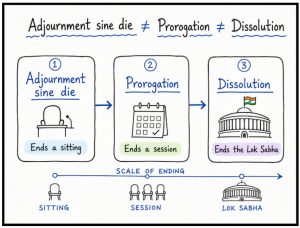 Prorogation: The President formally terminates a session of Parliament under Article 85(2)(a), generally acting on the advice of the Council of Ministers.
| Feature | Adjournment sine die | Prorogation | Dissolution |
| Authority | Presiding Officer | President | President |
| Effect | Ends a sitting | Ends a session | Ends Lok Sabha |
| House continues? | Yes | Yes | No |
| Bills | Generally remain pending | Generally remain pending | Lok Sabha-pending bills generally lapse |
Explore UPSC Foundation Courses

Explore UPSC Foundation Courses

The current episode highlights an important aspect of Indian parliamentary procedure: Parliament may stop sitting without the session having formally ended. While the 10-day delay is politically unusual and has invited speculation, there is no constitutional rule requiring immediate prorogation after adjournment sine die.
Check Out UPSC CSE Books
Visit PW Store






Connect with our experts to get free counselling & start preparing
Join India’s trusted platform for expert guidance, quality content, proven success.
Learn anytime, anywhere.



India's leading UPSC coaching platform helping aspirants prepare for IAS, IPS, IFS and other Civil Services examinations with the best faculty and proven strategies.
<div class="new-fform">
</div>