
Books

 30 Dec 2024

The central government will borrow ₹3.94 lakh crore via T-bills in January-March FY24, up from ₹2.47 lakh crore in October-December, per RBI’s auction calendar.
About Government Securities (G-Secs)
|
|---|
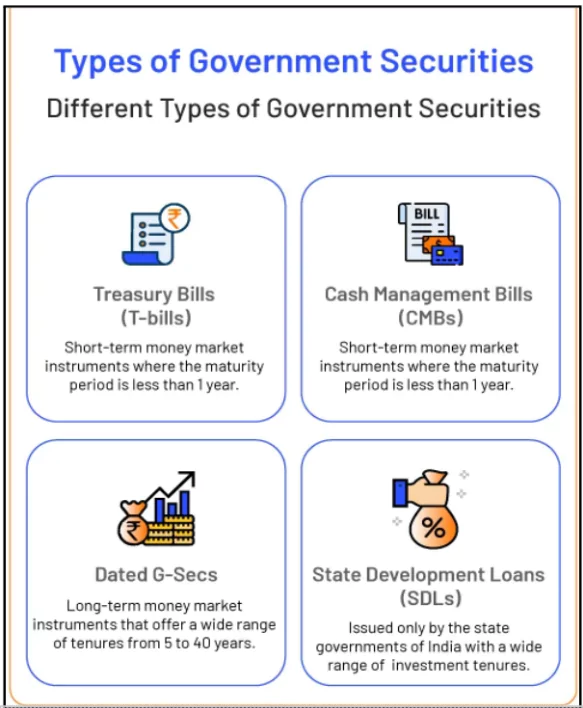 Flexibility in Auction: RBI, in consultation with the government, retains the flexibility to adjust auction amounts and timing based on market conditions and requirements.
Zero-Coupon SecurityA zero-coupon security is a debt instrument that doesn’t pay periodic interest (coupons) to the holder. Instead, it’s sold at a deep discount to its face value. At maturity, the investor receives the full face value of the bond. |
|---|
| Advantages of Treasury Bills | Disadvantages of Treasury Bills |
| Safety and Security: Backed by the Indian government, making them low-risk investments. | Liquidity Tightness: High borrowing through T-Bills can indicate constrained liquidity in the financial system. |
| Liquidity: Can be easily sold in the secondary market before maturity, offering ease of exit. | Market Sensitivity: Increased supply of T-Bills may impact short-term interest rates and market stability. |
| Short-Term Investment Horizon: Ideal for meeting short-term financial goals like emergency funds or vacations. | Investor Concentration: Predominantly held by financial institutions, limiting retail investor participation. |
| Diversification: Helps reduce overall portfolio risk by adding a low-risk asset class. | Limited Returns: Yields are generally lower compared to other investment options with higher risks. |
By addressing these challenges and leveraging effective monetary tools, the government and RBI can ensure stable borrowing conditions and robust financial market operations.
Explore SRIJAN Programs





Explore UPSC Foundation Course


Connect with our experts to get free counselling & start preparing
Books
Udaan (Prelims Wallah)
Prahaar (Mains Wallah)
Q&A Bank (Prelims & Mains)
Budget & Economic Survey
NCERT Wallah
Marks Booster
हिंदी माध्यम विशेष शृंखला
 Current Affairs
Monthly Current Wallah
Subject Wise Current Affairs
Editorial Analysis
Editorial PDFs
News of The Day
Download Our App



Download Our App
<div class="new-fform">
</div>



 GS Foundation
 Optional Course
 Combo Courses
 Degree Program




