GS II: Bilateral, regional, and global groupings and agreements involving India and/or affecting India’s interests.
Context: Growing threats by the Houthis to disrupt shipping through the Strait of Bab el-Mandeb, following tensions involving Iran, have renewed concerns over the security of one of the world’s busiest maritime chokepoints, with significant implications for India’s trade, energy security and maritime strategy.
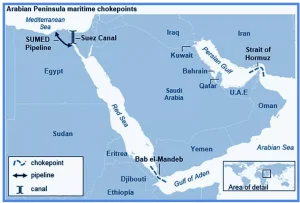
Lessons from the 2023–24 Red Sea Crisis

- Houthi Attacks: After the Gaza war (2023), the Houthis targeted at least 40 commercial vessels in the Red Sea, claiming solidarity with Palestinians.
- Operation Prosperity Guardian: The United States-led maritime coalition was launched in December 2023 to ensure freedom of navigation in the Red Sea.
- UN Response: UN Security Council Resolution 2722 (2024) condemned attacks on merchant vessels and supported maritime security.
- Indian Navy’s Role: India demonstrated its maritime commitment by rescuing the crew of a British tanker attacked in January 2024.
- Trade Route Disruption: Around 2,000 ships avoided the Suez Canal and rerouted around the Cape of Good Hope, increasing transit time and costs.
- Economic Impact: Egypt lost nearly one-fourth of Suez Canal revenue, while Israel’s Eilat Port faced bankruptcy due to declining traffic.
Best Online Coaching for UPSC
Why the Present Crisis Is More Serious
- Strategic Uncertainty: With US forces focused on Iran, their ability and willingness to secure the Red Sea remain uncertain.
- Reduced Diplomatic Leverage: India previously relied on Iran’s influence over Houthis to reduce attacks, but current geopolitical conditions are different.
- Weak Multilateral Response: Divisions within the UN Security Council may prevent authorisation of an effective maritime security force.
- China’s Approach: China may pursue bilateral arrangements with Houthis to protect its own shipping interests.
- Multiple Chokepoint Risks: Simultaneous instability in Hormuz and Bab el-Mandeb could severely impact India’s energy security and trade flows.
Implications for India
- Trade Vulnerability: Disruption of Bab el-Mandeb would affect India–Europe trade routes passing through the Red Sea and Suez Canal.
- Higher Logistics Costs: Rerouting ships through the Cape of Good Hope increases fuel consumption, freight rates and insurance costs.
- Supply Chain Disruptions: Critical imports, exports and industrial supplies may face delays.
- Inflationary Pressure: Increased transportation costs could raise prices of energy, fertilisers and essential commodities.
- Seafarer Safety Concerns: Restrictions on Indian sailors operating in dangerous waters could impact thousands of maritime workers.
India’s Strategy for Maritime Security
- Building a Naval Security Framework:
- India–France–Japan Cooperation: India should establish a theatre-specific Trade Protection Task Force with France and Japan.
- Strategic Advantage: France and Japan’s military presence in Djibouti provides logistical support near the Red Sea.
- Existing Naval Cooperation: Joint exercises between these countries and the Indian Navy can facilitate coordinated maritime operations.
- Regional Diplomatic Engagement:
- Egypt and Saudi Arabia: India should engage these countries as their economies are directly dependent on secure Red Sea shipping.
- Inclusive Approach: Cooperation should focus on maritime security and trade protection rather than forming a military alliance against any country.
- Strengthening Maritime Domain Awareness:
- Information Fusion Centre–Indian Ocean Region (IFC-IOR): India can provide real-time maritime intelligence, surveillance and threat monitoring.
- Joint Operations: Partner navies can coordinate vessel tracking, intelligence sharing and emergency response.
- Protecting Commercial Shipping:
- Escort Operations: Naval forces can provide security cover to commercial vessels travelling towards India, Europe and Japan.
- Rules of Engagement: Participating countries should establish common protocols to respond to drone, missile and maritime attacks.
Broader Significance
- Rules-Based Maritime Order: Protecting Bab el-Mandeb reinforces freedom of navigation and international maritime norms.
- SAGAR Vision: The initiative aligns with India’s doctrine of Security and Growth for All in the Region (SAGAR).
- Maritime Security Provider: Leadership in securing the Strait would strengthen India’s role as a net security provider in the Indian Ocean Region.
Click to Know UPSC Coaching Centres in India
Conclusion
India has both the strategic responsibility and naval capability to prevent Bab el-Mandeb from becoming a global trade vulnerability. A cooperative maritime framework with regional and like-minded partners can protect freedom of navigation, safeguard India’s economic interests and reinforce a rules-based maritime order.