Subject: GS 2: Polity & Governance
Context: The Ladakh Administration has announced the establishment of Autonomous Hill Development Councils (AHDCs) in all seven districts of the Union Territory. Previously, only Leh and Kargil had such councils.
- The Ladakh Lieutenant Governor had earlier increased the number of districts from two to seven and created 17 additional tehsils, taking the total number of tehsils in the Union Territory to 32.
IAS coaching
Key Highlights
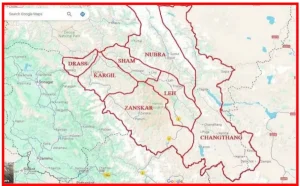
- Expansion of AHDCs: The Ladakh Administration has decided to constitute an Autonomous Hill Development Council (AHDC) in each of the Union Territory’s seven districts, extending the existing system beyond Leh and Kargil to the five newly created districts of Drass, Sham, Nubra, Changthang and Zanskar.
- Objective: To strengthen democratic decentralisation and grassroots governance by empowering elected local bodies to participate more effectively in district-level governance and development.
- Legal Basis: The proposal is based on Section 3(1) of the Ladakh Autonomous Hill Development Council (LAHDC) Act, which empowers the government to constitute an autonomous hill development council in every district through a government notification.
- UT-Level Institutional Framework: The administration has proposed the establishment of an overarching Union Territory-level institution under a customised framework based on Article 371 of the Constitution.
- Proposed Power for District Council:
- District planning, land management, district cadre recruitment and promotions, implementation of welfare schemes, and administration of sectors such as health, education and tourism.
- Constitutional Safeguards: The proposed UT-level body is expected to exercise legislative, executive, financial and administrative powers, while safeguarding land rights, employment opportunities and the cultural identity of the people of Ladakh.
- Implementation: The new councils will be constituted after the required amendments to the LAHDC Act and the delimitation of constituencies are completed.
Background- Demand for Constitutional Safeguards in Ladakh
- Union Territory Status: Following the Jammu and Kashmir Reorganisation Act, 2019, Ladakh became a Union Territory without a Legislative Assembly, leading to concerns over limited local legislative powers.
- Protection of Land and Jobs: Local communities have sought constitutional safeguards to protect land ownership, public employment and natural resources from external pressures.
- Preservation of Cultural Identity: There is a demand to safeguard Ladakh’s distinct tribal, linguistic, cultural and ecological heritage.
- Greater Democratic Representation: Civil society groups have demanded enhanced political representation and decentralised governance, including greater powers for local institutions.
- Constitutional Framework: These demands have led to discussions on providing special constitutional safeguards under a customised framework based on Article 371.
About Autonomous Hill Development Councils (AHDCs)
- They are statutory institutions of local self-government established to provide decentralised administration in the geographically remote and strategically important districts of Ladakh.
- Establishment: The Ladakh Autonomous Hill Development Council, Leh was established in 1995, followed by the Ladakh Autonomous Hill Development Council, Kargil in 2003.
- Composition: Each council generally consists of 30 Councillors, including 26 directly elected members and 4 members nominated by the Lieutenant Governor, with a five-year tenure.
- Functions: The councils prepare district development plans, oversee the implementation of government programmes, and exercise administrative powers over sectors such as health, education, agriculture, tourism, rural development and public works.
- Legal Framework: The councils function under the Ladakh Autonomous Hill Development Council Act, which empowers them to undertake planning and governance at the district level.
About Ladakh Autonomous Hill Development Councils (LAHDC) Act
- It was enacted to establish Autonomous Hill Development Councils for promoting democratic decentralisation, local self-governance and participatory development in the Ladakh region.
- Constitution of Councils: Section 3(1) of the Act empowers the Government to constitute an Autonomous Hill Development Council in each district through a government notification.
- Powers and Functions: The Councils are entrusted with preparing district development plans, implementing government schemes, and exercising administrative functions in sectors such as agriculture, education, health, tourism, rural development and local infrastructure.
- Recent Relevance: The Ladakh Administration has invoked Section 3(1) of the Act to extend the AHDC framework to all seven districts of the Union Territory, strengthening grassroots governance and democratic decentralisation.
|
UPSC Course Fees Online
Article 371 of the Constitution
- Constitutional Provision: Articles 371 to 371J, contained in Part XXI (Temporary, Transitional and Special Provisions) of the Constitution, provide special constitutional arrangements for certain states and regions.
| Note: Ladakh does not currently fall under any existing 371 clause. The Centre is considering a customised constitutional framework under Article 371 for Ladakh by incorporating suitable provisions from the existing Article 371 models to safeguard the region’s land, jobs, culture and unique administrative requirements. |
- Objective: These provisions seek to protect the social, cultural, economic and administrative interests of regions having distinct historical, geographical and ethnic characteristics.
- Nature of Safeguards: The provisions may provide safeguards relating to land ownership, public employment, customary laws, tribal rights, cultural identity and balanced regional development.
- State-Specific Framework: Different clauses under Article 371 provide tailor-made constitutional safeguards for different states; therefore, the nature and extent of autonomy vary across states.
Click to Know UPSC Offline Courses
Conclusion
The establishment of Autonomous Hill Development Councils in all seven districts, along with the proposed customised constitutional safeguards under Article 371, marks a significant step towards decentralised governance, protection of local interests, and inclusive development in Ladakh while addressing its unique geographical, cultural and strategic needs.
 14 Jul 2026