Subject: GS 2: Health
Context: Kerala reported 50 leptospirosis-related deaths in July 2026 alone, bringing renewed attention to the disease.
UPSC Course Fees Online
About Leptospirosis
- Leptospirosis, also known as “rat fever”, is caused by a type of bacteria in the urine of animal carriers, particularly rats.
- It is a zoonotic bacterial disease transmitted from animals to humans and is recognised as one of the world’s most widespread zoonotic infections.
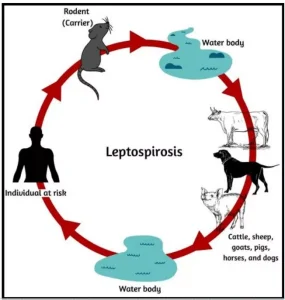 Reservoir Hosts: Pathogenic Leptospira colonizes the kidneys and genital tracts of several mammals.
 -
- Rodents are the principal reservoir hosts, while cattle, pigs, and dogs also harbour the bacteria and contaminate the environment through their urine.
- Rodents can excrete the bacteria throughout their lifetime without developing symptoms.
- Transmission: The disease is primarily transmitted through direct contact with the urine of infected animals or through water, soil, or food contaminated with infected urine.
- The bacteria enter the human body through cuts, abrasions, mucous membranes, or prolonged exposure of waterlogged skin. Human-to-human transmission is extremely rare.
- Incubation Period: The incubation period generally ranges between 7–10 days, although it may vary from 2–30 days.
- Symptoms: The disease initially presents with fever, severe headache, myalgia, conjunctival suffusion, vomiting, and jaundice.
- Treatment: Early administration of antibiotics such as Doxycycline, Penicillin G, and Ceftriaxone is highly effective.
- Patients with severe disease require dialysis, mechanical ventilation, and intensive care management.
- Prevention: Prevention focuses on avoiding exposure to contaminated water and soil, rodent control, improved sanitation, personal protective equipment, and chemoprophylaxis with doxycycline for high-risk groups.
- Vaccines are available for livestock and dogs, although they are serovar-specific and do not completely eliminate bacterial carriage.
Global and Indian Epidemiology
- Global Burden: Leptospirosis is a neglected tropical disease with worldwide distribution but is most prevalent in tropical and subtropical regions experiencing high rainfall, flooding, and poor sanitation.
- Regional Distribution: The disease is particularly endemic in South-East Asia, with India, Indonesia, Thailand, and Sri Lanka reporting a substantial disease burden during the monsoon season.
- Who Is Most Affected?
- Traditionally an occupational hazard, affecting:
- Farmers and dairy farmers
- Cleaning workers
- Migrant construction workers on highway projects
- Urban homemakers engaged in gardening (often bare-handed)
- Indian Scenario: In India, leptospirosis is endemic in several States, particularly Kerala, Tamil Nadu, Karnataka, Gujarat, Maharashtra, and the Andaman & Nicobar Islands, with disease incidence peaking during the monsoon months.
Why is Kerala Emerging as a Leptospirosis Hotspot?
- Heavy monsoons, frequent floods, and year-round humidity create ideal conditions for Leptospira survival in soil and waterbodies
- Abundant rodent and animal reservoir hosts live close to human settlements and farms
- Paddy cultivation, pineapple plantations, and canal cleaning expose agricultural and manual labourers to contaminated water
- Bacteria enter the body through mucosal surfaces, abrasions, or broken skin
- Kerala’s better disease surveillance and diagnostic infrastructure compared to other endemic States may partly explain its apparently higher burden — the disease is endemic in at least 12 other Indian States per National Centre for Disease Control (NCDC) data.
Kerala’s Mortality Reduction Strategy
- Chemoprophylaxis: Doxycycline (200 mg twice weekly) for high-risk groups, effective even after exposure by preventing bacterial replication — though compliance remains poor
- Clinical protocol: primary care physicians advised to maintain high suspicion for fever + myalgia without respiratory symptoms in high-risk patients, and start antibiotics early.
|
Click to Know UPSC Coaching Centres in India
India’s Initiatives
- Integrated Disease Surveillance Programme (IDSP) (2004): Leptospirosis surveillance is undertaken through the Integrated Disease Surveillance Programme (IDSP) for early detection, reporting, and outbreak response.
- Programme for Prevention and Control of Leptospirosis (2012): Introduced during the Twelfth Five-Year Plan (2012–17), the programme focuses on surveillance, laboratory diagnosis, standard treatment protocols, outbreak management, and public awareness.
- National Centre for Disease Control (NCDC): The NCDC provides technical guidance for surveillance, diagnosis, laboratory strengthening, and outbreak management of leptospirosis and other infectious diseases.
- National One Health Mission (2022): India adopted the One Health Approach by integrating human, animal, and environmental health to strengthen surveillance, prevention, and control of zoonotic diseases.
 3 Aug 2026