Pingali Venkayya
Context: Prime Minister Narendra Modi paid tributes to freedom fighter Pingali Venkayya on his 150th birth anniversary on 2 August 2026.
UPSC Online Courses
About Shri Pingali Venkayya (1876–1963)
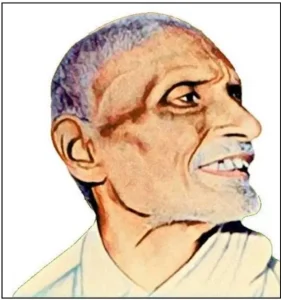
- He was an Indian freedom fighter, linguist, geologist and agricultural researcher, best remembered for his contribution to the evolution of India’s National Flag.
- Early Life: He was born on 2 August 1876 at Bhatlapenumarru near Machilipatnam, Andhra Pradesh, and served in the British Indian Army during the Second Anglo-Boer War (1899–1902), where he met Mahatma Gandhi.
- Key Contributions
-
- National Flag Design: At the 1921 All India Congress Committee session in Bezwada (present-day Vijayawada), Venkayya presented a prototype Swaraj flag to Mahatma Gandhi, initially featuring red and green bands.
- Evolution of Design: Gandhi suggested adding a white band and the spinning wheel (Charkha), symbolising peace, inclusivity, self-reliance and progress
- The Indian National Congress formally adopted the design in 1931.
- Agricultural Research: He conducted research on cotton and earned the nickname “Patti Venkayya” for his work on cotton varieties.
- Other Titles: His proficiency in Japanese earned him the title “Japan Venkayya”, while his geological research and interest in diamonds led to the nickname “Diamond Venkayya.”
About India’s National Flag (UPSC Prelims 2023)
- Adoption: The Constituent Assembly adopted the present National Flag on 22 July 1947, replacing the Charkha with the navy-blue Ashoka Chakra.
- Key Features: The Tricolour has three horizontal bands, India saffron, white and India green with a 24-spoke navy-blue Ashoka Chakra at the centre of the white band.
- Dimensions: The National Flag is rectangular, with a length-to-height ratio of 3:2.
- Legal Protection
-
- Flag Code of India, 2002: It regulates the display of the National Flag and permits the general public, private organisations and educational institutions to display it consistently with its dignity and honour.
- Amendment: The Flag Code permits flags made from hand-spun, hand-woven or machine-made cotton, polyester, wool, silk or khadi bunting, expanding permissible materials.
- Statutory Protection: The Prevention of Insults to National Honour Act, 1971 provides legal protection against improper use or insult to the National Flag.
Environmental Performance Index 2026
Context: The Environmental Performance Index (EPI) 2026 ranked Estonia as the best-performing country.
About Environmental Performance Index (EPI)
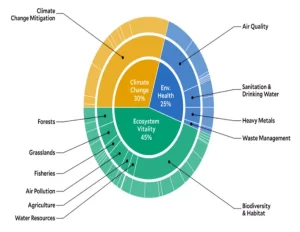
- The EPI is a biennial, data-driven global index that assesses the environmental sustainability performance of countries.
- Developed By: Yale Centre for Environmental Law & Policy (YCELP)
- Columbia University’s Centre for International Earth Science Information Network (CIESIN)
- Yale Centre for Geospatial Solutions
- Coverage: Evaluates 177 countries using 47 indicators grouped under 12 issue categories.
- Key Assessment Pillars: Climate Change, Ecosystem Vitality, Environmental Health.
- Key Findings of the 2026 Index:
- Top Performers: Estonia, Luxembourg, United Kingdom, Finland, Netherlands, Germany, France, Norway, Sweden, Austria.
- Lowest Ranked Country: Laos (Score: 21.78).
India’s Performance in EPI, 2026
- Rank: 176th out of 177 countries (second last), ahead of only Laos.
- Score: 22.46 (Regional average: 31.81)
- Tree Cover Loss in Key Biodiversity Areas: –3.92
India’s First Comprehensive Catalogue of Lepidoptera
Context: The Zoological Survey of India (ZSI) has published the Catalogue of Lepidoptera (Butterflies & Moths) of India in the peer-reviewed journal Zootaxa.
Key Highlights of the Catalogue
- Rich Lepidoptera Diversity: India is home to 13,703 species of Lepidoptera, representing 8.25% of the world’s known Lepidoptera.
- Comprehensive Taxonomic Coverage: The inventory documents 1,417 butterfly species and 12,286 moth species, classified into 3,705 genera, 240 subfamilies, 102 families, and 31 superfamilies.
- First Comprehensive National Catalogue: The catalogue addresses taxonomic gaps persisting for over 100 years, providing India’s first centralised and authoritative baseline inventory of Lepidoptera
- Global Significance of Geometroidea: It identifies 2,205 species of Geometroidea (mostly nocturnal pollinators), accounting for 8.8% of the world’s known species in this superfamily.
About Lepidoptera
- Taxonomic Classification: Lepidoptera is one of the largest orders of insects, comprising butterflies and moths.
- Etymology: The name Lepidoptera is derived from the Greek words lepido (scale) and ptera (wings), referring to their scale-covered wings.
- Life Cycle: Lepidoptera undergo complete metamorphosis (holometabolous development) through four stages—egg, larva (caterpillar), pupa (chrysalis/cocoon), and adult.
- Global Distribution: They are found on every continent except Antarctica.
- Behavioural Pattern: Butterflies are generally diurnal (day-active), whereas most moths are nocturnal (night-active).
Ecological Significance of Lepidoptera
- Pollination Services: Butterflies and moths serve as important pollinators, with moths playing a key role as nocturnal pollinators.
- Nutrient Cycling: They act as herbivores and detritivores, contributing to nutrient cycling and ecosystem functioning.
- Supporting Food Webs: They form a crucial food source for birds, bats, and other insectivores.
- Indicators of Ecosystem Health: Lepidoptera function as bioindicators, helping assess ecosystem health and environmental change.
UPSC Online Classes
Ceuta Migrant Crisis
Context: Recently, more than 50,000 migrants reportedly crossed from Morocco into Spain’s North African enclave of Ceuta, triggering a humanitarian and political crisis.
About the Ceuta Migrant Crisis
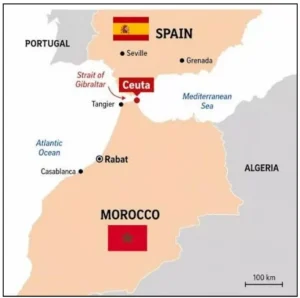
- Mass Crossing: The crisis saw around 50,000–60,000 migrants enter Ceuta in a single day, overwhelming the city’s population and infrastructure; at least 57 people reportedly died, many by drowning or in the crush during the crossing.
- Spanish and EU Response: Spain established temporary reception facilities, accelerated returns of those without legal residence, and deployed additional security forces
- The European Union considered coordinated measures and emergency discussions involving member states and Morocco.
About Ceuta
- Ceuta is a Spanish autonomous city and strategically located enclave in North Africa, covering approximately 18.5 sq km and serving as a major maritime and geopolitical gateway.
- Location: It lies on the southern side of the Strait of Gibraltar opposite the British territory of Gibraltar, sharing a land border with Morocco while being surrounded by the Mediterranean Sea on its remaining sides.
- Strategic Geography: It’s a vital maritime route connecting the Mediterranean Sea and Atlantic Ocean.
- Monte Hacho: Monte Hacho, a prominent hill in Ceuta, is traditionally identified as the southern Pillar of Hercules, complementing Gibraltar as the northern pillar.
- Isthmus: A narrow isthmus connects the Ceuta peninsula with the African mainland, contributing to its distinctive geographical configuration.
- Political Status: Ceuta is an integral part of Spain and the European Union, despite its geographical location in North Africa, and uses the euro as its currency.
- Migration Significance: Ceuta and Melilla are the European Union’s only land borders with Africa, making them important entry points in debates over irregular migration and EU border management.
Asiatic Wild Buffalo
Context: Recently, Chhattisgarh proposed translocating wild buffaloes from Assam to Pamed Wildlife Sanctuary, Udanti-Sitanadi and Indravati Tiger Reserve to revive its declining population.
Click to Know UPSC Coaching Centres in India
About Asiatic Wild Buffalo
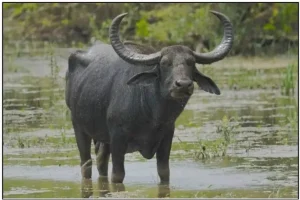
- The Asiatic Wild Buffalo (Bubalus arnee) is the world’s largest wild bovine and an ecologically important wetland-dependent herbivore.
- India is home to more than 90% of the global wild water buffalo population (3,500-3,700 individuals), with most found in Assam (3,000-3,500) and smaller populations in Meghalaya, Chhattisgarh and Maharashtra’s Kolamarka forests
- Habitat and Distribution: It inhabits swamps, flooded grasslands, wetlands, alluvial plains and densely vegetated river valleys.
- Its range is restricted to parts of India, southern Nepal, Bhutan and western Thailand.
- Kaziranga National Park, Manas National Park and Dibru-Saikhowa National Park provide important habitats in Assam.
- Udanti-Sitanadi Tiger Reserve, Indravati Tiger Reserve and Pamed Wildlife Sanctuary are central to efforts to conserve Chhattisgarh’s remaining population.
- Key Features
- Largest Wild Bovine: It is considerably larger and heavier than domestic buffaloes, with adults weighing up to around 1,200 kg.
- Distinctive Horns: Both males and females possess large, widely spreading horns, which can extend up to about two metres along the outer edges.
- Herbivorous Diet: It feeds mainly on grasses, aquatic plants, herbs, leaves, bark and crops, making wetlands and grasslands crucial for its survival.
- Wallowing Behaviour: It frequently wallows in mud and water, which helps regulate body temperature and protects it from biting insects and parasites.
- Major Threats
- Habitat Loss: Conversion and fragmentation of wetlands, floodplains and grasslands for agriculture, along with livestock grazing and invasive weeds, reduce suitable habitat.
- Once found in Chhattisgarh, Maharashtra, Madhya Pradesh, Odisha, Jharkhand and Telangana in central India, it is today confined to small herds in Chhattisgarh and Maharashtra
- Genetic Dilution: Hybridisation with domestic buffaloes threatens genetic purity.
- Human- Wild Conflict: Crop raiding, retaliatory killings, poaching and diseases further endanger isolated populations.
- Conservation Status
- IUCN Red List: Endangered.
- Wildlife Protection Act, 1972: Schedule I.
- CITES: Appendix III
- Conservation Initiatives
- Translocation Programme: Chhattisgarh plans to bring wild buffaloes from Assam and maintain them in selected protected areas to protect its state animal and the last surviving population in Central India.
- Integrated Conservation: Proposed measures include scientific monitoring, habitat restoration, grassland and waterhole development, anti-poaching measures, disease surveillance, genetic management and, where necessary, translocation.
 3 Aug 2026