The Strait of Hormuz crisis highlighted India’s energy vulnerability and underscored the need for an integrated institutional framework to strengthen energy security, coordination, and resilience.
About Energy Governance & Energy Security
- Energy governance refers to the institutions, policies, regulations, and coordination mechanisms that manage a country’s energy production, distribution, consumption, security, and transition towards sustainability.
- Energy Security is the uninterrupted availability of affordable, reliable, and sustainable energy to meet a nation’s present and future needs.
Best Online Coaching for UPSC
India’s Energy Profile
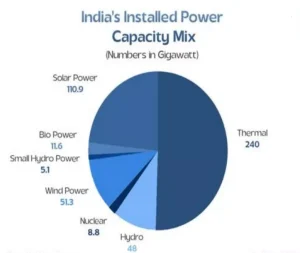
- Energy Mix and Consumption Patterns: India’s energy basket is dominated by coal, followed by oil, natural gas, hydroelectricity, nuclear energy, and renewable sources such as solar and wind.
- Rapid urbanization, industrialization, rising incomes, and increasing electrification have significantly increased energy demand across sectors including industry, transport, agriculture, and households.
- Demand–Supply Scenario: India is among the world’s fastest-growing energy consumers. While domestic energy production has expanded, it has not kept pace with rising demand, creating a persistent gap between energy requirements and domestic availability.
- Ensuring reliable and affordable energy supply remains a major policy challenge.
- Import Dependence: India relies heavily on imports to meet its energy needs, particularly for crude oil, natural gas, and critical minerals.
- This dependence exposes the country to global price volatility, geopolitical disruptions, and supply-chain risks, making energy security a strategic priority.
Institutional and Governance Framework
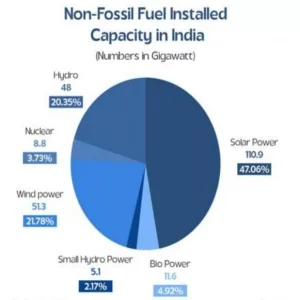
- Role of Union and State Governments: The Union Government formulates national energy policies, oversees strategic planning, regulates interstate energy infrastructure, and manages international energy cooperation.
- State Governments are responsible for electricity distribution, renewable energy implementation, land allocation, and local energy governance.
- Regulatory Bodies and Institutions: Key institutions include:
- Ministry of Power
- Ministry of Petroleum and Natural Gas
- Ministry of New and Renewable Energy
- Central Electricity Authority
- Central Electricity Regulatory Commission
- Petroleum and Natural Gas Regulatory Board
- Policy Architecture and Coordination Mechanisms:
- India’s energy governance framework is guided by various national policies, missions, and regulatory frameworks.
- For Example: The National Green Hydrogen Mission (NGHM), launched in January 2023 with a budget of ₹19,744 crore, aims to establish India as a global hub for the production, utilization, and export of Green Hydrogen.
Why Energy Security Matters for India?
- Import Dependence: India imports nearly 85% of its crude oil requirements, making it highly dependent on external energy sources.
- Strategic Chokepoint Vulnerability: A significant share of India’s oil and LNG imports passes through the Strait of Hormuz, making India’s energy supplies vulnerable to geopolitical disruptions.
- National Security: Any disruption in energy supplies can directly affect India’s national security, strategic autonomy, and defence preparedness.
- Inflationary Pressures: Higher crude oil prices increase transportation and production costs, thereby fuelling inflation across the economy.
- Current Account Deficit (CAD): Rising energy import bills widen the Current Account Deficit and put pressure on foreign exchange reserves.
- For Example: In FY 2024-25, crude oil imports were a major component of the overall import bill, about USD 166.73 billion, reflecting continued dependence on foreign energy sources.
- Fiscal Burden: Increased expenditure on energy imports and subsidies can strain the government’s fiscal position.
- Agricultural Productivity: Energy is essential for irrigation, fertilizer production, and farm mechanization, making it critical for agricultural growth.
- Transport and Connectivity: Reliable energy supplies are necessary for the efficient functioning of the transportation sector and supply chains.
- Technology and Semiconductor Manufacturing: Emerging sectors such as semiconductor manufacturing require uninterrupted and high-quality power supply.
- Heavy Industrial Growth: Industries such as steel, cement, and chemicals depend heavily on affordable and reliable energy.
- Infrastructure and Urbanization: Sustained energy access is vital for infrastructure development, urbanization, and long-term economic growth.
Key Issues in India’s Energy Governance
- Fragmented Institutional Structure
- Multiple Ministries: Energy governance is spread across different ministries, resulting in fragmented policymaking and weak coordination.
- Policy Silos: Ministries often function independently, limiting an integrated approach to energy planning.
- Coordination Gaps: Lack of a single nodal authority creates gaps between ministries and Centre-State actions.
- Delayed Decisions: Multi-layered approvals and inter-ministerial consultations slow policy implementation.
- Lack of a Whole-of-System Approach
- Disconnected Planning: Energy sectors are planned separately despite being highly interconnected.
- Overlooked Linkages: Policymaking often ignores the relationship between energy, industry, transport, agriculture, and climate goals.
- Reduced Efficiency: Poor integration leads to suboptimal resource allocation and energy insecurity.
- Infrastructure Bottlenecks
- Weak Transmission Networks: Inadequate grid infrastructure restricts efficient power evacuation and distribution.
- Renewable Energy Constraints: Renewable projects often remain underutilized due to insufficient transmission capacity.
- Limited Storage Capacity: Inadequate storage infrastructure affects grid stability and energy resilience.
- Investor Concerns: Persistent infrastructure gaps increase costs and discourage private investment.
- Regulatory Fragmentation
- Multiple Regulators: The presence of several regulatory bodies creates a complex governance framework.
- Overlapping Jurisdictions: Regulatory overlaps often lead to institutional conflicts and inefficiencies.
- Policy Uncertainty: Frequent changes and inconsistent regulations reduce investor confidence.
- Delayed Dispute Resolution: Complex regulatory procedures prolong the settlement of energy-sector disputes.
Way Forward
- Creation of a Ministry of Energy
- Unified Structure: Merge the ministries of Petroleum & Natural Gas, Coal, Power, and New & Renewable Energy under a single Ministry of Energy.
- Centralized Leadership: Establish a single authority responsible for formulating and implementing national energy policy.
- Establishment of the Department of Energy Resources and Security (DERS):
- Coordinated Governance: Create a specialized department under the Prime Minister’s Office to coordinate energy policy without replacing existing ministries.
- Ensuring Symmetry of Investments
- Balanced Infrastructure Development: Coordinate investments across generation, transmission, storage, and distribution segments.
- Efficient Resource Utilization: Ensure that infrastructure expansion occurs in a synchronized manner across the value chain.
- Building “India Energy Inc.”
- Energy Diplomacy: Strengthen international partnerships to secure reliable energy supplies.
- Technology Collaboration: Promote research partnerships and access to advanced energy technologies.
- Overseas Energy Assets: Facilitate investments in energy resources abroad to enhance supply security.
- Critical Mineral Access: Secure strategic minerals essential for clean energy technologies and battery manufacturing
- Energy Ombudsman
- Regulatory Harmonization: Streamline regulations across different energy sectors and agencies.
- Dispute Resolution: Provide a mechanism for addressing regulatory and commercial disputes.
- Best Practices Promotion: Encourage adoption of global regulatory standards and innovations.
- Public Communication and Awareness
- Energy Conservation: Promote responsible energy consumption and efficiency measures.
- Public Education: Increase awareness about energy security challenges and policy choices.
- Stakeholder Engagement: Build public support for reforms and long-term energy transition goals.
- Energy Responsibility and Security Act: A proposed framework to strengthen energy security, sustainability, accountability, and long-term energy transition planning in India.
Click to Know UPSC Coaching Centres in India
Conclusion
- India’s energy challenge is not merely one of resource availability but of governance and coordination.
- Establishing an integrated institutional mechanism such as a Department of Energy Resources and Security can help break policy silos, enhance resilience, and accelerate the transition towards energy atmanirbharta and sustainability.
 1 Jun 2026