UPSC PYQs

Prelims, Mains & Optional PYQs

UPSC Notes

Comprehensive & Short Notes

News In Shorts 02 September 2026: Distinguished Jurist, Article 142, Totaliser & More

2 Sep 2026

News In Shorts 02 September 2026: Distinguished Jurist, Article 142, Totaliser & More

Distinguished Jurist in the Supreme Court

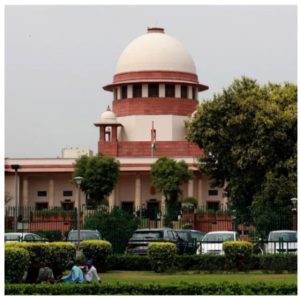
Context: Recently, Justice Ujjal Bhuyan highlighted that no person has been appointed as a Supreme Court judge through the “distinguished jurist” route under Article 124(3), despite the Constitution being over 76 years old.
UPSC Online Courses

About ‘Distinguished Jurist’

Distinguished Jurist

  • Article 124(3): A person can be appointed as a Supreme Court judge if they are:
    • a citizen of India and have been a High Court judge for at least 5 years; or
    • an advocate of a High Court for at least 10 years; or 
    • “In the opinion of the President, a distinguished jurist.”
  • A distinguished jurist is generally understood as a person with outstanding expertise, scholarship, teaching, or research in law, even without extensive courtroom experience.

Why was this provision included?

  • Constituent Assembly, 1949: H.V. Kamath argued that the pool should not be confined only to judges and practicing advocates.
    • It was intended to enable the appointment of persons with exceptional legal and juristic learning, including legal scholars.
    • B.R. Ambedkar did not oppose the concept, though he questioned the wording “distinguished” and considered whether “eminent” might be preferable.
    • The idea was partly inspired by practices such as the selection of judges to the International Court of Justice and the appointment of legal academics to the US Supreme Court.

Why has no distinguished jurist been appointed?

  • Limited exploration: Successive Governments and the Collegium have not seriously explored this constitutional route.
  • Limited legal academia: Indian legal academia has historically been perceived as lacking sufficient depth of juristic scholarship for elevation to the Supreme Court.
  • Collegium-driven appointments: The Supreme Court Collegium initiates appointments, with no separate mechanism specifically for identifying distinguished jurists.
  • Academia–practice divide: Full-time law teachers are generally restricted from legal practice under Bar Council rules, limiting the pool of candidates with both academic and courtroom experience.
  • Established convention: Supreme Court judges have traditionally been selected from the Higher Judiciary and the Bar, leaving the jurist category unused.

Supreme Court Invokes Article 142 to quash FIRs Against NEET-UG Protesters

Context: Recently, the Supreme Court invoked Article 142 to quash FIRs registered against Gen Z protesters involved in the NEET-UG 2026 protests, citing the need to ensure “complete justice” and protect the future prospects of young protesters.

About Article 142

  • Constitutional Provision: Article 142 empowers the Supreme Court to pass any decree or order necessary for doing “complete justice” in any cause or matter pending before it.
  • Enforceability: Such decrees or orders are enforceable throughout the territory of India.
  • Extraordinary Power: It provides the Supreme Court with a wide discretionary power to mould relief and prevent injustice where ordinary legal remedies may be inadequate.
  • Purpose: It enables the Court to provide effective and equitable remedies and, where necessary, fill gaps in the existing legal framework.
  • Scope: The power may be exercised in both civil and criminal matters.
  • Limitation: Article 142 cannot be used to override substantive statutory provisions or exercise a power expressly prohibited by law.
  • Article 141 vs Article 142:
    • Article 141: Law declared by the Supreme Court is binding on all courts in India.
    • Article 142: Supreme Court may pass orders necessary to ensure “complete justice” in a particular matter.


Super Garuda Shield

Context: Recently, the United States and Indonesia launched the annual Super Garuda Shield military exercise.
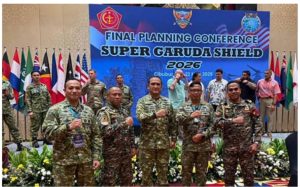
About Super Garuda Shield

Super Garuda Shield

  • It is a multilateral military exercise led by the United States and Indonesia.
  • Started: Held annually since 2006.
  • 2026 Edition: Conducted across multiple regions of Indonesia and scheduled to continue until September 11.
  • Participants: More than 4,700 personnel from 15 countries, including the United States, Indonesia, Japan, South Korea, Australia and Canada.
    • India taking part as an observer for the first time. 
  • Military Activities: Includes airborne jumps, missile firing, jungle warfare training, infiltration drills, naval manoeuvres and cyber defence.
  • Humanitarian Component: Also includes humanitarian assistance and disaster relief (HADR) exercises.

UPSC Online Classes

Totaliser in Elections

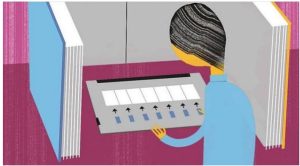
Context: The Supreme Court has sought the Centre’s response on using totalisers to mask booth-wise voting patterns, amid the Election Commission’s concerns over transparency and EVM confidence

About Totaliser

Totaliser in Elections

  • A totaliser is designed to aggregate votes from multiple EVM Control Units simultaneously, rather than revealing results for individual polling stations.
  • Configuration: One totaliser can connect 14 EVM Control Units corresponding to 14 polling stations and provide a consolidated candidate-wise result.
  • Voter Privacy: It can prevent political parties from identifying booth-level voting patterns, potentially reducing the risk of voter intimidation or reprisals.
  • Law Commission: The Law Commission’s 255th Report had recommended the selective use of totalisers to protect voter secrecy.
  • Present Legal Status: There is currently no specific statutory framework recognising or regulating totalisers under the Representation of the People Act or the Conduct of Election Rules, 1961.

Click to Know UPSC Coaching Centres in India

Totaliser vs Existing System

  • Counting: Existing system gives booth-wise results; totaliser aggregates votes from multiple booths.
  • Voter Privacy: Existing system reveals booth-level voting patterns; totaliser masks such patterns, reducing the risk of voter reprisals.
  • Transparency: Existing system enables booth-wise verification through Form 17C; totaliser may make individual EVM-level verification more difficult.

Check Out UPSC CSE Books

Visit PW Store

online store 1

News In Shorts 02 September 2026: Distinguished Jurist, Article 142, Totaliser & More

Need help preparing for UPSC or State PSCs?

Connect with our experts to get free counselling & start preparing

Free Counselling for UPSC Aspirants

Connect with our experts and take the right next step.

Expert Guidance
Personalized Strategy
100% Free

Book Your Free Session

NEED ASSISTANCE?

Request a Callback

Our counsellor will connect with you and help you choose the right course and centre.

  • Expert Guidance
  • Course & Fee Information
  • Quick Callback Support

Request a Callback

Books
UPSC PYQs
UPSC Notes
Current Affairs
Quick Revise Now !
AVAILABLE FOR DOWNLOAD SOON
UDAAN PRELIMS WALLAH
Comprehensive coverage with a concise format
Integration of PYQ within the booklet
Designed as per recent trends of Prelims questions
हिंदी में भी उपलब्ध
Quick Revise Now !
UDAAN PRELIMS WALLAH
Comprehensive coverage with a concise format
Integration of PYQ within the booklet
Designed as per recent trends of Prelims questions
हिंदी में भी उपलब्ध

<div class="new-fform">


    </div>

    Subscribe our Newsletter
    Sign up now for our exclusive newsletter and be the first to know about our latest Initiatives, Quality Content, and much more.
    *Promise! We won't spam you.
    Yes! I want to Subscribe.