Hallaniyat Islands
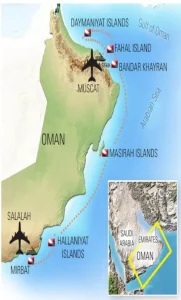
Context: A sanctioned oil tanker, Caroline Bezengi, ran aground near Oman’s Hallaniyat Islands, causing a major crude oil spill.
UPSC Online Courses
About Hallaniyat Islands

- It is an archipelago of five islands off the southern coast of Oman in the Arabian Sea, forming part of the Dhofar Governorate.
- Former Name: Kuria Muria Islands.
- Largest Island: Al Hallaniyya is the largest and only permanently inhabited island of the archipelago
- Protected Area: Designated as a protected nature reserve in 2025.
- Biodiversity: Important habitat for seabirds, sea turtles, coral reefs, and diverse marine life.
- Geographical Significance: Located along the Arabian Sea maritime zone, the islands are strategically important for regional maritime routes.
- Nearby Region: The islands lie off Dhofar, a region known for the Khareef monsoon and its influence on the southern Omani coast.
Sangeet Natak Akademi Awards 2024–25
Context: The Sangeet Natak Akademi will honor 10 artists from Northeast India with Fellowships and Awards for 2024 and 2025.
Key Points

- Recipients: Artists from Assam, Arunachal Pradesh, Mizoram, Tripura, Manipur, and Nagaland.
- Art Forms Recognised: Folk and tribal arts, puppetry, mask making, instrument making, music and dance, including Sattriya and Manipuri dance.
About Sangeet Natak Akademi
- Established: 1952 by the Government of India.
- Nature: India’s national academy for music, dance and drama, functioning under the Ministry of Culture.
- Headquarters: New Delhi.
- Objective: To promote, preserve and develop India’s performing arts traditions, including classical, folk and tribal forms.
About Sangeet Natak Akademi Awards
- Origin: The Sangeet Natak Akademi Awards have been conferred since 1952.
- Scope: Recognise contributions to music, dance, drama, folk and tribal arts, puppetry, mask making, instrument making, and other performing-art traditions.
- Akademi Fellowship: The highest honor conferred by the Akademi for distinguished contribution to the performing arts.
- Components:
- Akademi Fellowship: ₹3 lakh.
- Akademi Award: ₹1 lakh, along with a Tamrapatra and Angavastram.
Ebola Virus Disease
Context: The WHO has warned that the ongoing Ebola outbreak in eastern Democratic Republic of Congo (DRC) could surpass the 2014–16 West African outbreak, the deadliest recorded Ebola epidemic.
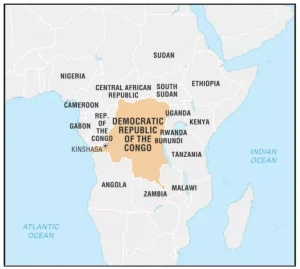
- The outbreak is driven by the Bundibugyo virus, which has no approved vaccine or specific treatment, while conflict, poor infrastructure, misinformation and limited healthcare access are hampering containment.
About Ebola Virus Disease

- Ebola Virus Disease (EVD) is a severe and often fatal viral haemorrhagic fever caused by viruses of the Orthoebolavirus genus.
- Origin: Ebola was first identified in 1976 during simultaneous outbreaks in Nzara (South Sudan) and Yambuku (DRC), near the Ebola River.
- Caused By: EVD is caused by Orthoebolaviruses, belonging to the Filoviridae family, with fruit bats of the Pteropodidae family considered a likely natural reservoir.
- Different Types of Ebola Virus : Zaire virus is the most common and severe human disease-causing species, while Sudan, Bundibugyo and Taï Forest viruses can also cause human disease
- Reston virus is not known to cause illness in humans.
- Transmission: Ebola spreads through direct contact with blood or other bodily fluids of infected people or animals and through contaminated objects; it is not an airborne disease.
- Fatality Rate: Approximately 50% as per WHO.
- Prevention: Prevention involves early isolation, appropriate PPE, infection-control measures, safe burials and vaccination, where an approved vaccine is available for the relevant strain.
- Treatment: Treatment primarily involves early supportive care, including fluid and electrolyte management, while specific monoclonal antibody therapies are available for Zaire ebolavirus but not for all Ebola species.
UPSC Online Classes
Container Manufacturing Assistance Scheme (CMAS)
Context: The Government has proposed the ₹10,000-crore Container Manufacturing Assistance Scheme (CMAS) to build domestic container manufacturing capacity and strengthen India’s maritime supply chains.
About Container Manufacturing Assistance Scheme
- CMAS is a targeted initiative to develop a globally competitive domestic container manufacturing ecosystem, reduce import dependence and support India’s growing EXIM trade.
- Launch: It was announced in the Union Budget 2026–27.
- Nodal Ministry: The Ministry of Ports, Shipping and Waterways
- Budget Outlay: CMAS has a proposed ₹10,000-crore outlay over five years.
- Objective:
- To establish annual manufacturing capacity of up to 7.5 lakh TEUs.
- Twenty-foot EquivalentUnit (TEU) is a standard unit of measurement used in the shipping and logistics industry to quantify cargo capacity based on the size of a standard 20-foot long shipping container.
- Reduce reliance on imported empty containers and enhance supply-chain resilience.
- Key Components
- Greenfield Manufacturing: CMAS provides capital assistance for establishing new container manufacturing facilities.
- Brownfield Expansion: Existing manufacturing units can receive support for capacity expansion and modernisation.
- Operational Support: The scheme provides assistance to improve the competitiveness and efficiency of domestic container manufacturers.
- Skill and Testing Infrastructure: Support is envisaged for testing facilities, skill development and capacity building to ensure internationally competitive production.
- CMAS can reduce India’s dependence on imported containers, strengthen logistics resilience, generate employment and support the country’s ambition to become a global maritime manufacturing hub.
Ship Recycling
Context: India became the world’s leading ship-recycling nation in 2025, accounting for 35.4% of global recycling, up from 30.1% in 2024.
About Ship Recycling
- Ship recycling involves dismantling end-of-life vessels to recover steel, non-ferrous metals, machinery and other reusable materials, thereby supporting a circular economy and reducing dependence on primary resources.
- Hong Kong Convention: The Hong Kong International Convention for the Safe and Environmentally Sound Recycling of Ships (HKC) establishes international standards for safe ship recycling, hazardous-material management and environmental protection.
- Entered into force: 26 June 2025.
- Top Recyclers: India, Bangladesh , Pakistan and Türkiye are among the major global ship-recycling countries, while India has emerged as a leading destination for environmentally compliant recycling.
- India’s Position: India recycled around 2.99 million Gross Tonnes (GT) of ships in 2025, registering nearly 60% growth over 2024.
- The recycling of the former aircraft carrier INS Viraat at Alang, Gujarat, demonstrated India’s capability to dismantle complex vessels while recovering valuable materials under increasingly stringent safety and environmental standards.
Click to Know UPSC Coaching Centres in India
Legal Provision for Ship Recycling in India
- Ship Recycling Act, 2019: Provides India’s principal statutory framework and empowers the Directorate General of Shipping as the National Authority for regulating ship recycling.
- Rules and Regulations: The Ship Recycling Rules, 2021 and Ship Recycling Regulations, 2026 provide detailed requirements relating to yard authorisation, recycling plans, hazardous materials, worker safety, inspections and environmental compliance.
- Hazardous Material Management: India follows the Inventory of Hazardous Materials (IHM) approach to identify and manage hazardous substances present on ships before and during recycling.