SURYAPATH TIRANGA
Context: The SURYAPATH TIRANGA Global Relay, organised under the Har Ghar Tiranga campaign, symbolically carried the Tiranga across time zones and continents along the path of the rising sun.
UPSC Online Courses
Key Features
- Beginning: The relay was launched from the High Commission of India in Fiji, symbolically beginning with the rising sun.
- Journey: The Tiranga travelled across 54 countries, connecting Indian communities and friends of India across continents.
- Concept: The initiative symbolically carried the Tiranga from one sunrise to the next, creating a continuous global relay.
- Vande Mataram: The relay also commemorated 150 years of Vande Mataram, highlighting its enduring role in India’s national consciousness.
India’s First Virtual Zoo in Indore
Context: Indore Zoo in Madhya Pradesh has launched India’s first virtual zoo.
About Virtual Zoos
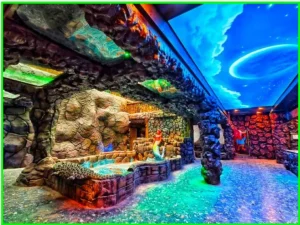
- Concept: They use extended reality, simulation, projection, sound and motion effects to recreate habitats and animal behaviour.
- 14-D experience: The label generally adds physical effects such as motion, wind, mist, scent or vibration to stereoscopic visual content; it is not a scientific dimensional classification.
- Educational value: Interactive interpretation can explain ecology, food webs and conservation threats to urban audiences.
Advantages and Limits
- Animal welfare: Virtual exhibits can reduce pressure to acquire animals solely for entertainment.
- Accessibility: Content can be multilingual and adapted for children and persons with disabilities.
- Limit: A virtual experience cannot replace field conservation, habitat protection or scientifically managed rescue and breeding programmes.
Cyber Kushti 2026
Context: The National Institute of Electronics and Information Technology (NIELIT) has launched ‘Cyber Kushti 2026’.
About Cyber Kushti 2026
- It is a national-level hackathon focused on Cyber Security and Artificial Intelligence (AI). The initiative seeks to test and recognise human judgement in cyber-security assessment.
- The winning team will be awarded the title ‘Cyber Kesari 2026’ and presented the traditional Gada (गदा), while the runners-up will be recognised with the titles ‘Rustam’ and ‘ Pahalwan.’
About NIELIT
- NIELIT is an autonomous scientific society under the Ministry of Electronics and Information Technology.
- Role: It conducts education, training, certification and capacity building in electronics and information technology.
Chromium Contamination
Context: Recently, an NGT report highlighted persistent hexavalent chromium contamination in groundwater across parts of three Uttar Pradesh districts.
About Chromium Contamination
- Chromium is a naturally occurring metal found in rocks and soil, while industrial activities can release toxic chromium compounds into the environment.
- Types of Chromium
- Chromium (III): A naturally occurring form of chromium.
- Chromium (VI): Hexavalent chromium, or chromium (VI), is a toxic, man-made form of the metallic element chromium.
- It is Widely used in industrial settings like chrome plating, welding, and anti-corrosive paints
- Sources of Contamination
- Industrial Waste: Chemical industries producing chromium sulphate generate waste and sludge that can contaminate soil and groundwater.
- Tanneries: Chromium compounds are used by tanning industries to strengthen leather, making tannery waste an important source of contamination.
- Improper Dumping: Untreated sludge, industrial run-off and dumping of chromium-laden soil allow contaminants to leach into groundwater.
- Safe Limit as per WHO: WHO sets a provisional guideline value of 0.05 mg/L (which is 50 µg/L or 50 parts per billion) for total chromium in drinking water
- Impacts of Chromium Contamination
- Physical and Water-Quality Impact: Contaminated groundwater may develop a yellow-green colour, bitter taste and unpleasant appearance, making it unsuitable for drinking.
- Health Impact: Chromium (VI) exposure is associated with skin problems, gastrointestinal disorders, kidney and liver damage, stomach ulcers and cancer risks.
- Environmental Impact: Contaminated soil and groundwater can remain polluted for decades; aquifer recovery may take tens to hundreds of years, depending on contamination levels
UPSC Online Classes
Indonesia Earthquake
Context: A magnitude 7.7 earthquake struck eastern Indonesia, killing at least 53 people and injuring more than 130 people.
About Indonesia
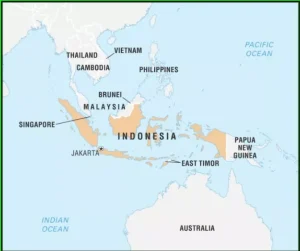
- Indonesia is an archipelagic country in Southeast Asia, located between the Indian and Pacific Oceans.
- Archipelago: It consists of more than 17,000 islands, with major islands including Sumatra, Java, Borneo (Kalimantan), Sulawesi, and New Guinea (Papua).
- Pacific Ring of Fire: Indonesia lies along the Pacific Ring of Fire, making it highly prone to earthquakes and volcanic eruptions.
- Tectonic Setting: It lies at the convergence of several tectonic plates, including the Indo-Australian, Eurasian, Pacific, and Philippine Sea plates.
- Important Straits: Major strategic waterways include the Strait of Malacca, Sunda Strait, and Lombok Strait.
- Capital: Jakarta is the largest city and former capital, while Nusantara is the country’s new capital being developed on the island of Borneo.
- Neighboring Countries: It shares land borders with Malaysia, Papua New Guinea, and Timor-Leste.
Hara Mangrove Forests
Context: A major oil spill off Qeshm Island, Iran, is threatening the ecologically important Hara mangrove forests in the Persian Gulf.
About the Oil Spill and Impacted Region
- Source and Extent: Satellite imagery has revealed an oil slick about 160 km long off Qeshm’s southern coast, with heavy fuel oil reaching the shoreline.
- Likely Source: Experts have identified the bulk carrier Minoan Pioneer as the source after it was struck by a projectile, causing leakage of heavy fuel oil.
- Threat to Ecosystem: The spill threatens mangroves that function as coastal barriers, carbon sinks and marine nurseries, while the ongoing conflict is hindering cleanup operations.
Click to Know UPSC Coaching Centres in India
About Hara Mangrove Forests
- The Hara mangrove forests are a vital coastal ecosystem of Iran, designated as a UNESCO Biosphere Reserve, and are important for biodiversity and local livelihoods.
- Location: The forests lie around Qeshm Island in Iran’s Persian Gulf, extending through the waterways of the Strait of Khuran and the wider Strait of Hormuz region.
- Key Features
-
- Grey Mangrove Ecosystem: The forests mainly comprise grey mangroves (Avicennia marina), whose specialised roots enable them to survive in saline environments.
- Marine Nursery and Carbon Sink: Mangrove roots provide breeding and sheltering grounds for fish, shrimp and crabs, while the forests store substantial amounts of carbon and protect coastlines from erosion.
- Biodiversity and Migratory Birds: The canopy and waterways support diverse wildlife and serve as an important migratory hub for birds, including herons and the great stone-curlew.
 17 Aug 2026