UPSC PYQs

Prelims, Mains & Optional PYQs

UPSC Notes

Comprehensive & Short Notes

News In Shorts 30 September 2026: IWC, Niyamgiri Hills, PRAHAAR & Iraq

30 Sep 2026

News In Shorts 30 September 2026: IWC, Niyamgiri Hills, PRAHAAR & Iraq

International Whaling Commission (IWC)

Context: India has reaffirmed its commitment to whale and cetacean conservation at the 70th meeting of the International Whaling Commission (IWC-70), being held in Hobart, Australia.
UPSC Online Courses

About International Whaling Commission (IWC)

International Whaling Commission

  • IWC is a global intergovernmental body established in 1946 under the International Convention for the Regulation of Whaling (ICRW) to conserve whale stocks and regulate whaling activities through science-based measures.
  • Membership: As of September 2026, the International Whaling Commission (IWC) has 89 member governments 
  • Headquarters: Impington, near Cambridge, England, United Kingdom. 
  • Key Functions: Sets whaling limits and seasons, establishes whale sanctuaries, protects certain species and regulates the capture of calves and female whales with calves. 
  • India: Has been a member of the IWC since 1981.
  • Florianópolis Declaration (2018): Members reaffirmed the conservation of whales and their recovery to pre-industrial whaling levels.
  • IWC-70: Coincides with the 80th anniversary of the International Convention for the Regulation of Whaling. 

India’s Cetacean Conservation Measures

  • Legal Protection: Cetaceans receive the highest level of protection (Schedule I) under the Wild Life (Protection) Act, 1972, prohibiting hunting and providing stringent penalties for violations.
  • Marine Protected Areas (MPAs): India has notified several MPAs to conserve marine biodiversity, including whales, dolphins, dugongs, sharks, rays, turtles and corals.
  • Project Dolphin: Launched in 2020, it adopts a holistic approach to conserve riverine and marine dolphins, along with other cetaceans and their aquatic ecosystems.
  • Arabian Sea Humpback Whale: Identified as one of 25 species for focused conservation efforts due to its conservation significance.


Niyamgiri Hills Bauxite Mining

Context: The National Alliance of People’s Movements (NAPM) has cautioned against renewed efforts to revive bauxite mining in Odisha’s Niyamgiri Hills.
About Niyamgiri Hills

Niyamgiri Hills Bauxite Mining

  • The Niyamgiri Hills are located in southern Odisha, primarily across Rayagada and Kalahandi districts.
  • Physiography: They form part of the Eastern Ghats hill system.
  • Mineral Resource: The hills are known for substantial bauxite deposits; Odisha itself is one of India’s major mineral-rich states.
  • Protected Areas: Niyamgiri Hills are bounded by Karlapat Wildlife Sanctuary to the northwest and Kotgarh Wildlife Sanctuary to the northeast.
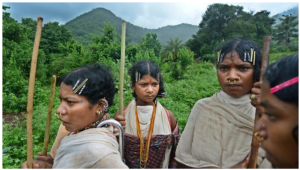
  • Tribal Community: The Dongria Kondh, an Indigenous tribal community and a Particularly Vulnerable Tribal Group (PVTG), have traditionally inhabited the Niyamgiri region. 

UPSC Online Classes

Mining In Niyamgiri Hills

  • Bauxite Mining Proposal: Vedanta Group had proposed bauxite mining in the Niyamgiri Hills.
  • Opposition to Mining: The project faced sustained opposition from local tribal communities and environmental groups.
  • Supreme Court Involvement: In 2013, the Supreme Court directed that the affected Gram Sabhas should consider the community’s religious and cultural rights under the Forest Rights Act, 2006, before the mining proposal could proceed.
    • 12 Gram Sabhas subsequently rejected the mining proposal, following which the proposed mining project did not receive the required approval.

Legal Safeguards for Tribal Communities in Scheduled Areas

  • Fifth Schedule of the Constitution: Provides special provisions for the administration and control of Scheduled Areas and Scheduled Tribes.
  • Panchayats (Extension to Scheduled Areas) Act, 1996 (PESA): Strengthens the role of Gram Sabhas in Scheduled Areas.
  • Forest Rights Act, 2006 (FRA): Recognises the rights of forest-dwelling tribal communities and other traditional forest dwellers.


PRAHAAR

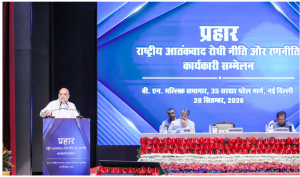
Context: The Union Home Minister inaugurated the Conference on ‘PRAHAAR – CT Policy and Strategy’ in New Delhi.
About PRAHAAR

PRAHAAR

  • PRAHAAR is India’s Counter-Terrorism (CT) Policy and Strategy framework, aimed at strengthening the country’s response to terrorism through a proactive, coordinated and whole-of-society approach.
  • Seven Pillars Of PRAHAAR
    • Prevention: Preventing terrorist activities and emerging threats.
    • Response: Ensuring timely and coordinated action against terrorism.
    • Aggregating Internal Capacities: Pooling the capabilities of various security and law-enforcement agencies.
    • Human Rights: Ensuring counter-terrorism measures respect human rights considerations.
    • Attenuating Conditions for Terrorism: Addressing factors and conditions that enable terrorism.
    • Aligning International Efforts: Strengthening international cooperation against terrorism.
    • Recovery & Resilience: Enhancing the ability of institutions and society to recover from terrorist incidents and withstand future threats.

Key Points of The PRAHAAR Conference

  • Strengthening Counter-Terrorism Strategy: Focus on continuously analysing terror incidents and strengthening the PRAHAAR framework for the next 10 years.
  • Police Station-Level Implementation: Emphasis on implementing the PRAHAAR framework at the Thana/police station level.
  • Automated CT Response: Focus on institutionalising an automated counter-terrorism response at every level of the framework.
  • Inter-Agency Coordination: Better coordination among central agencies, State Police, CAPFs and other stakeholders to prevent delays and ensure result-oriented action.
  • Extradition Portal: A new Extradition Portal was launched to streamline and expedite the process of bringing fugitives back to India.
  • Dedicated State Police Teams: States were urged to establish dedicated teams to work with central agencies on bringing fugitives back from abroad.
  • Whole-of-Society Approach: The conference emphasized the coordinated participation of security agencies, governments, and other stakeholders in counter-terrorism efforts.

UPSC Online Coaching

Mandar GI Tag

Context: The traditional Mandar folk musical instrument of Jharkhand received the Geographical Indication (GI) tag from the GI Registry, Chennai, in September 2026.

About ‘Mandar’

Mandar GI Tag

  • Mandar is a traditional percussion instrument deeply associated with Jharkhand’s tribal communities, folk music, dance and festivals.
    • The GI application was filed in 2021, documenting its construction, locally sourced materials, traditional techniques and cultural association.
  • Key Features
    • Distinctive Construction: Mandar has a distinctive drum-like structure, with its construction incorporating locally available natural materials.
    • Traditional Manufacturing: The instrument is produced using traditional artisan techniques, preserving indigenous knowledge and craftsmanship.
    • Acoustic Characteristics: Its traditional construction gives Mandar a distinctive deep acoustic sound, making it suitable for folk music and dance performances.
    • Historical Documentation: Its association with Jharkhand has been supported by historical records, including works of Sarat Chandra Roy (1915), Tarak Chandra Das (1931) and W.G. Archer (1940).
  • Cultural Significance
    • Mandar forms an integral part of the music, dance and social life of indigenous communities in Jharkhand.
    • It is traditionally used during community gatherings, folk dances and festivals, including Sarhul.
    • Its recognition helps preserve the traditional knowledge, cultural identity and livelihood of local artisans.

About Geographical Indication (GI) Tag

  • A GI tag identifies goods whose quality, reputation or other characteristics are essentially attributable to their geographical origin.
    • India’s first GI tag was awarded to Darjeeling Tea in 2004–2005.
  • Provided By: GI registration in India is administered by the Geographical Indications Registry, headquartered in Chennai, Tamil Nadu.
  • Legal Provision: GI protection in India is governed by the Geographical Indications of Goods (Registration and Protection) Act, 1999.
    • The Act came into force in 2003 and provides for registration and protection of geographical indications.
  • Registration: GI registration can protect agricultural, natural, manufactured, handicraft and industrial goods associated with a specific geographical territory.
  • Significance of GI Recognition: GI protection helps prevent unauthorised use of the geographical name, strengthens market recognition and supports the economic interests of registered producers.


U.S. Forces Withdrawal From Iraq

Context: U.S. forces are set to leave their last bases in Iraq by September 30, 2026, ending more than two decades of military presence.
Background of U.S. in Iraq

U.S. Forces Withdrawal From Iraq

  • U.S. Invasion (2003): The United States invaded Iraq in 2003 to topple Saddam Hussein’s regime and subsequently occupied the country.
  • Occupation and Counterinsurgency (2003–2011 ): U.S. forces supported the establishment of a Shiite-led government while conducting prolonged counterinsurgency operations against armed groups.
  • First U.S. Withdrawal (2011): The United States withdrew its forces from Iraq at the end of 2011 after completing its post-invasion military occupation.
  • Fight Against Islamic State (2014–2017): U.S. forces returned in 2014 to assist Iraqi forces in defeating Islamic State (IS), which had captured large areas of Iraq.
  • Killing of Qasem Soleimani (2020): The United States killed Iranian commander Qasem Soleimani in a strike near Baghdad Airport, intensifying tensions between US and Iran on Iraqi soil.
  • Withdrawal Agreement (2024): The withdrawal from Iraq was agreed upon in 2024 under President Joe Biden, with implementation subsequently carried forward by the Donald Trump administration.
  • Final Withdrawal (2026): U.S. forces left  their remaining Iraqi bases by September 30, 2026, ending the U.S. military presence in Iraq after more than two decades.

Click to Know UPSC Coaching Centres in India

Potential Implications of U.S. Exit from Iraq

  • Greater Iranian Influence: The withdrawal could remove an important military counterweight to Iranian influence in Iraq, potentially strengthening Iran-aligned political and armed groups.
  • Security Vacuum: Some Iraqi security figures fear that the withdrawal could create a security gap, particularly if Iraqi forces are not fully prepared to assume the entire security responsibility.
  • Islamic State Resurgence: The loss of U.S. intelligence, logistical support and drone capabilities could create opportunities for Islamic State sleeper cells to regroup and exploit security gaps.
  • Greater Iraqi Sovereignty: The departure fulfils a long-standing Iraqi aspiration for greater sovereignty and reduced dependence on foreign military forces, although concerns remain over maintaining security and balancing competing external influences

About Iraq

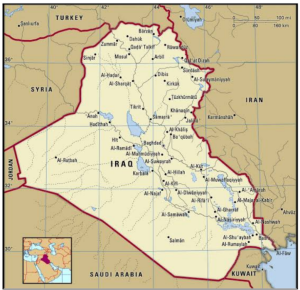
  • Iraq is a Middle Eastern country in Southwest Asia, located at the northern end of the Persian Gulf, with as its capital at Baghdad.
  • Borders: It is bordered by Turkey to the north, Iran to the east, Kuwait and Saudi Arabia to the south, and Jordan and Syria to the west.
  • Key Features
    • Climate: The country mostly experiences a hot, arid desert climate with extremely scorching summers and short, cool winters.
    • Vegetation: Plant life is sparse, consisting mainly of desert shrubs, dry grasslands, and date palms clustered near water sources.
    • Rivers: The historic Tigris and Euphrates rivers bisect the region, creating a fertile alluvial plain.

Check Out UPSC CSE Books

Visit PW Store

online store 1

News In Shorts 30 September 2026: IWC, Niyamgiri Hills, PRAHAAR & Iraq

Need help preparing for UPSC or State PSCs?

Connect with our experts to get free counselling & start preparing

Free Counselling for UPSC Aspirants

Connect with our experts and take the right next step.

Expert Guidance
Personalized Strategy
100% Free

Book Your Free Session

NEED ASSISTANCE?

Request a Callback

Our counsellor will connect with you and help you choose the right course and centre.

  • Expert Guidance
  • Course & Fee Information
  • Quick Callback Support

Request a Callback

Books
UPSC PYQs
UPSC Notes
Current Affairs
Quick Revise Now !
AVAILABLE FOR DOWNLOAD SOON
UDAAN PRELIMS WALLAH
Comprehensive coverage with a concise format
Integration of PYQ within the booklet
Designed as per recent trends of Prelims questions
हिंदी में भी उपलब्ध
Quick Revise Now !
UDAAN PRELIMS WALLAH
Comprehensive coverage with a concise format
Integration of PYQ within the booklet
Designed as per recent trends of Prelims questions
हिंदी में भी उपलब्ध

<div class="new-fform">


    </div>

    Subscribe our Newsletter
    Sign up now for our exclusive newsletter and be the first to know about our latest Initiatives, Quality Content, and much more.
    *Promise! We won't spam you.
    Yes! I want to Subscribe.