India-Nordic Summit 2026: Arctic Strategy, Nordic Cooperation & India’s Northward Turn

India-Nordic Summit 2026: Arctic Strategy, Nordic Cooperation & India’s Northward Turn 18 May 2026

India-Nordic Summit 2026: Arctic Strategy, Nordic Cooperation & India’s Northward Turn

Prime Minister Narendra Modi visited Nordic countries ahead of the India–Nordic Summit. The summit comes amid major geopolitical changes caused by the Russia–Ukraine conflict and increasing militarization of the Arctic.
UPSC Coaching Classes

Which are the Nordic Countries?

India Nordic Summit 2026

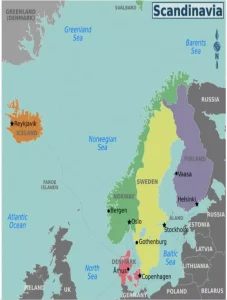
  • The Nordic countries include Norway, Sweden, Finland, Denmark, and Iceland.
  • These are five highly developed nations known for excellent human development indicators, high happiness rankings, and cutting-edge innovation.
  • They are leaders in green energy and maintain very high standards of living.

Previous Two Summits

  • First Summit (2018): Held in Stockholm.
  • Second Summit (2022): Held in Copenhagen, Denmark.
    • Focus: These earlier summits focused primarily on “soft” issues such as climate change, environment protection, green energy, technology sharing, and the Blue Economy (sustainable use of ocean resources).
  • Oslo Summit (2026):
    • The third summit is taking place in a significantly changed geopolitical environment due to the Ukraine-Russia war.
    • Unlike previous summits, the focus has shifted toward hard security, defense alignment, and securing critical supply chains.
    • Specific interests include securing critical minerals from areas like Greenland (part of Denmark) and addressing the increasing militarization of the Arctic.

The Arctic Council

  • Established in 1996 via the Ottawa Declaration to facilitate cooperation in the Arctic region.
  • Members: There are eight member states: US, Russia, Canada, Denmark, Finland, Iceland, Norway, and Sweden.
  • India’s Role: India is not a member but has been an observer country since 2013.
  • Current Crisis: Following the Ukraine war, the council is increasingly polarized (NATO vs. Russia), as seven of the eight members are now part of NATO.

Why is the Arctic Ocean Important for India? 

  • Climate Impact: The Arctic is warming three times faster than the rest of the world. Melting ice affects monsoon patterns, which are critical for India’s food security and economy.
  • New Trade Routes: Melting ice is opening the Northern Sea Route (NSR), which is much shorter than the Suez Canal route for reaching Europe. India seeks to link this with the Chennai-Vladivostok Maritime Corridor.
  • Coastal Security: Rising sea levels caused by melting ice threaten Indian coastal cities like Mumbai.
  • Existing Research: India already operates research stations like Himadri (Svalbard, Norway), IndARC (underwater observatory), and the Gruvebadet atmospheric laboratory.

UPSC Online Preparation

Benefits from Nordic Countries for India

  • Norway: Offers expertise and technology for deep-sea mining.
  • Denmark: Provides access to critical minerals through its ties to Greenland.
  • Sweden & Finland: Leaders in next-generation technologies like 5G, 6G, AI, semiconductors, and infrastructure.
  • Iceland: Expertise in geothermal energy, which could help India produce electricity in regions like the Himalayas.

What India has to Offer?

  • Market: India provides a massive market for Nordic products due to its large population.
  • Human Capital: India has a vast pool of top engineering talent.
  • Strategic Partner: India is a trusted partner in the Indo-Pacific that operates with strategic autonomy and is not easily pressured by other major powers like China.

Click to Explore UPSC Offline Coaching

Way Forward

  • Ice-breaker Ships: India needs at least five ice-breaker ships by 2030-31 to effectively explore and navigate the frozen Arctic waters.
  • Economic Forum: Establishing an India-Arctic Economic Forum to deal directly with Arctic nations regarding ship-building, manpower, and infrastructure.
  • Data Corridor: Creating an Arctic-Himalayas Climate Data Corridor for shared research on monsoon impacts.
  • Diplomatic Representation: Appointing a Special Envoy for the Arctic Council, similar to other Asian observers like China and Japan.
  • Co-development: Moving from mere purchasing to co-developing technology with Nordic countries to ensure strategic autonomy.
Mains Practice

Q. The Arctic is transitioning from a theater of scientific cooperation to a zone of geopolitical and strategic contestation. In this context, analyze the significance of the India-Nordic Summit (Oslo) and suggest measures to safeguard India’s long-term interests in the Arctic. (15 Marks, 250 Words)

Check Out UPSC CSE Books

Visit PW Store


online store 1

India-Nordic Summit 2026: Arctic Strategy, Nordic Cooperation & India’s Northward Turn

Explore UPSC Foundation Course

Need help preparing for UPSC or State PSCs?

Connect with our experts to get free counselling & start preparing

Aiming for UPSC?

Download Our App

      
Quick Revise Now !
AVAILABLE FOR DOWNLOAD SOON
UDAAN PRELIMS WALLAH
Comprehensive coverage with a concise format
Integration of PYQ within the booklet
Designed as per recent trends of Prelims questions
हिंदी में भी उपलब्ध
Quick Revise Now !
UDAAN PRELIMS WALLAH
Comprehensive coverage with a concise format
Integration of PYQ within the booklet
Designed as per recent trends of Prelims questions
हिंदी में भी उपलब्ध

<div class="new-fform">


    </div>

    Subscribe our Newsletter
    Sign up now for our exclusive newsletter and be the first to know about our latest Initiatives, Quality Content, and much more.
    *Promise! We won't spam you.
    Yes! I want to Subscribe.