Fertiliser and Fuel Supply Crisis: Impact of West Asia Conflict on India’s Agriculture

27 Apr 2026

Fertiliser and Fuel Supply Crisis: Impact of West Asia Conflict on India’s Agriculture

The West Asia conflict disrupting fertiliser and fuel supply chains has exposed vulnerabilities of India’s fossil-fuel-dependent agricultural model.
Best Online Coaching for UPSC

Recent Conflicts Affecting Fertiliser and Fuel Supply

  • Strait of Hormuz Disruption: Closure of Strait of Hormuz affected  ~1/3rd of the global fertilizer trade, constraining supplies to import-dependent countries like India.
  • Export Restrictions by Key Suppliers: Russia (~20% global fertilizer trade) and China curtailed fertilizer exports, worsening shortages.
  • Rising Input Prices: Global supply shocks have triggered spikes in fertilizer and fuel prices.
  • Energy Dependency Shock: Over 50% of India’s natural gas (fertiliser feedstock) is imported, increasing vulnerability.

India’s Dependence on Fossil-Fuel-Based Agricultural Inputs

Fuel Supply Crisis

  • Fertiliser-Intensive Farming: NPK consumption rose from 69,800 tonnes (1950-51) to 32.9 million tonnes (2024-25).
  • Shift to High-Analysis Fertilisers: Urea (46% N) dominates with 38.8 mt consumption, replacing low-nutrient traditional inputs.
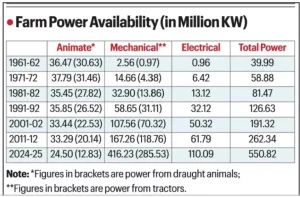
  • Mechanisation Dependency: Tractor stock crossed 12 million, replacing draught animals and increasing diesel dependence.
    • Draught animal power reduced to just 2.3% of total farm power (2024-25).
  • Petrochemical-Based Inputs: Pesticides rely on petroleum-derived solvents and emulsifiers.

Impact on Farmers

  • Input Availability Constraints: Supply disruptions reduce access to fertilisers and fuel during critical crop cycles.
  • Rising Cost of Cultivation: High diesel (6–7 litres/hour for tractors) and fertiliser prices increase production costs.
  • Agrarian Distress: Higher input costs with uncertain returns reduce profitability, especially for small farmers.
  • Food Security Risks: Dependence on imported inputs threatens stable agricultural output.

Way Forward

  • Promoting Organic and Natural Farming: Reduce dependence on chemical fertilisers through bio-inputs and traditional practices.
  • Enhancing Resource Efficiency: Adopt micro-irrigation, precision farming, and balanced fertilizer use.
  • Strengthening Domestic Capacity: Boost indigenous fertiliser production and alternative nutrient sources.

Click to Explore UPSC Offline Coaching

Conclusion

Reducing fossil-fuel dependency in agriculture is essential for ensuring resilience, sustainability, and long-term food security amid global geopolitical uncertainties.

Check Out UPSC CSE Books

Visit PW Store

online store 1

Explore UPSC Foundation Course

Need help preparing for UPSC or State PSCs?

Connect with our experts to get free counselling & start preparing

Aiming for UPSC?

Download Our App

      
Quick Revise Now !
AVAILABLE FOR DOWNLOAD SOON
UDAAN PRELIMS WALLAH
Comprehensive coverage with a concise format
Integration of PYQ within the booklet
Designed as per recent trends of Prelims questions
हिंदी में भी उपलब्ध
Quick Revise Now !
UDAAN PRELIMS WALLAH
Comprehensive coverage with a concise format
Integration of PYQ within the booklet
Designed as per recent trends of Prelims questions
हिंदी में भी उपलब्ध

<div class="new-fform">


    </div>

    Subscribe our Newsletter
    Sign up now for our exclusive newsletter and be the first to know about our latest Initiatives, Quality Content, and much more.
    *Promise! We won't spam you.
    Yes! I want to Subscribe.