India and the United Arab Emirates (UAE) signed key agreements during the Prime Minister’s brief stopover in the Gulf nation, the first leg of his five-country tour to Europe.
- The PM reaffirmed India’s strong condemnation of recent attacks on the UAE and conveyed his country’s solidarity with the UAE’s leadership and people.
Best Online Coaching for UPSC
Key Agreements
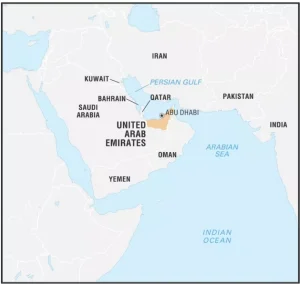
- Strategic Petroleum Reserves: A strategic collaboration agreement between Indian Strategic Petroleum Reserves Limited and Abu Dhabi National Oil Company (ADNOC).
- Energy Security: A strategic agreement on the supply of liquefied petroleum gas (LPG) to boost India’s long-term energy security and strengthen long-term LPG supply.
- Strategic Defence Partnership: A framework agreement on a Strategic Defence Partnership, aimed at expanding cooperation in defence manufacturing, innovation, military training, maritime security, cyber defence, and secure communications.
- Maritime Infrastructure: Memorandum of Understanding on setting up ship repair cluster in Gujarat’s Vadinar
- Infrastructure: Investment worth $5 billion announced in Indian Infrastructure and RBL Bank and Samman Capital
- Super Computer Clusters: Setting up eight Exaflop Super Computer Clusters involving India’s Centre for Development of Advanced Computing and UAE’s G-42.
- Skill Development: An arrangement on skill development in ship repair to advance capabilities of India’s maritime workforce and position the country as hub for skilled shipbuilding and ship repair professionals.
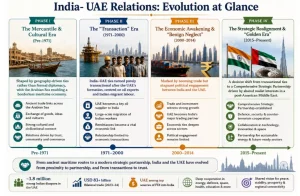
Importance of India–UAE Relations in the Contemporary Context
- Energy Security and Strategic Resilience: The United Arab Emirates is among India’s most important energy partners, supplying a substantial share of crude oil and liquefied petroleum gas (LPG) imports.
- Agreements between Indian Strategic Petroleum Reserves Limited and Abu Dhabi National Oil Company (ADNOC) strengthen India’s long-term energy security by ensuring stable supply chains, strategic reserves and protection against global energy disruptions arising from geopolitical conflicts and price volatility.
- Expanding Economic and Investment Partnership: The UAE has emerged as one of India’s top trading and investment partners, with bilateral trade crossing nearly $85 billion after the implementation of the India-UAE
- Comprehensive Economic Partnership Agreement (CEPA). UAE sovereign wealth funds, including Abu Dhabi Investment Authority (ADIA), are making large-scale investments in Indian infrastructure, logistics, renewable energy, fintech and urban development, thereby supporting India’s growth and infrastructure modernization goals.
- Strategic and Defence Cooperation: India and the UAE are increasingly strengthening defence and strategic cooperation in response to evolving security challenges in the Indian Ocean Region and West Asia.
- Collaboration in maritime security, cyber defence, military training and defence manufacturing enhances India’s ability to secure vital Sea Lanes of Communication (SLOCs) through which nearly 80% of India’s crude oil imports pass.
- Gateway to West Asia, Africa and Europe: The UAE functions as a major strategic and commercial gateway connecting India with West Asia, Africa and Europe.
- Cities such as Dubai and Abu Dhabi have emerged as global logistics, aviation and financial hubs, facilitating Indian exports, investments and business expansion across multiple regions through advanced port infrastructure and international trade networks.
- Emerging Technology and Digital Cooperation: India-UAE ties are increasingly driven by collaboration in futuristic sectors such as Artificial Intelligence (AI), supercomputing, fintech and digital infrastructure.
- The agreement to establish eight Exaflop Super Computer Clusters involving India’s Centre for Development of Advanced Computing (C-DAC) and UAE’s G-42 reflects the growing technological partnership aimed at enhancing innovation, scientific research, data processing and digital transformation.
- Counter-Terrorism and Regional Stability: India and the UAE share strong convergence on combating terrorism, extremism and transnational security threats in the Gulf and South Asian regions.
- Enhanced intelligence sharing, security cooperation and joint efforts against terror financing have significantly strengthened bilateral strategic trust and contributed to maintaining regional stability amid rising geopolitical tensions in West Asia.
- Indian Diaspora and Remittance Support: The United Arab Emirates hosts more than 3.5 million Indians, making it one of the largest overseas Indian communities in the world.
- The Indian diaspora contributes significantly to sectors such as construction, healthcare, finance, technology and services, while remittances sent from the UAE play an important role in supporting household incomes and foreign exchange earnings in India.
- Maritime Connectivity and Blue Economy Cooperation: India and the UAE are strengthening cooperation in the areas of port development, shipping, logistics and the Blue Economy to enhance regional connectivity and trade efficiency.
- Agreements such as the development of a ship repair cluster in Gujarat’s Vadinar improve India’s maritime infrastructure, support the growth of the Sagarmala Programme, and position India as an emerging hub for shipbuilding, ship repair and global maritime commerce.
Challenges
- Regional Geopolitical Instability: The United Arab Emirates is located in the strategically sensitive West Asian region, which frequently faces geopolitical conflicts, security tensions and maritime disruptions.
- Escalation of conflicts in the Gulf region can adversely affect India’s energy imports, trade routes and the safety of the large Indian diaspora residing in the region.
- Energy Transition Challenges: The growing global transition towards renewable energy and reduced dependence on fossil fuels may gradually alter the traditional hydrocarbon-based partnership between India and the UAE.
- Both countries need to recalibrate their relationship by expanding cooperation in emerging sectors such as green hydrogen, clean energy and sustainable technologies.
- Balancing Competing Strategic Interests: India faces the diplomatic challenge of maintaining balanced relations with major regional actors such as Iran, Israel, Saudi Arabia and the UAE simultaneously.
- Rising geopolitical rivalries and regional alignments in West Asia require India to pursue a careful and balanced foreign policy approach to protect its strategic and economic interests.
- Concerns Related to Indian Workers: The welfare, safety and labour rights of the large Indian migrant workforce in the UAE remain important concerns in bilateral relations.
- Issues related to working conditions, wage disputes, legal protections and economic vulnerabilities during crises require continuous institutional cooperation and labour welfare reforms.
- Global Economic Uncertainty: Global economic slowdowns, inflationary pressures and fluctuations in crude oil prices can affect bilateral trade, remittance flows and investment commitments between India and the UAE.
- Economic instability in global markets may also impact infrastructure investments and long-term financial cooperation.
- Technological Competition and Regulatory Challenges: Rapid advancements in sectors such as Artificial Intelligence (AI), digital infrastructure, cyber security and semiconductors require sustained investments, policy coordination and regulatory harmonization.
- Differences in technology standards, data governance and digital regulations may create challenges in expanding long-term technological cooperation.
- Maritime Security and Supply Chain Vulnerabilities: India and the United Arab Emirates depend heavily on secure maritime trade routes passing through the Strait of Hormuz and the Arabian Sea.
- Rising threats such as piracy, drone attacks, regional conflicts and disruptions in global shipping lanes can negatively affect energy transportation, trade flows and regional economic stability.
- Trade Imbalance and Limited Export Diversification: Although bilateral trade between India and the UAE has expanded significantly, India’s trade basket remains relatively concentrated in sectors such as petroleum products, gems and jewellery.
- For example, in FY2025, while bilateral trade crossed $100 billion, India’s trade deficit remained nearly $26 billion primarily due to oil imports.
- Also, India fears the UAE is becoming a conduit for third-party goods (like gold/silver) bypassing duties, forcing India to tighten scrutiny which frictionizes trade.
- Kafala Labour System: The United Arab Emirates follows the Kafala system, under which migrant workers are legally linked to their employers for residence and employment.
- While the system supports labour mobility in the Gulf region, it has also generated concerns regarding the protection of migrant workers’ rights, particularly for low-wage labourers.
- UAE’s Financial Engagement with Pakistan: Given Pakistan’s history of supporting cross-border terrorism against India, financial assistance and strategic support extended to Pakistan may create apprehensions regarding their broader geopolitical implications.
Click to Know UPSC Coaching Centres in India
Way Forward
- Strengthen CEPA Implementation: India and the United Arab Emirates should focus on effectively implementing the Comprehensive Economic Partnership Agreement (CEPA) to further expand bilateral trade and investment flows.
- Both countries must diversify trade beyond petroleum products by promoting exports in sectors such as services, pharmaceuticals, electronics, food processing and technology products to create a more balanced and resilient economic partnership.
- Deepen Technology Partnerships: India and the UAE should enhance cooperation in emerging sectors such as Artificial Intelligence (AI), semiconductors, quantum computing, fintech and digital infrastructure.
- Joint investments in research and innovation ecosystems, startup collaboration and advanced computing projects can help both countries emerge as major players in the global digital economy.
- Expand Defence and Strategic Cooperation: The two countries should deepen collaboration in defence manufacturing, technology transfer, cyber security and maritime security to address evolving regional threats.
- Enhanced naval cooperation and joint exercises in the Indian Ocean Region (IOR) can strengthen maritime stability and secure critical Sea Lanes of Communication (SLOCs) essential for global trade and energy transportation.
- Promote Renewable Energy Collaboration: India and the UAE should expand cooperation in green hydrogen, solar energy, clean technologies and sustainable infrastructure development.
- Stronger partnerships in climate action and energy transition will help both nations achieve long-term sustainability goals while reducing dependence on conventional fossil fuels.
- Improve Diaspora Welfare and Skill Development: Both countries should strengthen mechanisms for the protection and welfare of the large Indian diaspora working in the UAE.
- Expanding skill recognition agreements, improving labour standards and promoting workforce training in advanced sectors such as maritime services, healthcare and digital technology can further enhance employment opportunities for Indian workers.
- Enhance Connectivity and Regional Integration: India and the UAE should develop stronger multimodal connectivity networks through ports, shipping corridors, rail connectivity and logistics infrastructure.
- Integration with strategic initiatives such as the India–Middle East–Europe Economic Corridor (IMEC) can improve trade efficiency, regional integration and India’s connectivity with West Asia, Europe and Africa.
- Strengthen Food and Energy Supply Chain Resilience: India and the United Arab Emirates should develop resilient and diversified food and energy supply chains to address disruptions caused by geopolitical conflicts and global market volatility.
- Greater cooperation in strategic petroleum reserves, food processing, agri-logistics and long-term commodity agreements can enhance economic stability and ensure uninterrupted supplies of critical resources.
- Expand Cooperation in Maritime and Blue Economy Sectors: Both countries should intensify collaboration in the Blue Economy, including port development, shipbuilding, ship repair, coastal infrastructure and sustainable marine resource management.
- Joint investments in maritime infrastructure projects and logistics hubs can strengthen India’s ambition to emerge as a global maritime and transshipment center in the Indian Ocean Region.
 16 May 2026