India and China held the 35th round of the Working Mechanism for Consultation & Coordination (WMCC) talks on border affairs, marking the first high-level diplomatic engagement on the border situation since July 2025.
- Outcome of Earlier Special Representatives’ Talks: During the 2025 SR dialogue, Indian NSA Ajit Doval and Chinese Foreign Minister Wang Yi had agreed to establish an expert group to explore possibilities of achieving an “early harvest” in boundary delimitation in specific border areas.
Best Online Coaching for UPSC
About Line of Actual Control (LAC)
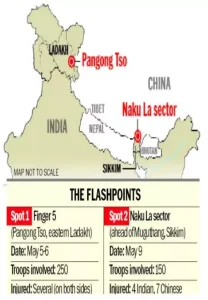
- The Line of Actual Control (LAC) is the de facto boundary separating India and China, stretching about 3,488 km across Ladakh, Uttarakhand, Himachal Pradesh, Sikkim, and Arunachal Pradesh.
- It is not a formally agreed boundary but a result of differing territorial perceptions.
- Segments of the LAC:
-
- Western Sector (Ladakh, ~1,597 km): Dispute over Aksai Chin; site of Galwan clashes (2020).
- Middle Sector (Uttarakhand, Himachal, ~545 km): Least disputed; limited patrol incidents.
- Eastern Sector (Sikkim, Arunachal, ~1,346 km): China claims Arunachal as “South Tibet”; flashpoints include Doklam standoff (2017).
|
Key Highlights of Talks
- Progress in Border Peace and Stability: Both countries expressed satisfaction over the progress achieved in maintaining peace and tranquility in the border areas, with India emphasizing that sustained border stability has created conditions for the gradual normalization of bilateral relations.
- The talks were described by both sides as “constructive and forward-looking”, indicating a cautious but positive movement towards rebuilding mutual confidence after years of border tensions.
- Focus on Boundary Delimitation and Border Management: India and China discussed a wide range of issues related to boundary delimitation, border management, mechanism building, and cross-border cooperation, reflecting efforts to institutionalize mechanisms for long-term stability along the Line of Actual Control (LAC).
- Both sides agreed to undertake substantive preparations for the next round of the Special Representatives (SR) dialogue, which remains the principal political mechanism for resolving the boundary dispute.
- Trans-Border River Cooperation: India highlighted the importance of convening an early meeting of the Expert Level Mechanism on Trans-border Rivers, underlining the significance of hydrological cooperation and information sharing between the two countries.
- Broader Bilateral and Strategic Context: Although bilateral relations have occasionally witnessed public tensions over issues such as Arunachal Pradesh and China’s close strategic ties with Pakistan, the overall relationship has remained relatively stable due to continued border peace and increasing economic pragmatism.
 Diplomatic engagement has also expanded through multilateral platforms, with Prime Minister Narendra Modi visiting China last year for the Shanghai Cooperation Organisation summit.
- India is also expecting Chinese President Xi Jinping to participate in the upcoming BRICS summit, reflecting the growing importance both countries attach to multilateral cooperation despite bilateral differences.
About Working Mechanism for Consultation & Coordination (WMCC)
- The Working Mechanism for Consultation & Coordination (WMCC) is an institutional diplomatic mechanism established in 2012 between India and China.
- Similarly, the Special Representatives (SR) dialogue represents the highest political mechanism tasked with negotiating a framework for settlement of the boundary dispute.
- Mandate: To manage issues related to the border areas and maintain peace and stability along the Line of Actual Control (LAC).
Relationship Between WMCC and Special Representatives (SR) Talks
| WMCC |
SR Talks |
| Operational and diplomatic mechanism |
Political-level negotiation mechanism |
| Focuses on border management |
Focuses on final boundary settlement |
| Deals with immediate tensions |
Deals with long-term resolution |
| Conducted by diplomatic and military officials |
Led by top political representatives |
Historical Background of the Boundary Dispute
- The India–China boundary dispute is rooted in differing perceptions regarding the alignment of the Line of Actual Control (LAC) and unresolved territorial claims across the western, middle, and eastern sectors.
- Major Areas of Dispute
- Western Sector – Aksai Chin region.
- Eastern Sector – Arunachal Pradesh, particularly Tawang.
- Middle Sector – Relatively less contentious areas in Uttarakhand and Himachal Pradesh.
- The relationship witnessed severe deterioration after:
- 1962 India–China War
- Recurrent border incidents such as:
- Depsang (2013)
- Doklam (2017)
- Galwan Valley clashes (2020)
- UPSC Online Courses
Significance of the Current Diplomatic Thaw
- Restoration of Border Stability: Maintenance of peace and tranquility along the border is critical as the overall India–China bilateral relationship is fundamentally linked to border stability, while prolonged tensions lead to heavy military deployment costs, economic strain, and reduced diplomatic cooperation in other sectors.
- Prevention of Military Escalation: Continuous diplomatic engagement through mechanisms such as the WMCC and Special Representatives (SR) Talks helps in reducing the risks of accidental clashes, troop confrontations, and escalation along the Line of Actual Control (LAC).
- Pragmatic Economic Engagement: Despite persistent strategic rivalry, China continues to remain one of India’s largest trading partners, with both economies interconnected through manufacturing supply chains, electronics imports, pharmaceutical intermediates, telecom equipment, and renewable energy components, demonstrating the rise of economic pragmatism amid geopolitical competition.
- Importance of Multilateral Platforms: India and China continue engagement through forums such as BRICS, Shanghai Cooperation Organisation, G20, and climate negotiations, which allow coordination on Global South concerns, promotion of multipolarity, and demands for reforms in global governance institutions.
- Strengthening Institutional Mechanisms: The continuation of WMCC meetings, military commander-level talks, and diplomatic consultations reflects the growing importance of institutionalized dialogue mechanisms in managing one of the world’s most sensitive border disputes.
- Strategic Significance for Asia: Stable India–China relations are essential for ensuring broader regional stability in Asia, as tensions between the two major Asian powers can adversely affect regional security, trade flows, and connectivity initiatives.
- Space for Functional Cooperation: Border stability creates opportunities for cooperation in areas such as trade, climate change, trans-border rivers, public health, and multilateral development initiatives, even while larger strategic differences persist.
- Support for India’s Strategic Autonomy: Improved diplomatic engagement with China enables India to pursue its policy of strategic autonomy, balancing competition with cooperation while avoiding excessive dependence on any single geopolitical bloc.
- Signal of Political Maturity: Sustained dialogue despite disagreements reflects a recognition by both countries that competition must not transform into uncontrolled conflict, particularly between two nuclear-armed neighboring powers.
- Boost to Confidence-Building Measures (CBMs): Continued engagement helps revive confidence-building measures, enhances military communication, and supports mechanisms aimed at maintaining peace and preventing future crises along the border.
Persistent Challenges in India–China Relations
- Trust Deficit: Despite recent diplomatic engagement, the post-Galwan Valley clashes atmosphere continues to generate deep strategic suspicion, sustained military preparedness along the Line of Actual Control (LAC), and concerns regarding China’s long-term geopolitical intentions, making the trust deficit the single biggest obstacle to complete normalization of bilateral relations.
- China–Pakistan Strategic Nexus: India remains concerned over China’s growing strategic and economic support to Pakistan, particularly through the China–Pakistan Economic Corridor (CPEC) and infrastructure development in Pakistan-occupied Kashmir (PoK), which intensifies India’s perception of a potential two-front security challenge.
- For Example: China’s military support during the operation Sindoor included the provision of advanced systems like J-10C fighters and PL-15 missiles, enhancing Pakistan’s operational capabilities.
- Arunachal Pradesh Issue: China’s repeated territorial claims over Arunachal Pradesh and attempts to rename locations in the region continue to create diplomatic friction, challenge India’s sovereignty and territorial integrity, and complicate efforts toward long-term border settlement.
- Competition in the Indo-Pacific: India’s expanding engagement with the QUAD, broader Indo-Pacific partnerships, and growing participation in maritime security initiatives is viewed cautiously by China, while India remains increasingly concerned about Chinese naval expansion and strategic presence in the Indian Ocean Region (IOR).
- Infrastructure Race Along the Border: Both countries are rapidly expanding border infrastructure, including roads, tunnels, airstrips, and logistics facilities near the LAC, which, while improving military preparedness, also increases the risks of faster mobilization and heightened tensions.
- Asymmetry in Economic Relations: India continues to face concerns regarding a widening trade imbalance with China, dependence on critical imports, and vulnerabilities in sectors such as electronics, active pharmaceutical ingredients (APIs), and renewable energy supply chains.
- For Example: Bilateral trade between India and China reached US$127.7 billion. India’s exports to China totaled US$14.3 billion, while imports from China hit US$113.5 billion, resulting in a persistent and widening trade deficit of US$99.2 billion.
- Technological and Cyber Concerns: India remains cautious regarding Chinese involvement in telecommunications, digital infrastructure, surveillance technologies, and cyber networks, citing concerns related to national security and data sovereignty.
- Competing Regional Influence: Both countries increasingly compete for strategic influence in South Asia, the Indian Ocean Region, and the Global South, particularly through connectivity projects, infrastructure investments, and regional diplomacy.
- Lack of Final Boundary Settlement: The absence of a clearly demarcated and mutually accepted border continues to remain the core structural issue, resulting in differing perceptions of the LAC and recurring military confrontations.
- Divergence in Global Strategic Outlook: India’s emphasis on a free, open, and inclusive Indo-Pacific contrasts with China’s expanding regional assertiveness, creating broader geopolitical divergence in Asia’s evolving strategic architecture.
India’s Strategic Approach Towards China
- Competition Without Uncontrolled Confrontation: India’s evolving China policy increasingly reflects a strategy of “competition without uncontrolled confrontation”, where New Delhi seeks to protect its strategic and security interests while simultaneously preventing escalation into open military conflict.
- Military Preparedness Along the LAC: India has significantly strengthened its military preparedness along the Line of Actual Control (LAC) through enhanced troop deployment, modernization of armed forces, improved surveillance capabilities, and rapid mobilization infrastructure to maintain credible deterrence.
- Infrastructure Development in Border Areas: The government has accelerated the construction of roads, tunnels, bridges, airstrips, and logistics networks in border regions to improve connectivity, military readiness, and strategic response capabilities.
- Strategic Partnerships with Like-Minded Countries: India has expanded cooperation with countries sharing similar strategic concerns through mechanisms such as the QUAD, Indo-Pacific partnerships, and defense collaborations aimed at ensuring a free, open, and inclusive Indo-Pacific region.
- Continuation of Diplomatic Dialogue: Despite military tensions and geopolitical rivalry, India continues to engage China through diplomatic channels such as the WMCC, Special Representatives (SR) Talks, military commander-level meetings, and multilateral platforms to maintain communication and prevent escalation.
- Diversification of Supply Chains: India is increasingly focusing on economic resilience and supply-chain diversification by promoting domestic manufacturing and reducing overdependence on Chinese imports in critical sectors such as electronics, pharmaceuticals, and renewable energy.
- Balancing Deterrence and Engagement: India’s broader objective remains the maintenance of strategic deterrence alongside diplomatic engagement, ensuring that competition with China remains managed and does not destabilize regional peace and security.
Way Forward
- Strengthening Confidence-Building Measures (CBMs): India and China must enhance existing confidence-building mechanisms through the expansion of military hotlines, greater transparency in troop movements, and regular commander-level meetings to reduce misunderstandings and prevent accidental escalation along the Line of Actual Control (LAC).
- Accelerating Boundary Negotiations: Both countries should prioritize the operationalization of expert groups on boundary delimitation and promote sector-wise confidence-building arrangements in order to gradually move toward a fair, reasonable, and mutually acceptable resolution of the boundary dispute.
- Enhancing Border Infrastructure: India must continue strengthening border infrastructure through the development of roads, tunnels, advanced surveillance systems, air connectivity, and logistics networks to ensure effective border management and maintain credible deterrence capabilities.
- Expanding Functional Cooperation: Despite strategic differences, both sides should deepen cooperation in areas such as climate change, trade stability, trans-border river management, disaster response, public health, and reforms in global governance institutions, where mutual interests converge.
- Maintaining Strategic Autonomy: India must continue balancing diplomatic engagement with strategic deterrence, while preserving its long-standing commitment to strategic autonomy and independent foreign policy decision-making.
- Institutionalizing Crisis Management Mechanisms: Regular engagement through platforms such as the WMCC, military dialogue mechanisms, and Special Representatives (SR) Talks should be institutionalized further to ensure timely conflict management during periods of tension.
- Reducing Economic Vulnerabilities: India should pursue greater supply-chain diversification, promote domestic manufacturing, and reduce excessive dependence on critical Chinese imports in sensitive sectors such as electronics, telecom, and pharmaceuticals.
- Promoting People-to-People Engagement: Encouraging greater interaction through academic exchanges, tourism, cultural diplomacy, and think-tank dialogues can help reduce mistrust and improve long-term societal understanding between the two countries.
- Balancing Competition with Cooperation: Both countries must recognize that while strategic competition may persist, it should not escalate into uncontrolled confrontation, especially given their importance for Asian stability, global economic growth, and multipolar world order.
Click to Know UPSC Coaching Centres in India
Conclusion
- India–China relations are likely to remain characterized by a complex mix of cooperation, competition, and cautious coexistence.
- The recent WMCC talks indicate that both countries recognize the importance of preventing border instability from dominating the broader relationship.
- While deep structural differences persist, sustained diplomatic engagement and effective border management mechanisms remain essential for preserving regional stability in Asia.
- For India, the challenge lies in pursuing pragmatic engagement with China while simultaneously safeguarding sovereignty, strategic autonomy, and national security interests.
 29 May 2026