Subject: GS 2: International Relations
Context: Recently, the Indian Prime Minister visited New Zealand (10–11 July 2026)—the first visit by an Indian Prime Minister in four decades—for the India–New Zealand Bilateral Summit.
Best Online Coaching for UPSC
Key Outcomes of the Summit
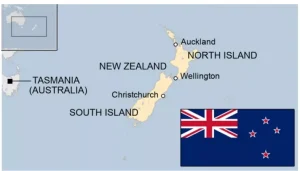
- Strategic Partnership and Roadmap to 2030: India and New Zealand elevated their bilateral relationship to a Strategic Partnership, marking a new phase of cooperation across trade, defence, maritime security, agriculture, technology, clean energy, tourism, innovation, and people-to-people ties.
- Both countries adopted the India–New Zealand Strategic Partnership: Roadmap to 2030, providing a long-term framework to guide bilateral cooperation at both bilateral and multilateral levels.
- The roadmap seeks to strengthen existing institutional mechanisms while exploring new avenues of cooperation over the coming years.
- Trade and Economic Cooperation: Both countries agreed to double bilateral trade in goods and services to NZ$7 billion (approximately ₹35,000 crore) by 2030.
- They welcomed the conclusion and signing of the India–New Zealand Free Trade Agreement (FTA) and agreed to ensure its early entry into force and effective implementation.
- The FTA is expected to reduce trade barriers, enhance market access, encourage greater New Zealand investment in India, and strengthen bilateral economic integration.
- Both sides also agreed to operationalise the Authorised Economic Operators Mutual Recognition Arrangement (AEO-MRA), 2025, under the Customs Cooperation Arrangement (CCA), 2024, to facilitate trusted trade and simplify customs procedures.
- Defence and Maritime Cooperation: India and New Zealand signed a Reciprocal Logistics Support Arrangement between the Indian Navy and the New Zealand Defence Force, enabling mutual logistical support during naval exercises, deployments, and humanitarian missions.
-
- Both countries adopted a Framework for Indo-Pacific Maritime Cooperation to enhance collaboration in maritime security, capacity building, and regional stability.
- They agreed to establish a Maritime Security Dialogue to strengthen coordination, information sharing, and maritime domain cooperation.
- Both sides also welcomed continued cooperation between India’s Directorate General of Shipping and Maritime New Zealand for the mutual recognition of seafarer competency certificates, enhancing seafarer mobility and maritime connectivity.
- Both countries signed a Memorandum of Arrangement on Maritime Cooperation to strengthen institutional dialogue, coordination, information sharing, and joint maritime activities in the Indo-Pacific.
- They also signed an Implementation Arrangement on Hydrography and Nautical Cartography to promote hydrographic data sharing, joint production of navigational charts, training, and capacity building.
- New Zealand joined the Maritime Security Pillar of India’s Indo-Pacific Oceans Initiative (IPOI), enhancing cooperation to combat Illegal, Unreported and Unregulated (IUU) Fishing.
- Security Cooperation: Both countries established a Joint Working Group on Counter-Terrorism to strengthen information sharing, capacity building, and coordinated efforts against terrorism and violent extremism.
- They also agreed to deepen cooperation in addressing emerging transnational security challenges.
- Indo-Pacific Cooperation: The two leaders reaffirmed their commitment to a Free, Open, Inclusive, and Prosperous Indo-Pacific based on international law and a rules-based international order.
- They emphasised respect for sovereignty, territorial integrity, and freedom of navigation and overflight, in accordance with the United Nations Convention on the Law of the Sea (UNCLOS), 1982.
- Agriculture, Tourism and Innovation: Both countries agreed to deepen cooperation in horticulture, forestry, animal husbandry, and dairying.
- They welcomed the Agricultural Productivity Partnership under the FTA, including collaboration on productivity enhancement for kiwifruit, apples, and honey, along with establishing Centres of Excellence for Kiwifruit in India.
- Kiwifruit Cooperation: Both countries launched the Kiwifruit Action Plan and agreed to establish two Centres of Excellence in Nagaland and Uttarakhand to promote research, technology transfer, capacity building, and high-value horticulture.
- New Zealand joined the Global Biofuels Alliance, strengthening cooperation in sustainable biofuels, clean energy transition, and energy security.
- A Memorandum of Cooperation on Animal Husbandry and Dairying was also concluded.
- The two countries welcomed the signing of a Memorandum of Arrangement on Tourism and encouraged the commencement of direct non-stop flights between India and New Zealand.
- Science, Technology and Education Cooperation: The National Centre for Polar and Ocean Research (NCPOR) and the University of Canterbury signed an MoU to promote Antarctic research, scientific collaboration, academic exchange, and capacity building.
- NIFTEM-Kundli and Massey University signed an MoU to strengthen cooperation in food technology research, academic exchange, student mobility, and innovation.
- Regional and Global Issues: India and New Zealand expressed concern over the renewed escalation of tensions in West Asia and called upon all parties to exercise restraint, pursue dialogue and diplomacy, and ensure the protection of civilians.
- They supported the restoration of freedom of navigation and uninterrupted global commerce through the Strait of Hormuz.
- Both leaders reaffirmed their support for comprehensive reforms of the United Nations, including the expansion of the United Nations Security Council (UNSC).
- Sports and People-to-People Relations: India and New Zealand are celebrating 100 years of sporting ties in 2026, commemorating the 1926 tour of the Indian Army Hockey Team to New Zealand—the first overseas tour by an Indian sports team.
- The legendary Major Dhyan Chand was a member of that historic team, making it a landmark event in Indian sporting history.
- Earlier in 2026, the Indian Women’s Hockey Team won the FIH Women’s Nations Cup in Auckland by defeating New Zealand in the final, further strengthening sporting ties.
- Both countries recognised sports, particularly hockey, as an important pillar of people-to-people engagement and cultural diplomacy.
- They also adopted the India–New Zealand Joint Action Plan on Sport to strengthen cooperation in high-performance sports, sports science, sports medicine, and athlete development.
- Disaster Management Cooperation: Both countries signed a Memorandum of Cooperation on Disaster Risk Management, focusing on earthquake resilience, tsunami preparedness, coastal hazard mitigation, knowledge exchange, policy dialogue, and capacity building.
- Cultural and Diaspora Engagement: Prime Minister Modi received a traditional Māori Powhiri ceremonial welcome at Government House, Auckland, symbolising New Zealand’s indigenous heritage and the warmth of bilateral relations.
- Both countries signed an Arrangement on Cultural Cooperation to promote arts, heritage conservation, cultural exchanges, and people-to-people ties.
- They also signed an arrangement between the National Maritime Heritage Complex (NMHC), Lothal and the New Zealand Maritime Museum to strengthen museum collaboration, maritime heritage conservation, and knowledge exchange.
Māori Powhiri
- Powhiri is the traditional Māori ceremonial welcome, performed to formally receive and honour distinguished guests in Aotearoa (New Zealand).
- It symbolises respect, hospitality (manaakitanga), peace, and the establishment of a relationship between the hosts (tangata whenua) and the visitors (manuhiri).
- The ceremony typically includes a karanga (ceremonial call), whaikōrero (formal speeches), waiata (songs), and the hongi (traditional greeting by touching noses and foreheads), signifying the sharing of the “breath of life.”
|
Its Significance for India
- Strengthening Strategic Partnership: The Strategic Partnership and Roadmap to 2030 institutionalise long-term cooperation across trade, defence, maritime security, agriculture, innovation, sports, tourism, and people-to-people exchanges.
- Advancing India’s Indo-Pacific Vision: As two maritime democracies, India and New Zealand reaffirmed their commitment to a Free, Open, Inclusive, and Rules-based Indo-Pacific, complementing India’s Act East Policy and broader Indo-Pacific strategy.
- Boosting Economic Integration: The FTA, ambitious 2030 trade target, customs cooperation, and enhanced investment framework are expected to deepen bilateral economic engagement and improve supply-chain resilience.
- Enhancing Maritime and Defence Cooperation: The Reciprocal Logistics Support Arrangement, Maritime Security Dialogue, and cooperation in shipping will strengthen maritime domain awareness, interoperability, Humanitarian Assistance and Disaster Relief (HADR), and regional maritime security.
- Expanding Sectoral Cooperation: Collaboration in agriculture, clean energy, innovation, tourism, education, and skills development supports India’s Viksit Bharat@2047 vision while opening new avenues for technology transfer and sustainable development.
- Strengthening People-to-People and Cultural Relations: The celebration of 100 years of sporting ties, vibrant Indian diaspora, expanding tourism, educational exchanges, and cultural engagement further reinforce the enduring friendship between the two countries.
Click to Know UPSC Coaching Centres in India
Conclusion
The India–New Zealand Strategic Partnership 2026 marks a significant milestone by adopting the Strategic Partnership Roadmap to 2030, deepening cooperation across key sectors, and reinforcing a Free, Open, Inclusive and Rules-based Indo-Pacific, thereby strengthening India’s engagement with the South Pacific.
 11 Jul 2026