Subject: GS 2: International Relations
Context: Recently, the Indian Prime Minister visited Indonesia (6–11 July 2026) for the India–Indonesia Bilateral Summit.
Best Online Coaching for UPSC
Key Highlights of the Summit
- Indonesia’s Highest Civilian Honour: PM Modi was conferred the Bintang Adipurna, Indonesia’s highest civilian honour, by President Prabowo Subianto.
- The award recognises his exceptional contribution to strengthening India–Indonesia bilateral relations and promoting regional peace, cooperation, and prosperity.
- Defence Cooperation: Signed agreements for the export of BrahMos Supersonic Cruise Missiles and Astra Beyond Visual Range Air-to-Air Missiles (BVRAAMs), marking a significant expansion of India’s defence exports.
- Both countries agreed to deepen cooperation in defence technology transfer, defence manufacturing, military exchanges, disaster management, and capacity building.
- India will also provide additional training opportunities for Indonesian officers at the National Defence Academy (NDA) and Defence Services Staff College (DSSC).
About BrahMos Missile
- Development: BrahMos is a joint venture between India’s Defence Research and Development Organisation (DRDO) and Russia’s NPO Mashinostroyenia.
- Type: Supersonic cruise missile capable of being launched from land, sea, submarine, and air platforms.
- A Supersonic cruise missile is a guided missile that flies within the atmosphere at Mach 1–5, using continuous propulsion (typically a ramjet) and aerodynamic lift to strike targets with high precision.
- Key features: Flies at low altitude, making interception difficult; capable of carrying conventional or nuclear warheads against land and maritime targets.
- Range: More than 290 km (with newer variants reportedly having longer ranges).
- Speed: Up to Mach 2.8, making it one of the fastest operational cruise missiles in the world.
- Capabilities: Equipped with precision strike capability, high survivability, and can engage both land and maritime targets.
- Significance: Successfully employed during Operation Sindoor, enhancing global confidence in India’s indigenous defence capabilities.
About Astra Mk-1 Missile
- Developer: Developed indigenously by the Defence Research and Development Organisation (DRDO).
- Type: Beyond Visual Range Air-to-Air Missile (BVRAAM) designed for engaging enemy aircraft beyond visual range.
- Beyond Visual Range Air-to-Air Missile (BVRAAM) is a guided air-to-air missile designed to engage enemy aircraft at ranges beyond the pilot’s visual line of sight (typically over 20 km) using advanced radar-guided targeting.
- Key features: Employs active radar, semi-active radar, or infrared seekers, supports fire-and-forget capability in many variants, and enables aircraft to neutralise threats before entering close-range combat.
- Range: Approximately 80–110 km, depending on launch conditions.
- Propulsion: Powered by a solid rocket motor.
- Operational Status: Inducted into the Indian Air Force (IAF) and integrated with Su-30MKI fighter aircraft.
- Future Variant: Astra Mk-2, featuring a longer engagement range, is in the final phase of development and flight trials and has received Defence Acquisition Council (DAC) clearance.
Its Significance for India:
- Boost to Defence Exports: The agreements strengthen India’s objective of becoming a major global defence exporter under the Atmanirbhar Bharat initiative.
- India has already signed a US$375 million contract with the Philippines for BrahMos missiles and is pursuing similar deals with Vietnam, Malaysia, and other countries.
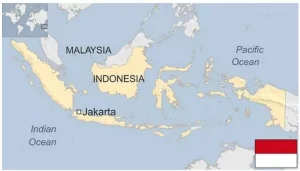
- Strategic Influence in the Indo-Pacific: Defence cooperation with Indonesia enhances India’s strategic presence in the Indo-Pacific, particularly around the Malacca Strait, one of the world’s most critical maritime trade routes.
- It contributes to India’s vision of MAHASAGAR (Mutual and Holistic Advancement for Security and Growth Across Regions) and strengthens regional maritime security.
- Strengthening Indigenous Defence Manufacturing: The export of BrahMos and Astra showcases India’s growing capabilities in indigenous defence technology, supporting domestic defence manufacturing and technological self-reliance.
|
- Maritime Cooperation: Strengthened cooperation in maritime security, Maritime Domain Awareness (MDA), and the Indo-Pacific to ensure a free, open, inclusive, and rules-based maritime order.
- Indonesia will station a Liaison Officer at India’s Information Fusion Centre–Indian Ocean Region (IFC-IOR) to enhance information sharing and maritime surveillance.
- Critical Minerals Partnership: Signed agreements to strengthen cooperation in the exploration, processing, and resilient supply chains of critical minerals.
- The partnership is strategically important as Indonesia possesses one of the world’s largest nickel reserves and is also a leading producer of copper, bauxite, and tin, which are essential for electric vehicles, batteries, semiconductors, and clean energy technologies.
- Technology, Education & Healthcare: Agreed to establish an overseas campus of Indian Institute of Management Bangalore in Indonesia to strengthen educational cooperation.
- Expanded collaboration in telecommunications, including wireless communication and quantum technologies, alongside cooperation in the supply of medicines and medical products.
- Cultural Cooperation: Both countries agreed to jointly conserve and restore the Prambanan Temple complex in Yogyakarta, one of the world’s largest Hindu temple complexes.
- The initiative aims to preserve the shared civilisational heritage of India and Indonesia while promoting cultural diplomacy, heritage conservation, and tourism.
- PM Modi and President Prabowo also announced a joint visit to the temple complex, highlighting the deep historical and cultural links between the two countries.
Its Significance for India
- Strengthening Strategic Partnership: Reinforces the Comprehensive Strategic Partnership (2018) by expanding cooperation across defence, maritime security, trade, technology, education, healthcare, and culture.
- Advancing India’s Indo-Pacific Vision: Enhances India’s Act East Policy and Indo-Pacific Oceans’ Initiative (IPOI) by strengthening cooperation with a key maritime partner located along vital sea lanes connecting the Indian and Pacific Oceans.
- Boosting Defence & Maritime Security: Expands India’s defence exports and strengthens bilateral cooperation in maritime domain awareness, capacity building, and regional security, contributing to a stable Indo-Pacific.
- Securing Critical Mineral Supply Chains: Improves India’s access to critical minerals required for the energy transition, electric mobility, advanced electronics, and strategic industries, thereby reducing supply-chain vulnerabilities.
- Deepening Economic & People-to-People Ties: Promotes greater collaboration in education, digital technology, healthcare, cultural heritage, and tourism, strengthening long-term economic integration and civilisational linkages between the two countries.
Click to Explore UPSC Offline Coaching
Conclusion
The India–Indonesia Bilateral Summit 2026 marks a significant step in deepening the Comprehensive Strategic Partnership, strengthening cooperation in defence, maritime security, critical minerals, technology, and cultural heritage, while reinforcing a free, open, inclusive, and rules-based Indo-Pacific.
 8 Jul 2026