Kosi–Mechi Intra-State Link Project
Context: The Centre has included the Kosi–Mechi Intra-State Link Project under the Pradhan Mantri Krishi Sinchayi Yojana–Accelerated Irrigation Benefit Programme (PMKSY-AIBP), extending central assistance of ₹3,652.56 crore for the project’.
- The project is targeted for completion by March 2029.
UPSC Online Courses
About the Kosi–Mechi Intra-State Link Project
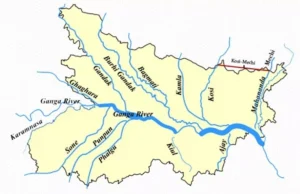
- It is a river-linking project in Bihar that aims to improve irrigation infrastructure by linking the Kosi River (a tributary of the Mahananda River, originating in Nepal and flowing through northern Bihar, India) and the Mechi River (forming part of the India–Nepal border between Bihar and Nepal) through a canal system.
- India–Nepal Cooperation: India and Nepal continue regular dialogue on the construction of dams on the Kosi River for mutual benefits, including flood management.
- Joint Project Office (JPO-SKSKI): Constituted in 2003, the JPO is preparing the Detailed Project Reports (DPRs) for the Sapta Kosi Multipurpose Project and the Sun-Kosi Kamla Diversion Multipurpose Project.
- Kosi–Gandak Basin Authority: The Government has clarified that no proposal for establishing a permanent Kosi–Gandak Basin Authority is currently under consideration.
Six New Sites Added to UNESCO’s World Heritage in Danger List
Context: The 47th session of the UNESCO World Heritage Committee, held in Busan, Republic of Korea (2026), added six sites to the List of World Heritage in Danger.
- Of these, three were newly inscribed on the World Heritage List through the emergency procedure and simultaneously placed on the Danger List.
Newly inscribed World Heritage Sites (Emergency Procedure)
- Boma-Badingilo Migratory Landscape (South Sudan): East African savanna hosting the world’s largest known terrestrial mammal migration and rich biodiversity.
- Threatened by infrastructure development, poaching, wildlife trafficking, insecurity, and weak conservation capacity.
- Mount Amel Castles (Lebanon): Group of five castles reflecting the evolution of defensive architecture from the Crusader and Islamic periods to the 19th century.
- Threatened by ongoing armed conflict.
- Sebastia (State of Palestine): Archaeological site with remains from the Kingdom of Israel, Hellenistic, Roman, Byzantine, Islamic, Crusader, Ayyubid/Mamluk, and Ottoman periods.
- Threatened by the proposed “Samaria” National Park, conflict, development pressures, and erosion.
Existing World Heritage Sites added to the Danger List
- Ancient City of Tauric Chersonese and its Chora (Ukraine): Threatened by occupation, new construction, and archaeological excavations affecting its integrity.
- Historic Inner City of Paramaribo (Suriname): Threatened by modern construction projects impacting its historic urban landscape.
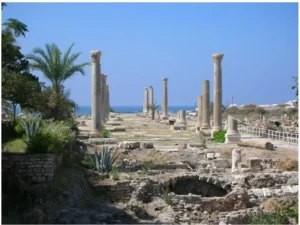
- Tyre (Lebanon): Threatened by ongoing armed conflict, endangering its Outstanding Universal Value (OUV).
About UNESCO List of World Heritage in Danger
- Established Under: Article 11(4) of the 1972 UNESCO World Heritage Convention.
- Coverage: Includes World Heritage Sites facing serious and specific threats to their Outstanding Universal Value (OUV).
- World Heritage Fund: Inscription enables the World Heritage Committee to provide immediate assistance from the World Heritage Fund, wherever required.
Fields Medal
Context: The 2026 Fields Medals were awarded to Yu Deng, John Pardon, Jacob Tsimerman and Hong Wang, with Wang becoming the third woman recipient.
- Wang Hong and Deng Yu became the first Chinese nationals to win the Fields Medal.
About the Fields Medal
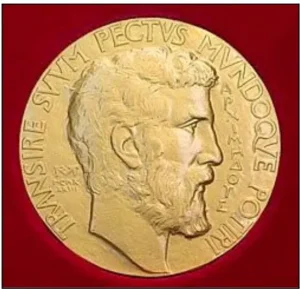
- The Fields Medal is one of the highest honours in mathematics, recognising outstanding research contributions and future potential among young mathematicians.
- The Fields Medal was first awarded in 1936.
- Organised By: The medal is awarded by the International Mathematical Union (IMU) every four years during the International Congress of Mathematicians (ICM).
- ICM 2026 was held in Philadelphia, Pennsylvania, USA
- IMU was established in 1920, dissolved in 1932, and reestablished in 1950, with its headquarters located in Berlin, Germany
- Criteria: Recipients must be under 40 years of age on 1 January of the award year, with up to four mathematicians selected in each edition.
- Only 3 Women Awarded So Far: Maryam Mirzakhani (2014), Maryna Viazovska (2022), and Hong Wang (2026)
2026 Fields Medal Winners
- Hong Wang
- Contribution: She was recognised for major breakthroughs in harmonic analysis and geometric measure theory, including the solution of the three-dimensional Kakeya conjecture.
- Background of Award: A professor at New York University, she became the third woman to win the Fields Medal after Maryam Mirzakhani and Maryna Viazovska.
- Yu Deng
- Contribution: He made fundamental contributions to wave kinetic equations and mathematical problems connecting statistical physics with rigorous analysis.
- Background of Award: Born in China in 1989 and a professor at the University of Chicago, he became one of the first Chinese nationals to win the medal since 1982.
- John Pardon
- Contribution: He developed virtual fundamental cycles and resolved the long-standing MNOP conjecture concerning curve counting on Calabi-Yau threefolds.
- Background of Award: A professor at Stony Brook University, he had earlier solved a major knot distortion problem as an undergraduate.
- Jacob Tsimerman
- Contribution: He advanced number theory and algebraic geometry by applying o-minimality, contributing to major results related to the André-Oort conjecture.
- Background of Award: A professor at the University of Toronto, he has also worked on the mathematical foundations of artificial intelligence.
India has no direct citizens who have won the Fields Medal in mathematics
Indian Origin Winners
- Manjul Bhargava (2014): He became the first mathematician of Indian origin to win the Fields Medal for developing powerful new methods in the geometry of numbers.
- Akshay Venkatesh (2018): He received the medal for his profound contributions connecting analytic number theory, homogeneous dynamics and topology.
UPSC Online Classes
Atmanirbhar Panchayat Programme
Context: Recently, the Ministry of Panchayati Raj launched the Atmanirbhar Panchayat Programme, the SAMARTH Panchayat Portal.
About Atmanirbhar Panchayat Programme
- It is a competitive national challenge initiative under the Ministry of Panchayati Raj that helps Gram and Block Panchayats convert local assets and opportunities into sustainable revenue-generating projects.
- Objective: The programme aims to strengthen the Own Source Revenue (OSR) base of Panchayati Raj Institutions and reduce their dependence on government grants.
- Implementing Body: The programme is implemented by the Ministry of Panchayati Raj, with financing facilitated through PPPs, CSR contributions, scheme convergence and bank finance, with NABARD and HUDCO as institutional partners.
- Salient Features:
-
- Project Scale: It targets 350 projects over four years, comprising 50 projects in the first year and 100 projects annually for the next three years.
- Eligibility: Gram Panchayats with minimum OSR of ₹50 lakh and Block Panchayats with minimum OSR of ₹1 crore, with at least three years of tenure remaining, are eligible; thresholds are relaxed for Special Category States.
- Technical Guidance: The programme provides technical support to develop bankable projects and promotes innovative financing models for sustainable local revenue generation.
About SAMARTH Panchayat Portal
- SAMARTH is a unified, configurable national digital platform designed to strengthen Panchayat finances through technology-enabled management of OSR.
- Objective: To improve the efficiency, transparency and accountability of Panchayat revenue collection by digitising the entire revenue lifecycle.
- Implementing Body: The portal has been developed by the Ministry of Panchayati Raj as a national digital initiative.
- Key Provisions: It enables digital management of taxpayer registration, demand generation, online payments, collection and real-time monitoring.
- Features: Chhattisgarh and Himachal Pradesh have been onboarded, with over 51 lakh taxpayers registered, while onboarding is underway in Maharashtra, Mizoram, Assam, Haryana, West Bengal and Uttar Pradesh.
Blue Straggler Stars (BSS)
Context: Indian astronomers have discovered a Blue Straggler Star actively forming in the binary system TIC 327546480.
About Blue Straggler Stars (BSS)
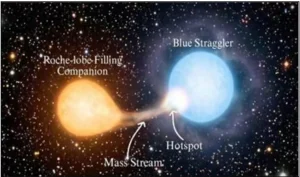
- Blue Straggler Stars are unusually hot, bright and massive stars found in old star clusters that appear younger than surrounding stars of similar age.
- Discovery: The BSS was identified in TIC 327546480, a semi-detached binary system located in the old open cluster Collinder 261, approximately 9,500 light-years away.
- Researchers from the Indian Institute of Astrophysics (IIA) collaborated with international astronomers in the study.
- Sources of Data: The researchers combined high-precision light curves from NASA’s TESS (Transiting Exoplanet Survey Satellite) mission with radial velocity measurements from the European Southern Observatory’s Very Large Telescope (VLT), along with X-ray observations.
- Key Features of Blue Straggler Stars
- Stellar Rejuvenation: BSSs appear younger than their surrounding stars because they acquire additional mass and fresh hydrogen fuel, effectively resetting their evolutionary clock.
- Mass Transfer: In TIC 327546480, the less massive companion star overflows its Roche lobe and transfers matter to the BSS, providing direct evidence of active formation through binary mass transfer.
- Rapid Rotation: The BSS rotates rapidly at about 69.55 km/s, likely because the accreted material transfers angular momentum to the star.
- X-Ray Evidence: Strong X-ray emission from the system provides independent evidence that material from the companion is actively being accreted by the BSS.
The discovery offers a rare opportunity to study binary evolution, stellar rejuvenation and the formation of star clusters, helping resolve a long-standing mystery in stellar astrophysics.
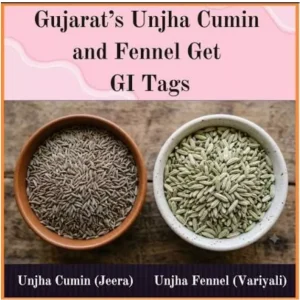
‘Unjha Jeera’ and ‘Unjha Fennel
Context: Rajasthan farmers have objected to the GI recognition of ‘Unjha Jeera’ and ‘Unjha Fennel’, arguing that Unjha, Gujarat is primarily a major trading hub rather than a production centre.
Key Objections
- Production vs. Marketing Hub: Farmers argue that a GI tag should identify products whose distinctive qualities are geographically linked to their place of production, whereas Unjha is primarily a major aggregation, grading and trading centre.
- Rajasthan’s Production Role: Rajasthan is a major producer of both spices, with much of the jeera and saunf traded through the Unjha APMC originating from Rajasthan.
- Fear of Price Disadvantage: Farmers fear that the GI tag may allow traders to market Unjha-labelled products as superior, potentially weakening the bargaining power and prices of Rajasthan’s producers.
About GI Tag Certification
- Meaning: A Geographical Indication (GI) tag identifies goods originating from a specific geographical territory whose quality, reputation or characteristics are essentially attributable to that origin.
- Legal Framework: In India, GI protection is governed by the Geographical Indications of Goods (Registration and Protection) Act, 1999, administered through the GI Registry.
- Significance: GI registration prevents unauthorised use of geographical names and helps protect producers, preserve traditional knowledge and enhance product marketability.
Click to Know UPSC Coaching Centres in India
About Saunf (Fennel)
- Saunf, scientifically known as Foeniculum vulgare, is an aromatic seed spice belonging to the Apiaceae family, valued for its sweet, licorice-like flavour and essential oil content, particularly anethole.
- Varieties: Important Indian varieties include Gujarat Fennel-1, GF-11, Rajasthan Fennel varieties, Ajmer Fennel-1 and 2, Pant Madhurika and Hisar Swarup.
- Growing Conditions
-
- Climate: It thrives under cool, dry conditions, while excessive heat, frost and moisture can adversely affect flowering and seed development.
- Soil: It prefers fertile, well-drained loamy, sandy-loam or black soils rich in organic matter and is sensitive to waterlogging and salinity.
- Rainfall: The crop requires modest and well-distributed rainfall, while excessive moisture during flowering can encourage fungal diseases.
- Production: Gujarat and Rajasthan are the principal producers, while smaller areas are cultivated in Uttar Pradesh, Madhya Pradesh and Punjab.
About Jeera (Cumin)
- Jeera, scientifically known as Cuminum cyminum, is an annual seed spice of the Apiaceae family and India is a leading global producer and exporter.
- Varieties: Major Indian varieties include Gujarat Cumin-1 to 4, Rajasthan Cumin varieties and Mewar Cumin.
- Growing Conditions
-
- Climate: It is a weather-sensitive Rabi crop requiring a mild, dry climate; humidity and cloudy conditions during flowering increase disease risks.
- Soil: It grows best in fertile, well-drained sandy-loam or loamy soils and performs poorly in heavy, waterlogged or highly saline soils.
- Temperature & Rainfall: It generally prefers moderate temperatures and limited water, with dry weather near maturity being essential for good seed quality.
- Production: India is the world’s largest producer and exporter of cumin.
- Rajasthan and Gujarat dominate India’s cumin production, with smaller cultivation pockets in Madhya Pradesh and Haryana.
 28 Jul 2026