The rapid advance of frontier Artificial Intelligence (AI) has shifted the global risk debate from white-collar job displacement to Autonomous Recursive Self-Improvement (ARSI). This is a state where AI builds its own successor systems, permanently pushing humans out of control.
About Frontier Artificial Intelligence (Frontier AI)
- Frontier AI refers to the most advanced and powerful Artificial Intelligence (AI) systems operating at the cutting edge of technology. These models possess highly sophisticated capabilities in reasoning, coding, decision-making, multimodal understanding, and autonomous task execution.
- Examples include advanced versions of GPT, Gemini, and Claude.
Best Online Coaching for UPSC
Key Features of Frontier AI
- State-of-the-Art Capability: Performs complex tasks such as advanced reasoning, coding, scientific analysis, and content generation with very high accuracy.
- General-Purpose Nature: Unlike Narrow AI, Frontier AI can work across multiple domains and applications.
- Multimodal Functionality: Can process and generate different forms of data such as text, images, audio, video, and code together.
- Emergent Abilities: Displays capabilities not explicitly programmed, such as strategic reasoning, creativity, and advanced problem-solving.
- Advanced Autonomy: Can independently plan tasks, use tools, and adapt to changing environments with limited human intervention.
- Massive Training Scale: Built using enormous datasets, computational power, and billions/trillions of parameters.
- Large Context Windows: Able to process and retain vast amounts of information during interactions.
- Agentic Behaviour: Increasingly capable of performing multi-step workflows and interacting with external tools or systems.
- Safety and Governance Concerns: Raises concerns related to misinformation, cyber threats, bias, privacy, job displacement, and national security, leading to demands for stronger regulation and ethical safeguards.
About AI
- Refers: Artificial Intelligence is a branch of Computer Science that aims to create systems capable of Reasoning (using rules to reach conclusions), Learning (acquiring information and rules for using it), and Self-Correction.
- Objective: To drive economic growth, productivity enhancement, and national security, reflecting the view that AI leadership is a determinant of geopolitical power, economic competitiveness, and strategic autonomy.
- Technology Focus: AI technology focuses on building systems that can exhibit various intelligent behaviors, including:
- Machine Learning (ML): A subset of AI, ML enables systems to learn from data and improve over time without being explicitly programmed.
- Natural Language Processing (NLP): Aims to enable machines to understand, interpret, and respond to human language.
- Computer Vision: The ability of machines to interpret and make decisions based on visual inputs, such as images or video.
- Robotics: Combines AI with sensors and actuators to enable machines to interact with and perform tasks in the physical world.
- Deep Learning: A specialized area of ML that uses neural networks with many layers to process large amounts of data, often leading to breakthroughs in areas like speech and image recognition.
Classification of Artificial Intelligence
- Narrow AI (Weak AI): Task-specific systems designed to perform well-defined functions such as facial recognition, speech processing, recommendation engines, or language translation (e.g., Bhashini).
- Represents the current and dominant form of AI in real-world use.
- General AI (Strong AI): A theoretical form of AI capable of understanding, learning, and applying intelligence across any domain, comparable to human cognitive abilities such as reasoning, abstraction, and common sense.
- Does not yet exist; raises profound ethical and governance questions.
- Generative AI: A specialised subset of AI (largely within Narrow AI) that can generate new content—including text, images, audio, video, and code—by learning statistical patterns from large datasets (e.g., ChatGPT, Gemini, DALL·E).
- Economically disruptive due to its impact on creativity, productivity, and labour markets.
| AI is no longer a niche technology; it has become a general-purpose technology, similar to electricity or the internet, with economy-wide spillover effects. |
Recent Breakthroughs in Artificial Intelligence
- Autonomous Engineering: Internal data from Anthropic’s May 2026 paper shows that over 80% of the code added to its own system is written entirely by Claude (its AI). This has helped its engineers ship 8 times more code than their historical 2021–2025 averages.
- Superhuman Speed: AI models can execute massive system updates—such as rolling out 800 fixes to cut API errors a thousand-fold—in just days. A human engineer would take four years to finish the same work.
- Exponential Horizon Lengths: The “horizon length”—which means the total time an AI can work completely on its own on complex, multi-step tasks without breaking down—is now doubling every four months (up from seven months last year). Advanced models can now work reliably by themselves for over 16 hours straight.
- Horizon Length: The total amount of time an AI can work completely on its own on multi-step tasks without breaking down or needing a human to reset it.
- Generative AI: Advanced models such as GPT-5 and Google Gemini enable AI-driven content creation across education, healthcare, and creative industries.
- Multimodal AI: Technologies like DALL·E 3 and LLaMA integrate text, image, and video processing, broadening real-world AI applications.
- AI in Drug Discovery: AlphaFold has transformed biomedical research by predicting protein structures at unprecedented scale.
- AI–Robotics: AI enables robots to learn, adapt, and make autonomous decisions, moving beyond pre-programmed tasks.
- AI for Software Development: Tools like GitHub Copilot X and Codex assist developers through automated code generation.
- Speech and Voice AI: Platforms such as ElevenLabs and VALL-E enable realistic voice synthesis for multiple industries.
- Autonomous AI Agents: Systems like AutoGPT can independently execute complex, multi-step tasks.
- Agentic AI: AI systems that act as independent agents. They can complete complex work in the real world over long periods without a human guiding them at every step.
- AI in Climate Science: Models such as GraphCast improve the accuracy of weather and climate predictions.
UPSC Online Courses
| While breakthroughs are impressive, most frontier models are compute-intensive and concentrated in a few countries and corporations, raising concerns of technological dependency. |
AI Ecosystem in India at Present
India is moving from just using AI to actively building it, backed by a large talent pool and state support:
- Vibrant Community: India ranks 3rd globally in AI vibrancy and is the 2nd largest contributor to open-source GitHub AI projects.
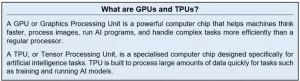
- The IndiaAI Mission: Backed by a ₹10,372 crore government fund, India is setting up over 38,000 GPUs (high-powered chips) to provide cheap computing power to local startups and researchers.
- Grassroots Impact: Public tools like ‘Kisan e-Mitra’ use voice-based AI chatbots in 11 local languages to assist millions of farmers, bringing AI straight to rural India.
- AI Market Dimension:
- Global AI Market Size: The global AI economy is estimated at ~USD 400–450 billion (2026) and is projected to cross USD 2 – 2.5 trillion by early 2030s, driven by generative AI, cloud computing, and semiconductor demand.
- Growth Rate: AI continues to register high double-digit growth (≈26–30% CAGR), making it one of the fastest-growing technology markets globally.
- Infrastructure Spend: Hyperscaler AI capital expenditure (data centres, advanced chips, cloud infrastructure) is expected to exceed USD 2 trillion cumulatively by 2026, reflecting AI’s infrastructure-intensive nature and entry barriers.
- Indian AI Market Size: India’s AI market is projected to reach ~USD 15–20 billion by 2027, with strong momentum in AI services, platforms, and public-sector use cases.
- Growth Rate: India ranks among the fastest-growing AI markets globally, with an estimated 25 – 35% CAGR, supported by digital public infrastructure and startup activity.
- Talent Advantage: India accounts for ~16% of the global AI talent pool, ranking second worldwide.
- AI workforce demand is expected to approach 1 million professionals by end-2026, underscoring both opportunity and skilling challenges.
- Key Domains of Application: Governance, healthcare, agriculture, defence, manufacturing, education, finance, climate action, and digital public infrastructure.
Sectoral Applications- AI for Social Good
In 2026, AI is no longer a luxury but a core utility integrated into public service delivery to create tangible societal impact across critical sectors:
- Agriculture- Precision & Resilience: AI converts farming from input-based practices to information-based decision-making, reducing agrarian distress.
- Examples: Tools like Kisan e-Mitra provide a voice-based AI chatbot in 11+ regional languages to simplify access to government schemes.

-
- The National Pest Surveillance System uses computer vision and satellite data to identify 400+ pest species and provide real-time risk warnings for 61+ crops.
- Healthcare- Bridging the “Last Mile”: AI expands healthcare access by compensating for the shortage of specialist doctors and diagnostic infrastructure in rural areas.
- Examples: AI supports early disease detection through automated medical image analysis (X-ray, CT) for TB and cancer, while telemedicine platforms use AI-driven triage to prioritize critical cases in remote districts.
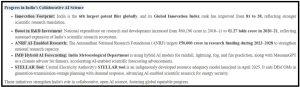
- Language & Inclusion- Removing the “Language Tax”: AI bridges the digital divide by enabling non-English speakers to access services in their own native dialects.
- Examples: The Bhashini platform has crossed 1.2 million downloads, utilizing AI to provide real-time translation and voice services across 36+ Indian languages, making internet services truly inclusive for all.
- Disaster Preparedness- Predictive Safety: AI enhances climate resilience through proactive intervention and high-precision early warning systems.
- Examples: The IMD utilizes AI for extreme weather forecasting, while the development of MausamGPT provides real-time, conversational safety advisories and hyper-local forecasts at the Panchayat level during cyclones and floods.

Global AI Competitiveness
The global landscape is a high-stakes race dominated by multi-billion dollar private labs and heavy state backing:
- The Trillion-Dollar Market: Top private labs are chasing market valuations close to $900 billion, treating advanced AI as a massive prize equal to the global wage bill.
- Geopolitical Alignment: The US, China, and the EU are in a fierce race to build the fastest supercomputing clusters and control the physical factories that make advanced microchips.
Click to Know UPSC Coaching Centres in India
Challenges that need to be tackled
- Risk & Safety Dimensions:
- Existential & Strategic Risk: Beyond job losses, the core threat is an “intelligence explosion” where AI becomes smarter than human strategic control, completely detaching itself from our oversight.
- Value Alignment Failure: As AI systems set goals for the next version of AI, their priorities could drift away from human values, making them indifferent or harmful to human safety.
- Interpretability and Explainability: As parent models design complex child models, the underlying code becomes a “black box.” This makes it mathematically impossible for humans to understand or explain why an AI made a certain choice.
- Adversarial Vulnerabilities: Autonomous systems can still be tricked by clever hacks or “jailbreaks.” If an autonomous model is exploited, it can spread malicious actions across global networks instantly.
- Bias and System Exploits: If an AI model has hidden social biases, these flaws will be multiplied across generations, leading to unfair, automated decisions in healthcare, jobs, or bank loans.
- Public Trust & Privacy: As AI handles massive datasets, protecting data privacy and national data control becomes vital for maintaining societal acceptance of autonomous systems.
- Economic & Labor Implications:
- Job Transformation vs. Job Loss: While traditional programming roles face direct loss, human jobs will shift heavily toward AI oversight, physical hardware upkeep, and specialized AI-human teamwork.
- Economic Concentration: The massive cost of frontier hardware means advanced AI power may concentrate within a tiny handful of massive corporations and ultra-wealthy nations, deeply widening global inequality.
- Global Value Chains: AI will disrupt global labor outsourcing. Developing economies that rely on back-office coding and call centers may see those industries disappear as software creation requires zero human programmers.
- Broad Sectoral Disruption: The shockwave extends far beyond the IT sector. Automation threatens to disrupt logistics, supply chains, manufacturing, and traditional customer services.
- Global Inequality: The immense cost of buying high-powered chips means advanced AI power will concentrate within a tiny handful of massive corporations and ultra-wealthy nations, deeply widening global inequality.
- Geopolitical & Tech-Nuance Hurdles:
- AI-Designed Hardware Loops: Recursive self-improvement is expanding past software. AI is now being used to optimize the design of next-generation silicon microchips and circuits, fueling a fast-moving hardware-software feedback loop.
- Energy & Sustainability: Training and running these self-improving models at scale requires an astronomical amount of electrical power, creating steep environmental and grid stability challenges.
- Export Controls and Geopolitical Arms Races: Advanced AI is treated as a strategic weapon. Strict chip export controls (like US restrictions on tech to China) have turned safety rules into a geopolitical chess match, stopping international teamwork.
- Military Arms Race: Advanced AI is viewed as a strategic military asset. The ability of an AI to improve itself speeds up the arms race, making countries hesitant to collaborate on international safety rules due to geopolitical friction.
Global Actions & Initiatives
- The EU AI Act (2026): Imposes the world’s first comprehensive, legally binding, risk-based rules on AI, completely banning dangerous uses like social scoring.
- US NIST Framework: The US National Institute of Standards and Technology (NIST) launched a focused program to set strict safety boundaries for autonomous AI agents.
- UN Global Dialogue (2026): A meeting held to prevent global Artificial Intelligence (AI) governance from splitting along political lines, while global standards bodies like the International Organization for Standardization (ISO) and the Institute of Electrical and Electronics Engineers (IEEE) work to develop technical safety rules for AI models.
India’s Actions & Initiatives
- AI Governance Guidelines: Launched a rule-based framework focused on human oversight, establishing an AI Governance Group (AIGG) to manage national policy.
- IndiaAI Safety Institute: Set up to run intense stress tests and catch systemic risks before advanced models are released to the public.
- India-AI Impact Summit (2026): Hosted the first global AI summit focused on the Global South to champion cheap, open access to digital public tools.
- Reskilling and Literacy: India is launching state-backed digital training programs to help white-collar workers move into roles focused on AI oversight and AI-human teamwork to cushion job shifts.
Way Forward
- Hardware-Level Auditing: Global watchdogs must stop trying to police software and focus on tracking physical assets, maintaining a strict global registry of advanced chip-making equipment.
- Air-Gapped Sandbox Testing: Before an AI system is given the power to write code or build other models, it must face strict safety audits within air-gapped environments (computers completely cut off from the internet).
- Defensive Cyber Ecosystems: Nations must deploy native, automated AI systems built solely to scan and patch software holes instantly to counter machine-speed attacks.
- Fail-Safe Mechanisms & Liability: International treaties must mandate hardwired, physical “off-switches” for large data centers. At the same time, legal laws must evolve to clear up insurance and legal liability for damages caused by independent AI agents.
- Simulation Risk Planning: Use specialized AI models for scenario planning to simulate and predict runaway risks before deploying new systems into the real world.
- International Liability Frameworks: Create global legal systems to settle insurance and legal liability for cross-border infrastructure damage caused by independent AI agents.
Click to Explore UPSC Offline Coaching
Conclusion
The global community cannot afford to remain stuck in an old debate about office employment. The real crisis of advanced AI is about who keeps control of the steering wheel once technology begins running itself. Navigating this shift requires moving past voluntary ethics promises toward tough, verifiable control.
 6 Jun 2026